


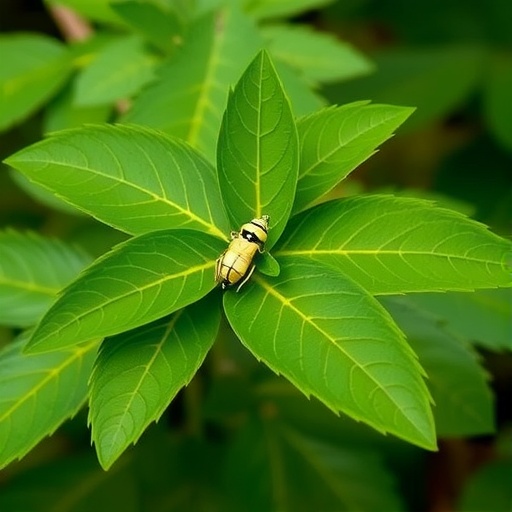
In an era defined by the relentless search for effective antimalarial therapies, a groundbreaking study leveraging traditional botanical knowledge has emerged as a beacon of hope one more time. Researchers Ogunleye, Simon-Oke, and Akeju recently published compelling findings illuminating the prophylactic and curative effects of the leaf extract of Xylopia aethiopica against Plasmodium berghei—a rodent malaria parasite widely used as a proxy for human malaria studies. This research epitomizes a vital crossroads where indigenous medicinal plants meet cutting-edge parasitology, potentially reshaping malaria treatment paradigms globally.
Malaria remains one of the most devastating infectious diseases worldwide, disproportionately impacting tropical and subtropical regions. Despite advances in antimalarial drugs and vaccine development, resistance to conventional therapeutics poses a persistent challenge. This predicament underscores the urgent necessity to identify novel agents that can either prevent infection or aid in curing malaria through alternative mechanisms. Xylopia aethiopica, commonly known as African pepper or “Ehu” in Yoruba culture, is a plant long revered in West African traditional medicine for its diverse pharmacological properties, including antimicrobial and anti-inflammatory effects.
The study delves deep into the bioactivity of Xylopia aethiopica leaf extracts, focusing on its interaction with the malaria parasite lifecycle within murine hosts. By utilizing Plasmodium berghei, the researchers harnessed a robust animal model that mimics many pathophysiological facets of Plasmodium falciparum infections in humans. Their approach involved administering oral doses of the leaf extract to mice both prior to and after infection, meticulously measuring parasitemia levels over subsequent days with advanced microscopic and molecular techniques.
Initial prophylactic administration of the Xylopia aethiopica leaf extract led to a marked suppression of parasitemia, demonstrating substantial preventive potential. This finding is pivotal as it suggests a mechanism where certain phytochemicals in the extract may interfere with the parasite’s ability to establish infection or multiply effectively within host erythrocytes. The exact biochemical pathways remain under investigation, but early evidence points toward the modulation of oxidative stress and immune system activation.
Equally impressive were the curative effects observed in mice treated post-infection. Animals receiving the extract showed accelerated clearance of parasitic loads compared to untreated controls. This curative action implies not only direct antiparasitic activity but potentially an immunomodulatory role, enhancing the host’s intrinsic capacity to combat malaria. The research team highlights compounds such as alkaloids, flavonoids, and phenolic acids known to possess potent pharmacodynamics that may contribute to these effects.
What truly sets this investigation apart is its comprehensive experimental design, leveraging both in vivo assessment and phytochemical analysis to establish a correlation between the chemical composition of the leaf extract and its antiplasmodial efficacy. Sophisticated chromatographic and spectrometric methods identified multiple bioactive constituents, many of which had not been previously characterized for antimalarial properties. This offers a promising avenue for isolating lead compounds that could be optimized into standardized drug candidates.
Furthermore, the safety profile of Xylopia aethiopica leaf extract was rigorously evaluated, revealing minimal toxicity at therapeutic dosages. This aspect is indispensable, considering that toxicity concerns often impede the translation of natural products into clinical use. The researchers’ findings, therefore, position Xylopia aethiopica not only as an effective antimalarial agent but also as a potentially safe alternative or adjunct to existing treatments.
Significantly, this study resonates with broader scientific and socioeconomic dimensions. The resurgence of interest in plant-based remedies aligns with a global movement toward sustainable and accessible healthcare solutions, especially in low-resource settings where malaria burden is highest. Incorporating traditional botanical knowledge validated by modern scientific methods can empower indigenous communities and enhance local healthcare infrastructures.
Beyond immediate clinical implications, the research prompts deeper inquiries into the molecular crosstalk between plant-derived compounds and parasite biology. Understanding how these extracts disrupt Plasmodium development could unlock new mechanistic insights into parasite vulnerabilities. Such knowledge not only advances antimalarial drug discovery but may also illuminate fundamental aspects of parasitology and host-pathogen interactions.
Another intriguing facet relates to the potential synergistic effects observed when Xylopia aethiopica extract is combined with established antimalarials. Preliminary data hint that such combinations could lower dosage requirements and reduce side effects, representing a critical strategy against drug-resistant malaria strains. This synergy merits extensive future research, encompassing pharmacodynamics, pharmacokinetics, and clinical trials.
Moreover, as global climate patterns evolve and malaria-endemic zones shift, adaptable and versatile therapeutic options are paramount. Plant-based remedies like Xylopia aethiopica exhibit inherent advantages: they can be cultivated locally, processed using low-cost techniques, and integrated into culturally acceptable medical frameworks. These traits underpin their strategic value in combating emerging infectious diseases.
The multidisciplinary lens adopted in this study exemplifies the convergence of ethnobotany, pharmacology, parasitology, and molecular biology. By preserving the integrity of traditional knowledge and validating it through rigorous experimentation, scientific innovation can harmonize with cultural heritage. This synergy is essential not only to discover new cures but to foster equitable and inclusive healthcare paradigms worldwide.
In conclusion, the work of Ogunleye and colleagues signifies a milestone in malaria research. Their elucidation of the prophylactic and curative potency of Xylopia aethiopica leaf extract against Plasmodium berghei paves the way for novel therapeutic options rooted in nature’s reservoir. As malaria continues to claim lives and challenge global health systems, such pioneering efforts inspire hope and galvanize further investigations toward sustainable eradication strategies.
Cite Scienmag News
Drew Townsend. (August 6, 2025). Xylopia aethiopica Leaf Extract Fights Mouse Malaria. Scienmag. https://scienmag.com/xylopia-aethiopica-leaf-extract-fights-mouse-malaria/
Drew Townsend. "Xylopia aethiopica Leaf Extract Fights Mouse Malaria." Scienmag, 6 August 2025, https://scienmag.com/xylopia-aethiopica-leaf-extract-fights-mouse-malaria/. Accessed 1 September 2026.
Drew Townsend. "Xylopia aethiopica Leaf Extract Fights Mouse Malaria." Scienmag. August 6, 2025. https://scienmag.com/xylopia-aethiopica-leaf-extract-fights-mouse-malaria/


