


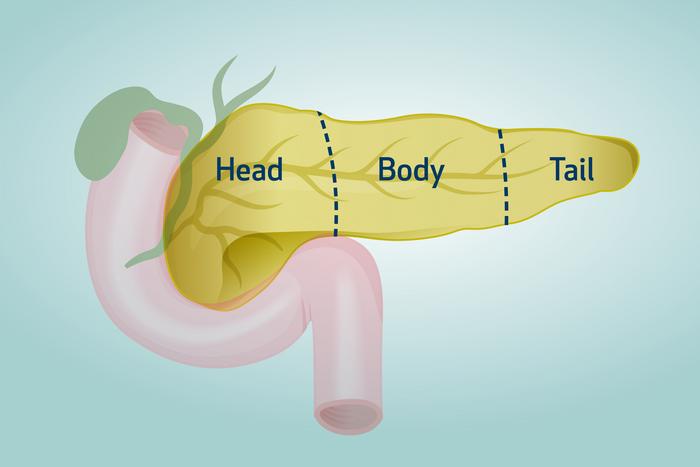
A new study has found that pancreatic cancer cells are different based on their location in the pancreas, providing new information about tumors that could lead to better targeted treatments.

Credit: Houston Methodist
A new study has found that pancreatic cancer cells are different based on their location in the pancreas, providing new information about tumors that could lead to better targeted treatments.
Pancreatic ductal adenocarcinoma (PDAC) is an aggressive cancer, and the diagnosis has dramatically increased over the last decade. It is currently the seventh leading cause of cancer deaths in men and women globally and projected to be the third leading cause of cancer-related deaths world-wide by 2030. This increase is due to several factors such as an increase in obesity and diabetes.
Houston Methodist’s section chief of gastrointestinal medical oncology, Dr. Maen Abdelrahim, served as first and concept generating author for the article titled, “Comparative molecular profiling of pancreatic ductal adenocarcinoma of the head versus body and tail,” published in NPJ Precision Oncology, an online journal in the Nature family of publications. The research team discovered that the anatomical location of the pancreatic tumor is a contributing factor for the outcomes of systematic therapy interventions.
Abdelrahim and his collaborators established a hypothesis that there is a difference in microenvironments of tumors in the pancreatic head versus the body and tail, particularly the immunotherapy receptors found on each section of the pancreas.
“By focusing on biology around the tumor and taking its location on the pancreas into account we can better evaluate our treatment options,” said Abdelrahim. “Rather than treating patients under the umbrella of pancreatic malignancy, a shift to a tumor location-based model can seriously alter how clinicians set up preliminary treatment plans.”
The team hopes this finding will help clinicians develop a more specific treatment plan and improve patient outcomes.
Abdelrahim’s collaborators on this study were Benjamine A. Weinberg, Adbullah Esmail, Anup Kasi, Nestor F. Esnaola, Joanne Xiu, and Yasmine Baca.
The Cockrell Foundation and Houston Methodist Hospital Foundation support this research.
For more information about Houston Methodist, visit our newsroom, On Health and Leading Medicine blogs and follow us on X, Facebook, LinkedIn, Instagram and TikTok.
Journal
npj Precision Oncology
Method of Research
Data/statistical analysis
Subject of Research
Cells
Article Title
Comparative molecular profiling of pancreatic ductal adenocarcinoma of the head versus body and tail
Article Publication Date
6-Apr-2024
COI Statement
Y.B. and J.X. are workers at Caris Life Sciences, Phoenix, AZ. All other authors have declared that there are no financial conflicts of interest concerning this work.
Cite Scienmag News
Nathaniel Bowman. (April 30, 2024). Researchers at Houston Methodist find difference in pancreatic cancer cells, offering new hope for immunotherapy effectiveness. Scienmag. https://scienmag.com/researchers-at-houston-methodist-find-difference-in-pancreatic-cancer-cells-offering-new-hope-for-immunotherapy-effectiveness/
Nathaniel Bowman. "Researchers at Houston Methodist find difference in pancreatic cancer cells, offering new hope for immunotherapy effectiveness." Scienmag, 30 April 2024, https://scienmag.com/researchers-at-houston-methodist-find-difference-in-pancreatic-cancer-cells-offering-new-hope-for-immunotherapy-effectiveness/. Accessed 4 September 2026.
Nathaniel Bowman. "Researchers at Houston Methodist find difference in pancreatic cancer cells, offering new hope for immunotherapy effectiveness." Scienmag. April 30, 2024. https://scienmag.com/researchers-at-houston-methodist-find-difference-in-pancreatic-cancer-cells-offering-new-hope-for-immunotherapy-effectiveness/

