


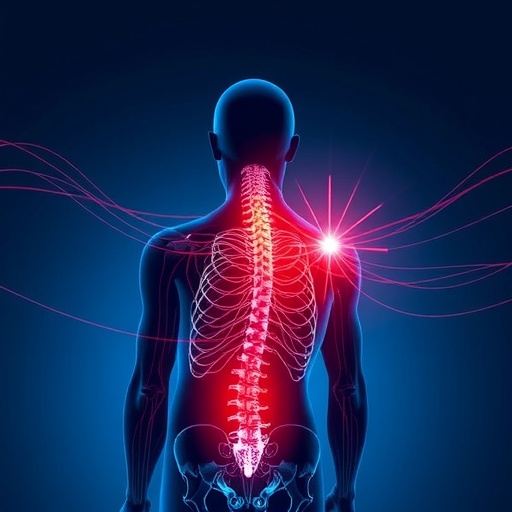
In a groundbreaking study poised to reshape the therapeutic landscape for spinal cord injury (SCI), researchers have demonstrated that daily administration of controlled electric fields can significantly enhance functional recovery following thoracic contusion injuries in rats. This development opens avenues for non-invasive and potentially translatable clinical interventions, marking a pivotal shift toward bioelectrical modulation as a cornerstone of regenerative medicine in neural trauma. The implications extend far beyond the preclinical realm, teasing the possibility of restoring mobility and quality of life for millions affected by spinal cord damage worldwide.
Spinal cord injury, characterized by partial or complete loss of sensory, motor, and autonomic function below the lesion level, remains one of the most devastating and clinically challenging forms of neurological trauma. Despite decades of research, therapeutic strategies have largely been palliative, offering limited functional restoration. The cascade of secondary injury processes—ranging from inflammation and glial scar deposition to apoptosis and demyelination—has consistently impeded effective regeneration. Against this bleak backdrop, the employment of targeted electric field stimulation represents an innovative departure from conventional pharmacological or stem cell-based approaches.
The investigators, led by Harland, Matter, Lopez, and colleagues, utilized a robust rat model of thoracic contusion injury, a clinical analogue recognized for mimicking human SCI pathophysiology with high fidelity. Through meticulous placement of electrodes coupled to a daily regimen of precisely calibrated electric fields, the team evaluated the impact of electrotherapeutics on neural tissue repair and behavioral outcomes. The treatment commenced within hours post-injury, capitalizing on a defined therapeutic window to mitigate secondary degeneration and promote endogenous repair mechanisms.
Mechanistically, the applied electric fields are hypothesized to influence cellular and molecular pathways integral to neural recovery. Modulation of endogenous electrical gradients is known to affect neuronal growth cone dynamics, axonal guidance, and synaptic plasticity. Additionally, electrical stimulation can regulate gene expression linked to neurotrophic factors, anti-inflammatory cytokines, and remyelination processes. By harnessing these intrinsic biological responses, the approach seeks to create a permissive environment conducive to regeneration rather than simply attenuating injury.
Behavioral assessments underscored the functional significance of this intervention. Rats subjected to daily electric field treatment exhibited marked improvements in locomotor scores, coordination, and sensory-motor reflexes relative to untreated controls. These functional gains were corroborated by histological analyses revealing enhanced preservation of white matter tracts, reduced cavity formation, and attenuated glial scarring at lesion sites. Intriguingly, parameters such as axonal sprouting and synaptic connectivity also showed robust enhancement, signifying that electric fields promote neural circuit remodeling critical for recovery.
The frequency, intensity, and duration of electric field administration were meticulously optimized during the experimental timeline, reflecting a nuanced understanding of dose-dependent biological effects. The researchers noted a therapeutic sweet spot wherein sustained, moderate electric fields yield maximal benefits without exacerbating tissue damage or eliciting adverse inflammatory responses. This precision contrasts starkly with prior indiscriminate stimulation techniques, underscoring the importance of biophysical parameters in neuromodulation strategies.
On a cellular level, the study highlighted the modulation of microglial and astrocytic activity as pivotal to the observed outcomes. Electric field treatment appeared to shift microglial states toward anti-inflammatory phenotypes, reducing the secretion of cytotoxic mediators and creating a milieu supportive of neuronal survival. Astrocytes, traditionally associated with scar formation, exhibited altered gene expression profiles indicative of a more regenerative phenotype. Together, these glial responses likely facilitate remyelination and axonal regrowth, enhancing overall tissue architecture.
Beyond local tissue effects, systemic influences were also apparent. Biomarkers of oxidative stress and systemic inflammation were significantly attenuated following electrotherapy, suggesting that daily electric field application creates a global biological state favorable for healing. This holistic impact challenges the historically localized view of SCI pathology and supports integrative approaches combining neurostimulation with immunomodulation.
Importantly, the study embraced cutting-edge imaging and electrophysiological technologies to elucidate real-time neural activity shifts during treatment courses. Functional magnetic resonance imaging (fMRI) and electrophysiological recordings evidenced improved conduction velocities and heightened synaptic responsiveness in circuits previously compromised by injury. These findings not only validate behavioral improvements but also provide mechanistic insight into how electric fields restructure neural networks.
The translational potential of these findings is particularly exciting. While rat models offer critical proof of principle, the scalability of electric field delivery to larger mammals and eventually humans is under active exploration. Implantable or wearable electrode arrays, combined with intelligent control systems, may soon usher in personalized therapies that dynamically adjust stimulation parameters based on real-time neural feedback.
Despite its promise, the study also acknowledges challenges ahead. Precise electrode placement, long-term biocompatibility, and the risk of unintended neuromodulation effects remain hurdles. Moreover, the heterogeneity of human spinal injuries demands patient-specific protocols, emphasizing the need for extensive clinical trials. Nonetheless, this pioneering research lays a solid foundation for the rational design of electric field-based therapies.
Furthermore, the ethical implications of neurostimulation warrant thoughtful deliberation. Intervening in the central nervous system’s electrical milieu carries the potential for unforeseen psychological or cognitive effects. Rigorous safety profiling alongside efficacy studies will be essential before widespread clinical adoption.
In parallel with neuroengineering advances, this study catalyzes interdisciplinary dialogues between neuroscientists, bioengineers, and clinicians. The convergence of bioelectrics and regenerative medicine represents an emergent frontier, promising not only spinal cord repair but also potential applications in stroke, traumatic brain injury, and neurodegenerative disorders.
On the horizon, integrating electric field therapy with adjunctive modalities—such as neurotrophic factor delivery, stem cell transplantation, and biomaterial scaffolds—may yield synergistic benefits. Multipronged strategies combining electrical and biochemical cues could further amplify neural plasticity and functional restitution.
In summary, the demonstration that daily controlled electric field treatment substantially improves outcomes after thoracic contusion spinal cord injury in rats marks a landmark achievement in SCI research. This innovative approach transcends traditional paradigms by leveraging the bioelectrical underpinnings of neural tissue to foster repair and functional restoration. As the field advances toward clinical translation, electric field therapy holds promise to transform the prognosis for spinal cord injury patients, illuminating a new dawn in neurorehabilitation.
Cite Scienmag News
Clara W. (June 26, 2025). Daily Electric Field Therapy Boosts Spinal Injury Recovery. Scienmag. https://scienmag.com/daily-electric-field-therapy-boosts-spinal-injury-recovery/
Clara W. "Daily Electric Field Therapy Boosts Spinal Injury Recovery." Scienmag, 26 June 2025, https://scienmag.com/daily-electric-field-therapy-boosts-spinal-injury-recovery/. Accessed 29 August 2026.
Clara W. "Daily Electric Field Therapy Boosts Spinal Injury Recovery." Scienmag. June 26, 2025. https://scienmag.com/daily-electric-field-therapy-boosts-spinal-injury-recovery/


