


The evolving science of well-being has captured the attention of researchers, policymakers, and interdisciplinary sectors alike, reflecting a worldwide surge in efforts to understand what it means to live well. At the heart of this burgeoning field lies a critical conceptual debate: how should well-being be defined and measured? This question is far from academic, impacting everything from individual psychological health to the design of public policy aimed at enhancing societal welfare. In a timely Perspective published in Nature Human Behaviour, VanderWeele and Johnson dissect the dichotomy between unidimensional and multidimensional approaches to well-being, arguing for a paradigm shift while acknowledging the practical challenges involved.
Well-being, as a concept, has long been a subject of philosophical inquiry and empirical research, yet it remains notoriously complex. Historically, many studies and policy frameworks have gravitated toward assessing life satisfaction or life evaluation as a single overarching measure. This unidimensional approach captures a general sense of how individuals rate their lives as a whole, commonly through surveys asking respondents to assign a numerical value to their life satisfaction. The simplicity and ease of interpretation have made this metric popular, especially in large-scale social science and economic data collection.
However, VanderWeele and Johnson caution that such a singular measure, while pragmatically appealing, inherits significant conceptual limitations. A unidimensional approach risks oversimplifying the lived human experience, which is inherently multifaceted, spanning emotional, psychological, social, and physical domains. By condensing the vast spectrum of human flourishing into a single number, valuable nuances and disparities within the components of well-being may be obscured, hindering targeted interventions and nuanced policy responses.
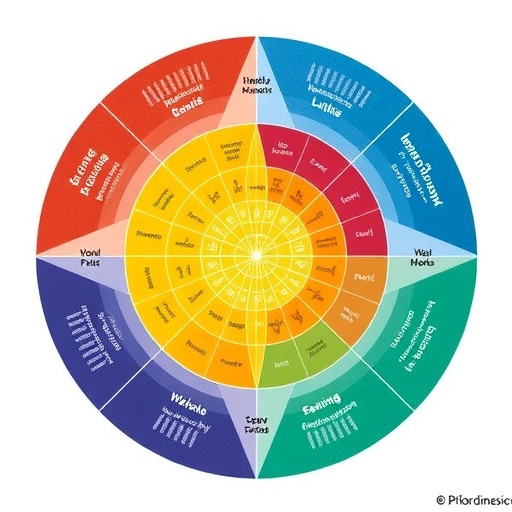
To address the complexities omitted by unidimensional evaluations, a multidimensional framework has gained increasing traction. This model recognizes well-being as an aggregation of distinct but interrelated domains such as emotional health, physical vitality, social connectedness, purpose and meaning, and material conditions. Such an approach aligns with advances in positive psychology and the emerging science of flourishing, which argues for a broader and richer understanding of human thriving beyond mere happiness or life satisfaction.
Technically, operationalizing a multidimensional construct requires harnessing diverse measurement instruments, ranging from psychological scales and biomarkers to sociological indices. These tools collectively attempt to map the experiential landscape of well-being in fine resolution. Notably, flourishing indices often incorporate qualitative assessments of positive functioning, virtue, engagement, and relational quality, reflecting a normative dimension that life satisfaction metrics typically eschew.
Empirically, multidimensional data sets present both opportunities and challenges. The granularity enables researchers to disentangle which specific domains drive overall well-being and uncover heterogeneity within populations that aggregate scores mask. For instance, a person may report moderate life satisfaction yet exhibit high social engagement and strong purpose, suggesting resilience or areas of strength that are actionable. Conversely, identifying low scores in particular dimensions can guide targeted interventions, whether in healthcare, social services, or education.
Yet, this richness comes with a cost. Collecting multidimensional well-being data is inherently resource-intensive, often requiring longer surveys, nuanced item development, and complex analysis methods including multivariate modeling and latent variable analysis. In policy contexts, these challenges raise questions about feasibility and comparability across regions or subgroups, where data infrastructure and capacities may vary considerably. The authors emphasize that while multidimensional assessment is ideal in theory, practical constraints sometimes necessitate reliance on simpler life satisfaction measures.
Nonetheless, VanderWeele and Johnson propose a middle path in which policymakers and researchers navigate the tension between conceptual thoroughness and pragmatic applicability. One forward-looking suggestion is to employ a tiered measurement strategy—using life satisfaction as a broad initial screen complemented by periodic, more detailed multidimensional studies. This hybrid approach could leverage the scalability of unidimensional measures while progressively enriching scientific insight and policy precision.
Moreover, the authors argue that clarifying the theoretical foundations of well-being is indispensable. Without consensus on what constitutes flourishing, the choice of measurement instruments risks reflecting arbitrary or culturally biased assumptions. Embracing a multidimensional framework fosters interdisciplinary dialogue among psychology, economics, sociology, and philosophy, potentially leading to robust, universally relevant definitions and tools.
The policy relevance of this debate cannot be overstated. Governments worldwide increasingly incorporate measures of well-being into national statistics and policy evaluation frameworks, transcending traditional economic indicators like GDP. A refined understanding of how to measure well-being multidimensionally would allow for more nuanced policies addressing mental health crises, social inequalities, community cohesion, and sustainable development goals.
Significantly, the Perspective highlights empirical evidence linking multidimensional flourishing with a variety of positive outcomes beyond material wealth, including improved physical health, longevity, and social capital formation. These associations reinforce the argument that well-being research must move beyond narrow economic proxies to a holistic, integrated science of flourishing.
The authors also delve into methodological innovations facilitating multidimensional research. Advances in psychometrics, longitudinal panel studies, and computational modeling enable dynamic tracking of well-being components across time and contexts. Such approaches pave the way for personalized interventions and adaptive policy designs that respond to shifting societal needs.
However, the authors caution against disregarding the value of life satisfaction metrics altogether. Life satisfaction remains a powerful and scalable indicator, especially suitable for broad population surveys and international comparisons. It also serves as a valuable anchoring point in multidimensional frameworks, providing a global baseline around which more detailed constructs can be contextualized.
Furthermore, recognizing cultural and demographic heterogeneity is critical. The constructs of flourishing and satisfaction can be differentially interpreted and prioritized worldwide. Multidimensional models allow for incorporating culturally sensitive domains, which may enhance validity and promote inclusiveness in global well-being assessments.
In conclusion, VanderWeele and Johnson articulate a compelling vision for advancing the science of well-being. They advocate conceptual clarity, scientific rigor, and empirical nuance while addressing the practical realities of data collection and policy implementation. Their work underscores that the future of well-being science lies not in discarding unidimensional measures but in intelligently complementing them with rich multidimensional insights.
As the global landscape grapples with complex challenges such as mental health epidemics, climate change, and social fragmentation, refining how we understand and measure well-being becomes urgent. The multidimensional lens elucidated in this Perspective offers a promising roadmap for harnessing scientific innovation to foster human flourishing at individual, community, and societal scales.
This paradigm shift calls for collaborative efforts involving scientists, policymakers, and citizens to co-create well-being frameworks that are theoretically sound, methodologically robust, and practically applicable across diverse contexts. The ongoing dialogue between unidimensional efficiency and multidimensional richness may well define the next epoch of human behavioral science and public policy.
Cite Scienmag News
Courtney Benton. (May 31, 2025). Multidimensional vs. Unidimensional Well-Being Approaches Explained. Scienmag. https://scienmag.com/multidimensional-vs-unidimensional-well-being-approaches-explained/
Courtney Benton. "Multidimensional vs. Unidimensional Well-Being Approaches Explained." Scienmag, 31 May 2025, https://scienmag.com/multidimensional-vs-unidimensional-well-being-approaches-explained/. Accessed 31 August 2026.
Courtney Benton. "Multidimensional vs. Unidimensional Well-Being Approaches Explained." Scienmag. May 31, 2025. https://scienmag.com/multidimensional-vs-unidimensional-well-being-approaches-explained/


