


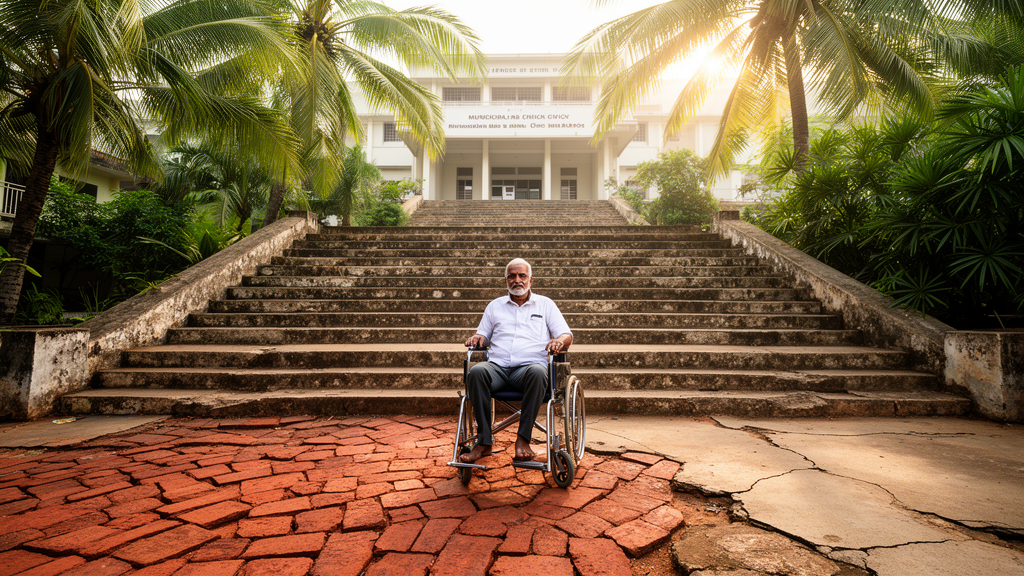
A recent study published in the journal City, Territory and Architecture examines how physical, visual, and symbolic accessibility constraints hinder the functionality of urban public spaces in Kannur, Kerala. The research, conducted by Heera Dinesh, T. N. Trivikram, K. C. Surekha, and Sharon Maria Thomas, focuses on the urban core of the city, identifying significant gaps in how these spaces serve as inclusive community hubs. The authors argue that congestion, underutilization, and poor connectivity prevent key locations from realizing their potential as vibrant, equitable environments for diverse user groups.
The study addresses a specific gap in urban design literature, where accessibility is often analyzed through a single lens, typically physical inclusivity. By applying a multi-dimensional framework derived from the work of Mathew Carmona, the researchers integrate spatial mapping, photographic documentation, and qualitative comparative scoring. This approach allows for a holistic assessment of how physical, visual, and symbolic dimensions of access collectively influence the usability and perceived value of public spaces in a mid-sized Indian city.
Kannur, a coastal city in northern Kerala with a population of approximately 232,486 within its municipal corporation limits as of the 2011 census, was selected for this analysis due to its rapid urbanization and distinct socio-spatial fabric. Although classified as a Tier II city under various government frameworks, Kannur has received limited academic attention regarding its public space dynamics. The city’s historical significance as a port town and its current role as a regional economic hub make it a compelling case study for understanding accessibility challenges in emerging urban centers.
The methodology employed a qualitative, site-based strategy tailored to the experiential nature of public space analysis. The researchers initially identified seventeen public areas across Kannur, categorized into recreational zones, heritage precincts, and commercial or transportation nodes. To ensure analytical focus on everyday urbanism, the study narrowed its scope to nine Central Business District (CBD) based spaces. Recreational tourism zones were excluded due to their limited relevance to daily resident life, while heritage sites with restricted access were omitted to maintain a focus on open public interaction.
Field observations were conducted across different time intervals, including weekdays and weekends, to capture varying usage patterns. The team utilized a Multi-Criteria Decision Analysis (MCDA) based qualitative evaluation framework, organizing parameters under the three accessibility dimensions. Each parameter was rated using a three-level ordinal scale of High, Medium, and Low, based on direct field observation, photographic documentation, and user activity mapping. This structured approach helped minimize observer bias and ensured consistency in interpreting spatial conditions across the selected sites.
The physical access analysis revealed significant deficiencies in circulation, connectivity, and comfort at key nodes such as the Kannur Market, Old Bus Stand, and Railway Station. These areas suffer from limited barrier-free design, inadequate sidewalks, and a lack of dedicated pedestrian crossings. The Caltex KSRTC Stand, despite being a major transit hub, presents mobility barriers for individuals with disabilities, the elderly, and those carrying heavy loads. The study notes that the prioritization of vehicular movement over pedestrian needs has resulted in fragmented spaces that are difficult to navigate and unsafe for non-vehicular users.
Visual access issues were also prominent, with many spaces exhibiting obstructed visibility due to encroachments, unregulated signage, and dense commercial activity. The Kannur Market and Caltex KSRTC Stand were identified as having chaotic streetscapes that hinder wayfinding and reduce visual comfort. In contrast, the New Bus Terminal demonstrated higher visual comfort and safety due to its structured layout and clear sightlines. The study highlights that poorly articulated boundaries and ambiguous transitions between public and private spaces contribute to visual clutter and functional inefficiencies, particularly in areas like the Old Bus Stand and Fort Road.
Symbolic access, which reflects cultural identity and psychological comfort, was found to be weak in several key locations. The Old and New Bus Stands lack informative signage and evoke little sense of place, failing to integrate local identity into their design. Conversely, Fort Road and the Kannur Stadium Complex were noted for their strong cultural identity and spatial cues that resonate with the local community. The absence of cultural references in other spaces makes them feel disconnected from the collective memory of the city, reducing their potential to foster a sense of belonging among diverse social groups.
The discussion section of the study emphasizes the interdependence of the three accessibility dimensions. Spaces that performed poorly in physical access, such as the Market and Old Bus Stand, also exhibited low symbolic legibility, suggesting that infrastructural inadequacies often coincide with a lack of cultural cues. Conversely, sites with moderate visual scores, like the Stadium precinct, showed greater symbolic resonance, indicating that visual openness can enhance place attachment. This cross-dimensional relationship underscores that accessibility barriers in Kannur are not isolated deficits but symptoms of fragmented spatial and cultural integration.
Environmental factors, such as poor drainage infrastructure, further exacerbate accessibility issues, particularly during the monsoon season when waterlogging restricts movement. The study also highlights safety concerns that discourage women and other vulnerable groups from using certain spaces, especially at night. Poor lighting, lack of passive surveillance, and the absence of clearly defined pedestrian-friendly zones contribute to a sense of insecurity in areas like the Old Bus Stand and Railway Station. These factors collectively limit the inclusivity and usability of public spaces for a wide range of demographics.
Based on the comparative findings, the researchers propose context-specific interventions aligned with the three accessibility dimensions. For physical access, tactical urbanism interventions such as temporary pedestrian-priority designs are recommended at nodes with low scores. Visual access can be improved through façade control guidelines, removal of visual clutter, and enhanced night-time lighting. Symbolic access could be strengthened through participatory public art installations and community-led cultural events that express local identity. These strategies aim to transform underperforming spaces into more engaging and inclusive areas that respond to the diverse needs of the population.
The study acknowledges its limitations, noting that the reliance on observational and interpretive assessment constrains the quantitative verification of behavioral patterns. The authors suggest that future research could incorporate perceptual surveys and more rigorous mathematical techniques to further validate the findings. Despite these limitations, the multi-dimensional accessibility framework provides a valuable diagnostic tool for assessing and reimagining public spaces. It highlights the need for holistic revitalization strategies that integrate walkability, visual clarity, and cultural expression to create dynamic, multifunctional, and equitable urban environments.
By emphasizing the importance of accessibility as a mediating factor between functionality and inclusivity, the study contributes to the broader discourse on inclusive urbanism in emerging regional cities. The findings underscore the necessity for urban designers and policymakers to view public spaces as evolving civic assets that require continuous adaptation to changing social, economic, and environmental conditions. Implementing these recommendations could help Kannur and similar cities develop well-connected public spaces that cater to the social, cultural, and economic requirements of their metropolitan populations.
Subject of Research: Multi-dimensional accessibility assessment of urban public spaces in Kannur, Kerala
Article Title: Accessibility as a factor in assessing urban public spaces: a case of Kannur, Kerala
Article References: Dinesh, H., Trivikram, T. N., Surekha, K. C., & Thomas, S. M. (2026). Accessibility as a factor in assessing urban public spaces: a case of Kannur, Kerala. City, Territory and Architecture, 13(1), Article 8. https://doi.org/10.1186/s40410-026-00301-2
Image Credits: AI Generated
DOI: 10.1186/s40410-026-00301-2
Keywords: urban public spaces, accessibility, Kannur, Kerala, urban design, physical access, visual access, symbolic access, pedestrian infrastructure, spatial analysis, factor, assessing
Cite Scienmag News
Denise Maddox. (November 12, 2026). Kannur Public Spaces Struggle with Accessibility Barriers. Scienmag. https://scienmag.com/kannur-public-spaces-struggle-with-accessibility-barriers/
Denise Maddox. "Kannur Public Spaces Struggle with Accessibility Barriers." Scienmag, 12 November 2026, https://scienmag.com/kannur-public-spaces-struggle-with-accessibility-barriers/. Accessed 16 November 2026.
Denise Maddox. "Kannur Public Spaces Struggle with Accessibility Barriers." Scienmag. November 12, 2026. https://scienmag.com/kannur-public-spaces-struggle-with-accessibility-barriers/




