


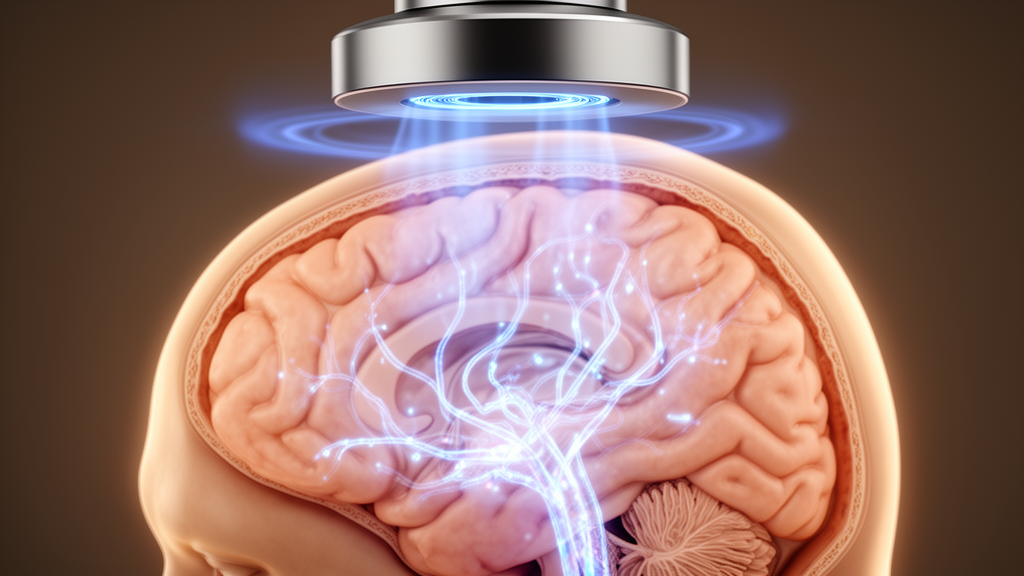
Simultaneous application of motor imagery and high-frequency repetitive transcranial magnetic stimulation modulates task-related corticospinal excitability during movement without producing measurable changes in motor performance, according to research conducted by investigators at Kyoto University.
Combined therapeutic maneuvers are investigated under the premise that multimodal approaches may be more effective for addressing motor dysfunction than isolated interventions. While motor imagery and high-frequency repetitive transcranial magnetic stimulation can each independently influence cortical excitability or motor execution, whether their concurrent delivery produces superior behavioral or neurophysiological outcomes has remained unresolved.
To evaluate these concurrent effects, the study implemented a crossover design involving four experimental modulation procedures: motor imagery of a typing task alone, 5-Hz repetitive transcranial magnetic stimulation directed over the left primary motor cortex alone, concurrent motor imagery paired with 5-Hz stimulation, and a control condition.
Motor performance before and after each intervention was assessed through multiple quantitative measures, including actual movement time, imagined movement time, task error rate, vividness of motor imagery, and surface electromyography recorded from intrinsic and extrinsic hand muscles. In parallel, motor evoked potentials elicited by single-pulse transcranial magnetic stimulation were recorded at rest, during motor imagery, and during actual movement execution.
Following the interventions, the researchers detected no statistically significant changes in either motor performance or motor imagery performance across any of the tested conditions. However, task-related corticospinal excitability, calculated relative to resting motor evoked potential amplitude, decreased during actual movement after the combined motor imagery and high-frequency stimulation intervention compared with both the control condition and motor imagery alone.
In addition, motor evoked potential persistence within the agonist muscle remained stable during stimulation alone but exhibited a decline during the latter half of the combined intervention. The investigators conclude that concurrent motor imagery and high-frequency repetitive transcranial magnetic stimulation modulates motor cortical output in a task-dependent manner despite the absence of acute behavioral alterations.
The experimental motivation centered on whether combining therapeutic maneuvers could address motor dysfunction more effectively than standalone interventions. Although prior work indicated that motor imagery and high-frequency repetitive transcranial magnetic stimulation can each independently enhance cortical excitability, motor performance, or both, the physiological and behavioral consequences of applying both modalities at the exact same time remained unclarified.
To resolve this uncertainty, the investigators implemented a four-condition crossover experimental design. Participants completed four separate modulation procedures across the study: performing motor imagery of a typing task by itself, receiving 5-Hz repetitive transcranial magnetic stimulation directed specifically over the left primary motor cortex by itself, undertaking the typing motor imagery concurrently with the 5-Hz cortical stimulation, and completing a control condition.
Assessments conducted before and after each intervention combined behavioral tracking with detailed electrophysiological monitoring. Behavioral and subjective evaluations included measuring actual movement time, imagined movement time, execution error rate, and the vividness of motor imagery during the task. Peripheral muscular activity was monitored using surface electromyography placed over both intrinsic and extrinsic hand muscles. Simultaneously, single-pulse transcranial magnetic stimulation was applied to elicit motor evoked potentials across three defined operational states: while participants were completely at rest, while they actively engaged in motor imagery, and during actual physical movement execution.
To quantify task-related corticospinal excitability, the authors expressed task-evoked motor evoked potential amplitudes relative to baseline resting motor evoked potential amplitudes, denoted as a percentage of rest (%rest). When analyzing post-intervention outcomes across all conditions, the researchers observed no statistically significant changes in actual motor execution or motor imagery performance, including movement times, error rates, or imagery vividness. However, corticospinal excitability during actual movement execution decreased significantly following concurrent motor imagery and high-frequency stimulation when compared directly against both the control condition and the motor imagery-alone condition.
Electrophysiological analysis of the agonist muscle further demonstrated temporal changes during the course of stimulation. Whereas motor evoked potential persistence within the agonist muscle remained stable throughout the application of high-frequency repetitive transcranial magnetic stimulation alone, persistence declined significantly during the latter half of the combined motor imagery and stimulation intervention. The Kyoto University researchers noted that these findings demonstrate that concurrent motor imagery and repetitive cortical stimulation can selectively modulate task-related corticospinal output without inducing acute behavioral changes, establishing supportive neurophysiological evidence for a neuromodulatory framework designed to optimize human motor cortical function.
Subject of Research: Neurophysiological and behavioral effects of concurrent motor imagery and high-frequency rTMS
Article Title: Combined effects of concurrent motor imagery and high-frequency repetitive transcranial magnetic stimulation on human motor performance and corticospinal excitability
Article References: Toriyama, M., Kaneshige, M., Matsumoto, A., Aruga, R., & Liang, N. (2026). Combined effects of concurrent motor imagery and high-frequency repetitive transcranial magnetic stimulation on human motor performance and corticospinal excitability. Frontiers in Psychology, 17, Article 1931984. https://doi.org/10.3389/fpsyg.2026.1931984
Image Credits: AI Generated
DOI: 10.3389/fpsyg.2026.1931984
Keywords: motor imagery, repetitive transcranial magnetic stimulation, high-frequency rTMS, corticospinal excitability, motor performance, primary motor cortex, motor evoked potentials, electromyography, typing task, movement time, error rate, crossover design, hand muscles, neuromodulation, motor dysfunction, agonist muscle
Cite Scienmag News
Glenn Wilkins. (November 12, 2026). Concurrent Motor Imagery and rTMS Modulate Corticospinal Excitability Without Behavioral Changes. Scienmag. https://scienmag.com/concurrent-motor-imagery-and-rtms-modulate-corticospinal-excitability-without-behavioral-changes/
Glenn Wilkins. "Concurrent Motor Imagery and rTMS Modulate Corticospinal Excitability Without Behavioral Changes." Scienmag, 12 November 2026, https://scienmag.com/concurrent-motor-imagery-and-rtms-modulate-corticospinal-excitability-without-behavioral-changes/. Accessed 15 November 2026.
Glenn Wilkins. "Concurrent Motor Imagery and rTMS Modulate Corticospinal Excitability Without Behavioral Changes." Scienmag. November 12, 2026. https://scienmag.com/concurrent-motor-imagery-and-rtms-modulate-corticospinal-excitability-without-behavioral-changes/




