
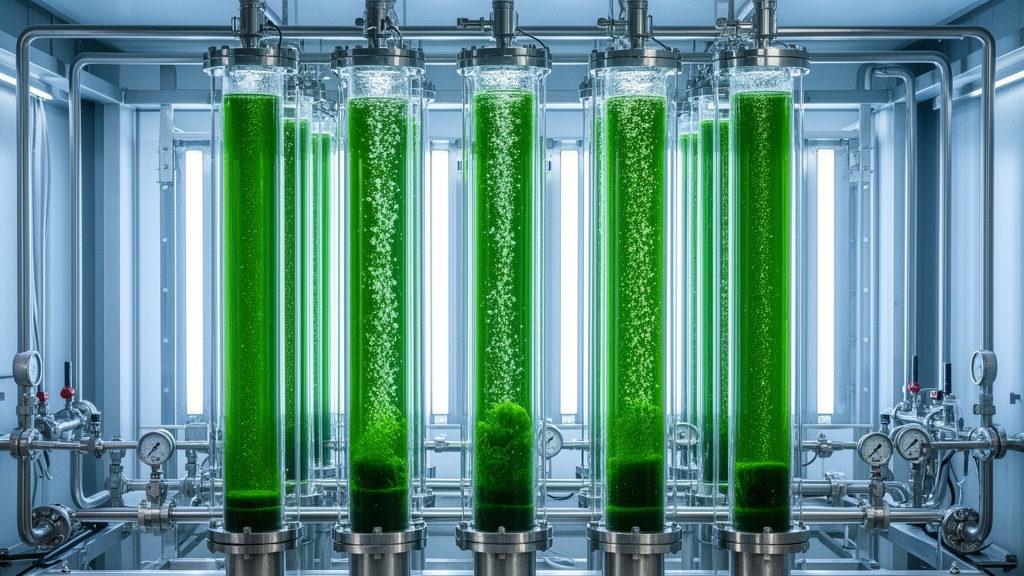
A comprehensive review published in Bioresources and Bioprocessing examines the technical and economic barriers preventing microalgae from becoming a scalable source of high-quality protein. The study, which synthesizes recent laboratory and industrial-scale research, argues that process intensification is essential to bridge the gap between promising lab results and viable commercial production. While microalgae can contain up to 70% protein by dry weight, the current methods for cultivating and extracting these proteins are often too energy-intensive and costly to compete with traditional animal and plant-based sources.
The review highlights that microalgae offer distinct advantages over conventional protein sources, including the ability to grow on non-arable land and utilize wastewater. Certain species, such as Spirulina and Chlorella, provide a nutritionally favorable profile of essential amino acids comparable to meat, eggs, and dairy. However, the commercialization of microalgal-derived proteins remains limited primarily due to the low digestibility of whole-cell microalgae, which is caused by the presence of complex cell wall polysaccharides like cellulose and hemicellulose.
To address these limitations, the authors emphasize the role of genetic modification in enhancing protein productivity. Mutagenesis-based approaches, such as the use of chemical mutagens like ethyl methanesulfonate, have been used to create strains with higher protein content. For instance, a mutant of Chlorella vulgaris developed through random mutagenesis exhibited a 60% increase in protein content compared to its wild-type counterpart, reaching 48.7% of dry weight. These mutations often work by redirecting carbon flux away from pigment and starch biosynthesis toward amino acid production.
Recombinant genetic engineering offers another avenue for intensification, allowing for the targeted modification of specific genes to optimize metabolic pathways. The review notes that more than 50 different types of recombinant proteins have been successfully produced from microalgae, including vaccines and therapeutic antibodies. Chloroplast transformation is particularly advantageous in this context because it allows for higher levels of stable gene expression and is less susceptible to gene silencing than nuclear genome modification, although it may lack certain post-translational modifications like glycosylation.
Operational parameters in bioreactor design play a critical role in determining protein yield. Light spectrum, intensity, and photoperiod significantly influence photosynthetic efficiency and metabolic fluxes. The review details how blue light is often associated with enhanced nitrogen uptake, while red light is linked to higher biomass productivity in several green microalgal species. However, excessive light intensity can lead to photoinhibition and oxidative stress, which reduce cellular viability and protein yield. Optimizing these light conditions is crucial for maximizing the space-time yield of protein production.
Temperature also exerts a substantial impact on microalgal metabolism. The review explores the potential of using cold-adapted microalgal strains as a strategy for process intensification. These strains can maintain metabolic activity at lower temperatures, reducing the energy costs associated with heating large-scale cultivation systems. For example, Chlamydomonas sp. MALINA demonstrated better growth and higher protein productivity at 8 °C compared to 15 °C, suggesting that ambient temperature cultivation could improve the economic feasibility of protein production in colder climates.
Cultivation strategies that integrate different metabolic pathways are also highlighted as promising intensification methods. Sequential heterotrophic-autotrophic cultivation involves growing microalgae in the dark using organic carbon to build biomass, followed by a shift to light-driven photosynthesis to enhance protein accumulation. In one study, this two-stage approach increased the protein content of Chlorella vulgaris from 32% to 52.18% of dry weight after 14 days of autotrophic cultivation. Mixotrophic cultivation, which uses both light and organic carbon simultaneously, is another strategy that can improve energy status and reduce stress-induced growth arrest.
Despite these biological and engineering advances, downstream processing remains a major bottleneck for commercialization. Harvesting and extracting proteins from microalgal biomass account for approximately 20–30% of the total production cost. The complex cell walls of microalgae require energy-intensive disruption methods, such as high-pressure homogenization or bead milling, which can lead to protein denaturation. Emerging techniques like pulsed electric fields and enzymatic hydrolysis offer milder alternatives but are currently limited by lower extraction efficiencies and higher processing times.
Economic feasibility is a central theme of the review, noting that microalgal protein production currently requires higher capital investment and operational costs than conventional agriculture. To become competitive, the industry must adopt biorefinery models that maximize the utilization of biomass by recovering high-value co-products such as pigments and lipids alongside proteins. Techno-economic analyses suggest that integrating these value-added streams could significantly reduce the overall cost of protein production, making microalgae a more viable option for premium food and feed markets.
Regulatory and safety concerns also pose significant challenges to the widespread adoption of microalgal proteins. The approval process for genetically modified microalgae in food and feed applications is rigorous, time-consuming, and expensive, particularly in the European Union and the United States. Concerns regarding allergenicity, toxicity, and the environmental release of genetically modified organisms require detailed risk assessments. Furthermore, public acceptance of genetically modified food products remains variable, with consumer surveys indicating a willingness to consume microalgae-based meat substitutes but also highlighting the need for transparent labeling and clear regulatory frameworks.
The review concludes that while microalgae hold immense potential as a sustainable protein source, their commercialization depends on overcoming technical, economic, and regulatory hurdles. Process intensification strategies, including strain engineering, optimized bioreactor operation, and efficient downstream processing, are necessary to translate laboratory-scale successes into industrial-scale production. Future research should focus on understanding the molecular mechanisms linking cultivation parameters to amino acid biosynthesis and developing robust, cost-effective extraction technologies to ensure the nutritional quality and economic viability of microalgal proteins.
The review situates microalgal protein production within the broader context of global food security and resource conservation, noting that the Food and Agriculture Organization of the United Nations has highlighted the nexus among water, energy, and food systems. In this framework, the biotransformation of atmospheric and aquatic carbon dioxide, along with the utilization of wastewater through oxygenic photosynthesis, offers a pathway for sustainable resource management. Microalgae are described as nutrient biofactories that can grow on non-arable land using wastewater, thereby reducing competition with edible plant and animal protein sources for arable land and freshwater resources. The global protein market was valued at approximately 38 billion USD in 2019 and is projected to grow at a rate of 9.1% from 2020 to 2027. Within this expanding market, the microalgae-based protein segment is expected to rise from approximately 0.6 billion USD in 2018 to 0.84 billion USD by 2023, reflecting increasing consumer interest in alternative protein sources.
Land use efficiency provides a quantitative comparison between microalgae and conventional protein sources. The review cites data indicating that producing one kilogram of protein requires less than 2.5 square meters of space for microalgae, whereas beef requires 144 to 258 square meters, pork requires 47 to 64 square meters, and chicken requires 42 to 52 square meters. Similarly, microalgae provide higher protein yields per unit area compared to terrestrial crops. The reported yield for microalgae is 4 to 15 tons per hectare per year, compared to 0.6 to 1.2 tons per hectare per year for leguminous soybean, 1 to 2 tons per hectare per year for pulses, and 1.1 tons per hectare per year for wheat. These figures underscore the spatial efficiency of algal cultivation, although the review notes that the commercialization of microalgal-derived proteins remains limited due to digestibility issues associated with whole-cell consumption.
Nutritional quality is a critical factor in the adoption of microalgal proteins, with the review detailing the amino acid profiles of various species. Microalgae can provide all 20 essential amino acids, similar to soybean, meat, egg, and milk proteins. In many microalgal species, essential amino acids represent almost half of the total amino acids, meeting the recommended requirements set by the Food and Agriculture Organization. The review lists specific glucogenic amino acids, including proline, serine, aspartic acid, glycine, alanine, ornithine, glutamic acid, lysine, and valine, as well as ketogenic amino acids such as leucine, lysine, tryptophan, phenylalanine, and tyrosine. Free amino acids are also abundant in microalgae and vary among species. For instance, free glutamic acid and aspartic acid are primarily responsible for the umami sensation, while glycine and alanine contribute to sweet flavor. These sensory properties, along with the nutritional profile, make microalgal proteins suitable for vegetarian and vegan diets, provided that the cell wall barriers to digestibility are effectively addressed through processing.
Techno-functional properties of microalgal proteins play a significant role in food processing beyond their nutritional value. These properties, which depend on amino acid composition and extraction techniques, influence surface properties such as solubility, emulsification, and foaming, as well as hydrodynamic properties like gelation, viscosity, and thickening. The review also highlights the bioactive potential of algal protein-derived peptides, which have been reported to exhibit anti-oxidative, anti-inflammatory, anti-aging, anti-hypertensive, anti-tumor, anti-bacterial, anti-viral, osteogenic, neuroprotective, and hepatoprotective activities. These functional attributes suggest that microalgal proteins could serve as multifunctional ingredients in food formulations, offering both nutritional and health-promoting benefits. However, the realization of these benefits in commercial products depends on the ability to extract and purify these proteins while preserving their structural integrity and biological activity.
The regulatory landscape for microalgal proteins is complex, with approval processes varying significantly across different jurisdictions. In the European Union and the United States, genetically modified microalgae intended for food and feed applications are subject to rigorous risk assessments under genetically modified organism legislations. These assessments typically evaluate potential impacts on human and animal health, allergenicity, toxicity, environmental safety, and ecological persistence. The review notes that the approval process can be scientifically demanding, time-consuming, and expensive, which may dampen industrial investment. A primary regulatory concern is the potential exposure of genetically modified microalgae to ecosystems, particularly when cultivated in open systems where accidental discharge is possible. Authorities are concerned about the survivability, competitiveness, and ecological behavior of these organisms, as well as the possibility of horizontal gene transfer to native microbial communities. The diversity of genetic engineering techniques, including modern genome-editing tools like CRISPR/Cas systems, adds further complexity to regulatory assessments, as uncertainty remains regarding how genome-edited microalgae should be classified compared to conventional transgenic organisms.
Consumer acceptance is another critical factor for the commercialization of microalgal proteins, with public discernment playing a significant role in market adoption. The review cites a consumer survey involving 940 consumers from the Netherlands, Germany, and France, which found that consumers have a preference and willingness to consume microalgae-based products as substitutes for meat. However, concerns about food safety and the transparency of labeling may influence market adoption, particularly for products produced using genetic engineering technologies. Effective communication of scientific evidence, transparent risk assessment procedures, and clear regulatory frameworks are identified as prerequisites for improving consumer acceptance. The review emphasizes that there is currently no information about commercially available food products produced by genetically modified microalgae, highlighting the gap between laboratory research and market availability. Bridging this gap requires coordinated efforts among scientists, industry stakeholders, and policymakers to address technical, economic, and regulatory challenges simultaneously.
Subject of Research: Process intensification for the protein production from microalgae: a comprehensive review
Article Title: Process intensification for the protein production from microalgae: a comprehensive review
Article References: Nath, A., Ahmad, A. S., Enkhbold, M., Elzhraa, F., & Kiskó, G. (2026). Process intensification for the protein production from microalgae: a comprehensive review. Bioresources and Bioprocessing, 13(1), Article 126. https://doi.org/10.1186/s40643-026-01118-0
Image Credits: AI Generated
DOI: 10.1186/s40643-026-01118-0
Keywords: Process, intensification, protein, production, microalgae, comprehensive, review, scientific research
Cite Scienmag News
Gregory Coleman. (November 11, 2026). Microalgae Protein Production Faces Process Intensification Hurdles. Scienmag. https://scienmag.com/microalgae-protein-production-faces-process-intensification-hurdles/
Gregory Coleman. "Microalgae Protein Production Faces Process Intensification Hurdles." Scienmag, 11 November 2026, https://scienmag.com/microalgae-protein-production-faces-process-intensification-hurdles/. Accessed 11 November 2026.
Gregory Coleman. "Microalgae Protein Production Faces Process Intensification Hurdles." Scienmag. November 11, 2026. https://scienmag.com/microalgae-protein-production-faces-process-intensification-hurdles/