


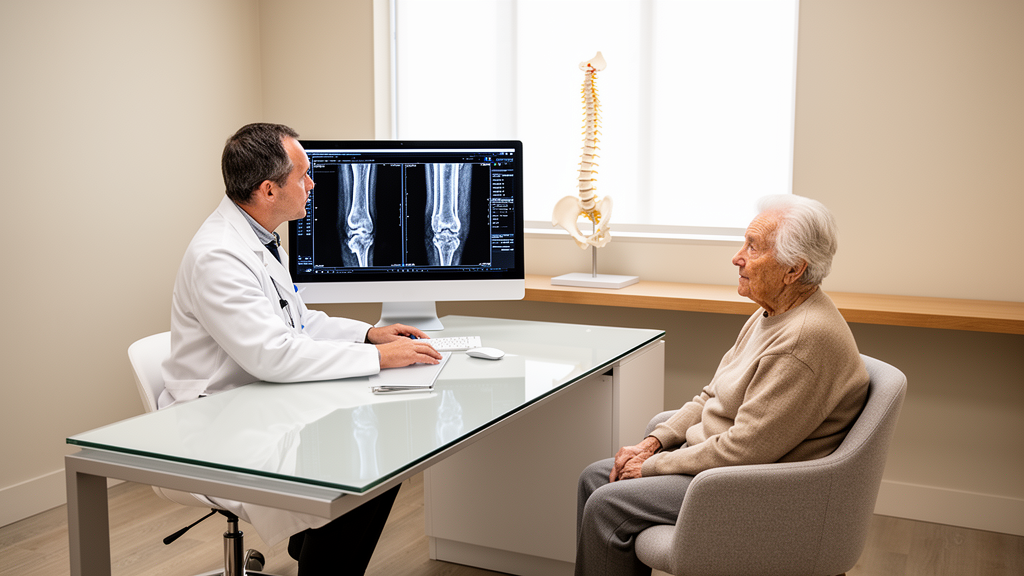
An observational study evaluating a structured healthcare network designed to coordinate osteoporosis care between primary care providers and hospital specialists has demonstrated that electronic integration alone does not prevent substantial patient attrition along the clinical care cascade. Conducted within Local Health Authority Umbria 1 in central Italy, the retrospective investigation examined operational performance, diagnostic yield, and patient engagement among 1,631 individuals who underwent bone mineral density testing via dual-energy X-ray absorptiometry during the 2021 calendar year. The coordinated pathway, designated the Health Bone Network, was established to address longstanding discontinuities in routine skeletal healthcare by standardizing diagnostic reporting and structuring access to specialist consultations. However, tracking data revealed that only 60.1 percent of evaluated patients accessed their digital specialist reports through an online administrative portal, while merely 38.2 percent of individuals flagged with explicit clinical recommendations for specialist evaluation attended their scheduled appointments within a twelve-month follow-up window.
The study cohort comprised 1,631 consecutive outpatients referred by general practitioners to a dedicated screening facility located at the Hospital of Città della Pieve, with diagnostic interpretation conducted by bone specialists at the University Hospital of Perugia. The participants presented with a mean age of 64.6 years, and 92.5 percent were female, reflecting routine screening patterns in an Italian regional population where over a quarter of residents are older than 65 years. Among female participants, 93.8 percent were postmenopausal, including 241 women who experienced early menopause before age 45. To determine densitometric disease burden according to standard diagnostic criteria, investigators excluded 151 females, comprising 94 premenopausal individuals and 57 postmenopausal women with unusable baseline scans, along with 12 men younger than 50 years. Within the resulting analytical cohort of 1,468 participants, standard T-score thresholds categorized 23.7 percent as having normal bone mineral density, 48.0 percent with osteopenia, and 28.3 percent with densitometric osteoporosis.
Diagnostic assessment involved automated dual-energy X-ray absorptiometry scans of the lumbar spine and dual femoral regions using a standardized device, coupled with a binary clinical history questionnaire administered by radiologic technicians. Mean T-scores across the evaluated cohort were recorded at minus 2.2 standard deviations for the lumbar spine and minus 1.8 standard deviations for the femoral neck. Beyond densitometric measurements, questionnaire data identified extensive baseline clinical vulnerability across the screening sample. Thyroid disorders were documented in 18.7 percent of participants, while diabetes mellitus was reported in 8.0 percent and connective tissue diseases in 5.8 percent. Furthermore, 12.5 percent of individuals were undergoing therapies associated with cancer treatment-induced bone loss, such as aromatase inhibitors or androgen deprivation therapy, and 4.8 percent reported systemic glucocorticoid use. In addition, 55.1 percent of participants reported active vitamin D supplementation, with a mean monthly intake of 41,000 international units among those documenting exact dosages.
To determine factors independently associated with a densitometric diagnosis of osteoporosis, researchers performed a multivariable binary logistic regression using forward stepwise variable selection on 1,464 complete-case participants, excluding four individuals due to incomplete observations or singular demographic representation. The resulting model demonstrated adequate calibration, with a Hosmer-Lemeshow goodness-of-fit test statistic of 6.433 and an area under the receiver operating characteristic curve of 0.679. In this adjusted analysis, female sex was associated with nearly 2.5-fold higher odds of osteoporosis compared to male sex, yielding an adjusted odds ratio of 2.49 with a 95 percent confidence interval spanning 1.44 to 4.33. Advanced age demonstrated a progressive and statistically significant association with disease classification relative to individuals under 60 years of age, rising from an adjusted odds ratio of 2.31 for participants aged 60 to 69 years to an adjusted odds ratio of 3.91 for those aged 80 to 89 years.
Personal history of prior fragility fractures also emerged as a robust independent correlate of densitometric disease in the multivariable model, conferring an adjusted odds ratio of 2.21, with a 95 percent confidence interval of 1.65 to 2.96. Active vitamin D supplementation similarly exhibited a positive association with densitometric osteoporosis, recording an adjusted odds ratio of 1.59 and a 95 percent confidence interval between 1.24 and 2.04. The authors emphasized that this statistical relationship does not represent an etiological or causal risk factor, but rather reflects confounding by indication and reverse causation within a cross-sectional dataset. Because vitamin D constitutes a foundational component of routine management under Italian prescribing regulations, clinicians preferentially initiated or maintained supplementation among individuals who had already been identified as presenting with low bone mass, historical fractures, or heightened overall clinical susceptibility prior to undergoing formal network bone mineral density assessments.
Conversely, diabetes mellitus exhibited a statistically significant inverse association with densitometric osteoporosis in the multivariable analysis, yielding an adjusted odds ratio of 0.56 with a 95 percent confidence interval of 0.35 to 0.91. This finding indicates that individuals with diabetes experienced a 44 percent reduction in the odds of being classified as osteoporotic based strictly on dual-energy X-ray absorptiometry T-scores. The authors contextualized this observation within the documented densitometric paradox of metabolic bone disease, wherein individuals with diabetes frequently preserve or exhibit elevated bone mineral density despite suffering structural microarchitectural decay and elevated skeletal fragility. In univariate comparisons, other clinical comorbidities including chronic obstructive pulmonary disease or asthma, neurological disorders, and prior organ transplantation were significantly associated with osteoporosis, whereas exposure to cancer treatment-induced bone loss therapies showed an inverse relationship with densitometric bone loss driven by proactive early referral protocols.
A critical observation within the screening cohort was the discordance between densitometric measurements and actual historical skeletal fracture events. A prior fragility fracture was documented in 258 participants, yet 144 of these fractured individuals presented with bone mineral density values falling entirely outside the diagnostic threshold for osteoporosis, including 80 individuals who sustained vertebral or femoral fractures. In a dedicated secondary multivariable logistic regression restricted to the 258 fractured patients, advancing age remained positively associated with densitometric osteoporosis, yielding an adjusted odds ratio of 1.044 per year. Conversely, active cancer treatment-induced bone loss therapy demonstrated a pronounced inverse association with an osteoporotic T-score, yielding an adjusted odds ratio of 0.152. This relationship highlights that oncological endocrine deprivation significantly compromises skeletal integrity and precipitates fractures before patients register substantial bone mineral density reductions, reinforcing that densitometric T-scores alone cannot capture total clinical fragility.
Analysis of post-assessment documentation demonstrated that bone specialists formulated stratified pharmacological recommendations within reports, advising bisphosphonate initiation in 103 individuals and denosumab initiation in 16 patients, alongside recommendations for anabolic teriparatide initiation in six individuals. However, the investigators explicitly noted that recorded therapeutic parameters represented advisory specialist recommendations rather than pharmacy-confirmed medication dispensing or verified patient adherence. A longitudinal subset of participants underwent repeat evaluations, including 95 individuals evaluated in 2022 and 298 individuals in 2023. Within the 2022 follow-up group, mean lumbar and femoral T-scores remained stable at minus 2.3 and minus 1.7 standard deviations, respectively, while two incident cases of osteoporosis accompanied by new fragility fractures were identified. In the 2023 reassessment group, nine additional patients reported new fragility fractures, prompting updated specialist management notes recommending antiresorptive initiation or treatment switching.
The central operational finding remains the steep drop-off across the care pathway, wherein 39.9 percent of all assessed outpatients failed to download their digital reports and 61.8 percent of those referred for specialist care did not attend consultations within 12 months. The authors situated these attrition rates alongside established chronic care barriers, including low public perception of osteoporosis severity, historical undertreatment gaps, and exaggerated public anxiety regarding rare antiresorptive adverse effects such as osteonecrosis of the jaw or atypical femoral fractures. Operationally, the Health Bone Network must be delineated from the local hospital-based Fracture Liaison Service, which operates exclusively as an inpatient secondary prevention pathway for acute low-trauma hip fractures. In contrast, the network serves community-dwelling outpatients primarily in a primary prevention context, capturing remote non-acute fractures without direct individual-level data linkage between the separate administrative screening and inpatient registry systems.
The authors acknowledged substantial methodological limitations inherent to the study design, foremost being the absence of a pre-implementation historical control cohort to formally evaluate the comparative effectiveness of the network model against prior uncoordinated care. Additional constraints include the lack of longitudinal pharmacy dispensing databases to confirm treatment persistence, the restriction of engagement metrics to binary administrative indicators that omitted qualitative reasons for missed appointments, and the unavailability of biochemical markers such as serum 25-hydroxyvitamin D concentrations. Furthermore, standardized multi-parametric fracture risk algorithms such as FRAX or DeFRA could not be calculated retrospectively because essential parameters, including parental hip fracture history and body mass index, were unrecorded in the initial software architecture. Ultimately, the investigators concluded that while digital networks establish vital structural foundations, passive data availability cannot ensure clinical continuity, underscoring the necessity of proactive patient navigation strategies.
Subject of Research: Operational implementation and care pathway continuity in a structured osteoporosis management network
Article Title: Patient engagement and care pathway continuity in structured osteoporosis management: real-world evidence from routine practice
Article References: De Fano, M., Cesarotti, M., Valentini, V., Malara, M., Rucco, S., Manco, M., Fruttini, D., Bartoloni, E., Gerli, R., & Falorni, A. (2026). Patient engagement and care pathway continuity in structured osteoporosis management: real-world evidence from routine practice. Frontiers in Endocrinology, 17, Article 1953097. https://doi.org/10.3389/fendo.2026.1953097
Image Credits: AI Generated
DOI: 10.3389/fendo.2026.1953097
Keywords: osteoporosis, bone mineral density, dual-energy X-ray absorptiometry, health bone network, care pathway continuity, patient engagement, fragility fractures, primary care integration, specialist consultation, diabetes mellitus, densitometric paradox, vitamin D supplementation, cancer treatment-induced bone loss, bisphosphonates, digital health reporting, clinical epidemiology, skeletal fragility
Cite Scienmag News
Ophelia Keating. (November 11, 2026). Structured Bone Care Pathway Shows High Attrition Despite Integrated Digital Reporting. Scienmag. https://scienmag.com/structured-bone-care-pathway-shows-high-attrition-despite-integrated-digital-reporting/
Ophelia Keating. "Structured Bone Care Pathway Shows High Attrition Despite Integrated Digital Reporting." Scienmag, 11 November 2026, https://scienmag.com/structured-bone-care-pathway-shows-high-attrition-despite-integrated-digital-reporting/. Accessed 15 November 2026.
Ophelia Keating. "Structured Bone Care Pathway Shows High Attrition Despite Integrated Digital Reporting." Scienmag. November 11, 2026. https://scienmag.com/structured-bone-care-pathway-shows-high-attrition-despite-integrated-digital-reporting/




