


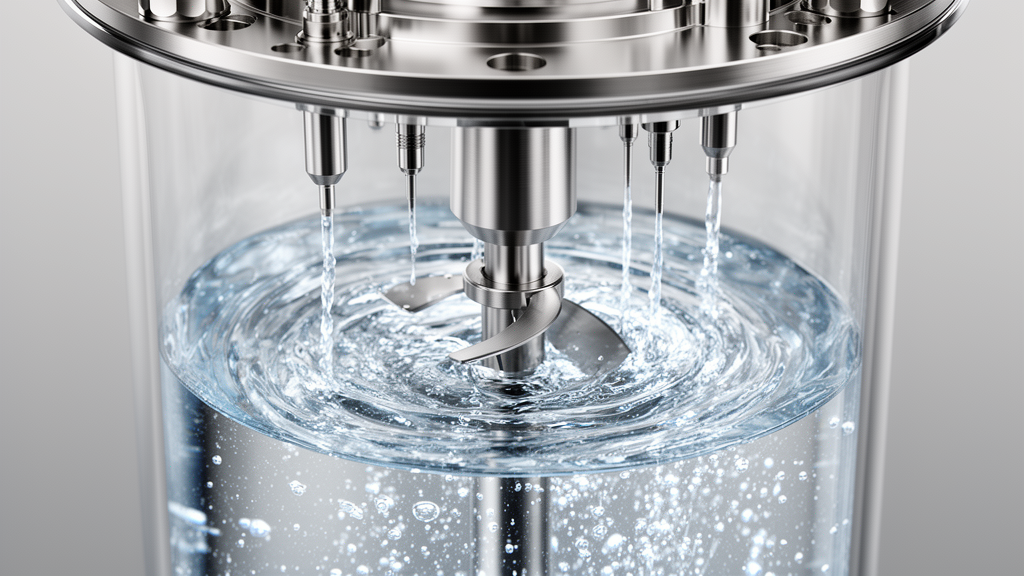
An interdisciplinary engineering team at Graz University of Technology has introduced an open-source computational toolbox named CLARA that speeds up industrial bioreactor simulations by up to 10,000 times while preserving physical consistency. Detailed in the journal Chemical Engineering Science, the software uses unsupervised machine learning algorithms to automate the generation of reduced order models for complex fluid systems. The framework was designed and financed through the university’s DigiBioTech lead project to address long-standing computational bottlenecks in scaling up and regulating large bioprocess facilities.
Industrial bioprocess control represents one of the most challenging operating domains in chemical engineering. In massive industrial vessels used for fermentation, biomass energy conversion, and polymer manufacturing, localized variations in dissolved oxygen concentration, pH levels, and temperature can determine the success or complete failure of an entire production batch. Historically, engineers have relied on computational fluid dynamics to calculate these intricate transport processes and biochemical reactions. While conventional fluid dynamics simulations yield exceptionally detailed and accurate flow depictions, they require immense computing power, often taking several months to model physical operations that unfold over mere days or weeks in an operational plant.
CLARA, which stands for CLustering AlgoRithm Austria, eliminates this computational delay by automatically grouping massive fluid datasets into compact compartment architectures. During the workflow, unsupervised clustering algorithms evaluate millions of spatial data points extracted from relatively short baseline computational fluid dynamics runs. The software systematically aggregates these points into between five and fifty interconnected zones, or compartments, converting an otherwise unmanageable continuous domain into a discrete reduced order network that can be solved with fractional computing overhead.
Prior to the introduction of this automated methodology, constructing compartment models required painstaking manual calibration and specialized domain expertise. CLARA replaces heuristic segmentations with mathematically rigorous clustering capable of tracking complex multiphase environments where solid, liquid, and gaseous streams mix simultaneously. By dramatically simplifying the structural complexity of the underlying hydrodynamic mesh, the tool allows researchers to calculate detailed mass transport and reaction kinetics efficiently without discarding critical flow information.
Maintaining fundamental transport phenomena was a core objective during the development of the clustering framework. Furthermore, the compartment formulation realistically accounts for interfacial species exchange between dispersed gas phases and the surrounding liquid, an operational factor that dictates microbial oxygenation and nutrient delivery.
To overcome the structural errors that frequently plague simplified engineering models, the researchers placed specific emphasis on absolute physical validity. Standard reduced order approximations often exhibit mass balance drift, particularly when simulating biological growth phases where expanding cell populations demand sharply escalating amounts of dissolved gases and liquid nutrients. In response, the team engineered specialized optimization algorithms within CLARA that enforce strict, constant conservation of mass across every compartment interface. The researchers confirmed this accuracy through initial verification against analytical mathematical benchmarks and rigorous comparative validations using full-scale fluid dynamics datasets.
Led by Stefan Radl from the Institute of Process and Particle Engineering at Graz University of Technology alongside co-authors Michael Mitterlindner, Maximilian Graber, Regina Kratzer, and Markus Reichhartinger, the investigators have published the complete toolbox in a public open-source repository. Beyond standard fermentation systems, the authors anticipate immediate utility in carbon dioxide capture reactors, battery cell manufacturing equipment, and dynamic digital twins engineered to monitor and optimize industrial chemical processes in real time. The underlying technology has already entered practical engineering deployment within doctoral research at the COMET center BEST and through commercial applications at the university spin-off SimVantage.
Subject of Research: Automated compartment modeling and simulation acceleration for industrial multiphase bioreactors
Article Title: AI tool CLARA accelerates the development of bioreactors
Article References: AI tool CLARA accelerates the development of bioreactors. Original publication (Bibliographic details unavailable.)
Image Credits: AI Generated
DOI: Not provided
Keywords: CLARA toolbox, bioreactor simulation, reduced order models, computational fluid dynamics, unsupervised machine learning, compartment modeling, multiphase flow, mass conservation, Graz University of Technology, DigiBioTech, process engineering, industrial fermentation, digital twins, Chemical Engineering Science, bioprocess control, gas-liquid mass transfer, Stefan Radl, SimVantage
Cite Scienmag News
Teresa Odom. (November 11, 2026). Machine Learning Toolbox Accelerates Multiphase Bioreactor Simulations Ten Thousandfold. Scienmag. https://scienmag.com/machine-learning-toolbox-accelerates-multiphase-bioreactor-simulations-ten-thousandfold/
Teresa Odom. "Machine Learning Toolbox Accelerates Multiphase Bioreactor Simulations Ten Thousandfold." Scienmag, 11 November 2026, https://scienmag.com/machine-learning-toolbox-accelerates-multiphase-bioreactor-simulations-ten-thousandfold/. Accessed 11 November 2026.
Teresa Odom. "Machine Learning Toolbox Accelerates Multiphase Bioreactor Simulations Ten Thousandfold." Scienmag. November 11, 2026. https://scienmag.com/machine-learning-toolbox-accelerates-multiphase-bioreactor-simulations-ten-thousandfold/




