


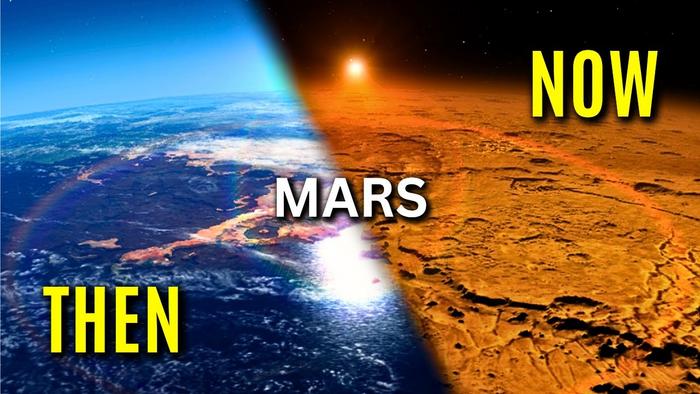
Recent advancements in the understanding of Mars have ignited fascination within the scientific community, particularly surrounding the quest to determine the presence of liquid water beneath the Martian surface. A recent collaborative study conducted by a multidisciplinary team of scientists suggests that substantial amounts of liquid water may exist in the upper crust of Mars, raising vital questions regarding past and present habitability on the planet. This research not only sheds light on the planet’s geological history but also propels forward the discussions concerning the potential for life on Mars and human exploration of this enigmatic world.
The research team comprised experts from renowned institutions, including the Institute of Geology and Geophysics at the Chinese Academy of Sciences, The Australian National University, and the University of Milano-Bicocca. Collaborators such as Dr. Weijia Sun, Dr. Hrvoje Tkalčić, Dr. Marco G. Malusà, and Dr. Yongxin Pan have deftly combined their expertise to examine the Martian geological constructs and their potential implications. Their findings underscore a critical re-evaluation of the historical climatic conditions that prevailed on Mars, especially during its Noachian and Hesperian periods, when liquid water is believed to have been plentiful.
The existence of liquid water on Mars dates back to around 3 billion years ago, before the planet entered a phase characterized by extreme aridity and cold temperatures. Understanding how liquid water transitioned to a state of scarcity provides essential context for the search for potential microbial life and the conditions that would enable human settlement on Mars in the future. According to Dr. Tkalčić, the enigmas surrounding water on Mars are deeply interwoven with profound questions about both extraterrestrial life and the prospects for humanity’s long-term future on the Red Planet.
Employing cutting-edge seismic analysis, the researchers delved into seismic waveforms triggered by significant meteorite impacts and marsquakes. NASA’s InSight seismometer has recorded seismic activity on Mars, and the team scrutinized these measurements to analyze subsurface conditions at varying depths. Their seismic inversion resulted in detecting a notable low shear-wave velocity anomaly at depths estimated to range from 5.4 to 8 kilometers. This finding not only points towards the possibility of liquid water but also highlights the complexity of Mars’ geological processes.
Estimations provided by the researchers indicate the presence of substantial water content equivalent to approximately 520 to 780 meters of a Global Equivalent Layer. This means that, if the pores in the Martian crust are fully occupied by water, the total volume of water could cover the entire surface of Mars to a significant depth. However, the researchers emphasize that this estimation relies heavily on localized geophysical measurements beneath the InSight lander, neglecting the potential for lateral variation across the Martian landscape. Such complexities introduce significant challenges when extrapolating these findings to the planetary scale.
Additionally, the research acknowledges the possibility of primordial liquid water, which may have originated during the planet’s formation and could still be trapped within the upper crust. The presence of such ancient water would have profound implications for understanding Mars’ geological history and the evolutionary persistence of water on the planet. Verification of these intriguing insights may depend on future missions equipped with advanced seismometers capable of conducting in-depth geological surveys.
Crucially, this study contributes to our understanding of the Martian water cycle and its implications for habitability both in the past and present. The discovery of significant volumes of water in the Martian crust could reshape current hypotheses regarding the planet’s potential to support life forms. As scientists develop new exploratory missions, these findings will serve as a foundational basis for discussions about where to land, how to conduct studies, and what types of technologies will be essential in the quest to uncover the mysteries of Mars.
Moreover, the implications of these findings extend beyond scientific inquiry into the realms of human exploration. If liquid water does reside beneath the Martian surface as suggested, understanding its distribution and characteristics will be crucial for future manned missions planning to establish a sustainable human presence. The need for reliable sources of water on Mars cannot be overstated, as it is fundamental for life support systems, food production, and even providing hydrogen for rocket fuel.
In conclusion, this groundbreaking study shines a light on the complexities of Mars’ geological history and current state. It presents compelling evidence of liquid water possibly residing beneath the surface and encourages further exploration of the Martian subsurface. The integration of geophysical techniques and collaborative research among top scientists creates an optimistic outlook for Mars exploration, suggesting that the planet may still harbor secrets waiting to be uncovered, and thereby adds to our understanding of our neighboring world.
Keywords
Mars, liquid water, geology, habitability, InSight, seismic analysis, Mars exploration, extraterrestrial life, geophysics.
Cite Scienmag News
Violet Maxwell. (May 8, 2025). Unveiling Martian Mysteries: Seismic Analysis Indicates Deep Liquid Water Beneath the Surface. Scienmag. https://scienmag.com/unveiling-martian-mysteries-seismic-analysis-indicates-deep-liquid-water-beneath-the-surface/
Violet Maxwell. "Unveiling Martian Mysteries: Seismic Analysis Indicates Deep Liquid Water Beneath the Surface." Scienmag, 8 May 2025, https://scienmag.com/unveiling-martian-mysteries-seismic-analysis-indicates-deep-liquid-water-beneath-the-surface/. Accessed 4 September 2026.
Violet Maxwell. "Unveiling Martian Mysteries: Seismic Analysis Indicates Deep Liquid Water Beneath the Surface." Scienmag. May 8, 2025. https://scienmag.com/unveiling-martian-mysteries-seismic-analysis-indicates-deep-liquid-water-beneath-the-surface/


