

Sunday, November 15, 2026
Science
No Result
View All Result
  • Login
  • HOME
  • SCIENCE NEWS
  • CONTACT US
  • HOME
  • SCIENCE NEWS
  • CONTACT US
No Result
View All Result
Scienmag
No Result
View All Result
Home Science News Cancer

Simulation Beats Mobile Apps for Tracheal Suctioning Skills

November 10, 2026
in Cancer, Medicine
Nathaniel Bowman
By Nathaniel Bowman Scienmag Editorial Profile - Precision Oncology
Reading Time: 3 mins read
0
Simulation Beats Mobile Apps for Tracheal Suctioning Skills

Simulation Beats Mobile Apps for Tracheal Suctioning Skills

65
SHARES
587
VIEWS
Share on FacebookShare on Twitter
ADVERTISEMENT

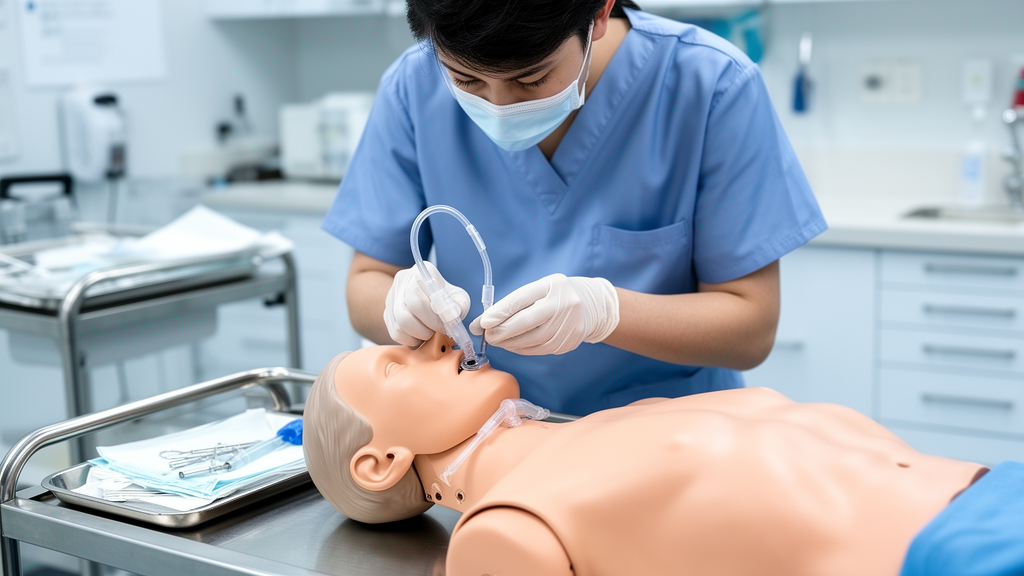
A randomized controlled study published in Supportive Care in Cancer found that simulation-based training was the most effective method for teaching tracheal suctioning skills to caregivers of patients with tracheostomies. The research, conducted by Yeliz Şapulu Alakan, Neriman Akansel, and Olgun Deniz, evaluated the impact of two distinct educational approaches—a mobile application and simulation-based training—against a control group receiving routine bedside instruction. The study aimed to enhance the supportive care process for individuals who have undergone tracheostomy due to head and neck cancers or various other clinical conditions, focusing specifically on the knowledge and practical skills required for safe tracheal suctioning.

The experimental study employed a pretest–posttest control group design to assess the efficacy of these teaching methods. A total of 77 primary caregivers were randomly assigned to one of three groups using block randomization during the study period. The participants were divided into a simulation group, a mobile application–based training group, and a control group. Although 11 participants subsequently withdrew from the study, 66 caregivers, with 22 individuals per group, completed the study and were included in the final analysis. The trial was registered with ClinicalTrials.gov under the identifier NCT05434442, with a registration date of November 30, 2023.

Data collection utilized a comprehensive set of instruments, including the Introductory Information Form, Tracheostomy Suctioning Knowledge Evaluation Form, Tracheostomy Suctioning Skill Evaluation Form, Evaluation Form of the Training Provided, and Result Evaluation Form. These tools allowed the researchers to measure both theoretical knowledge and practical competency at multiple time points. Data were collected at three distinct intervals: pre-intervention, immediately after the training session, and on the 30th day following the training. This longitudinal approach enabled the researchers to assess not only immediate learning gains but also the retention of skills and knowledge over a one-month period.

The intervention groups received specialized training tailored to their assigned method. In contrast, the mobile group utilized a developed application named ‘Trakaspirasyon’ to learn the procedure. The control group, serving as the baseline for comparison, received routine bedside training directly from healthcare professionals.

The results indicated that all assessment scores differed significantly between the three groups, with a p-value of 0.000. The simulation group achieved the highest scores in both knowledge and skill evaluations, followed by the mobile application group.

Furthermore, the study observed that improvements in knowledge and skills were greater at the 30-day follow-up compared to the immediate post-training assessment.

The authors concluded that both simulation-based and mobile application–based training significantly improved caregivers’ knowledge and skills in tracheal suctioning. While simulation was identified as the most effective method, the ‘Trakaspirasyon’ mobile application was noted as a scalable alternative.

Subject of Research: Comparison of simulation and mobile application training for caregiver tracheal suctioning skills

Article Title: Efficiency of different approaches in teaching tracheal suctioning procedure to caregivers of tracheostomy patients: randomized controlled study

Article References: Şapulu Alakan, Y., Akansel, N., & Deniz, O. (2026). Efficiency of different approaches in teaching tracheal suctioning procedure to caregivers of tracheostomy patients: randomized controlled study. Supportive Care in Cancer, 34(11), Article 1180. https://doi.org/10.1007/s00520-026-11424-0

Image Credits: AI Generated

DOI: 10.1007/s00520-026-11424-0

Keywords: tracheostomy, caregiver education, simulation training, mobile health, randomized controlled trial, supportive care, nursing education, home care, Efficiency, different, approaches, teaching

Cite Scienmag News

Nathaniel Bowman. (November 10, 2026). Simulation Beats Mobile Apps for Tracheal Suctioning Skills. Scienmag. https://scienmag.com/simulation-beats-mobile-apps-for-tracheal-suctioning-skills/

Nathaniel Bowman. "Simulation Beats Mobile Apps for Tracheal Suctioning Skills." Scienmag, 10 November 2026, https://scienmag.com/simulation-beats-mobile-apps-for-tracheal-suctioning-skills/. Accessed 15 November 2026.

Nathaniel Bowman. "Simulation Beats Mobile Apps for Tracheal Suctioning Skills." Scienmag. November 10, 2026. https://scienmag.com/simulation-beats-mobile-apps-for-tracheal-suctioning-skills/

Tags: approachescaregiver educationdifferentefficiencyhome caremobile healthNursing educationRandomized Controlled TrialSimulation trainingsupportive careteachingtracheostomy
Share26Tweet16
Previous Post

Over Twelve Percent of Georgian Metformin Patients Have Vitamin B12 Deficiency

Next Post

New B-Spline Technique Solves Fractional Volterra Equations

Related Posts

Antioxidant Compound Rescues Calcium Signalling in Diseased Human Heart Valve Cells
Medicine

Antioxidant Compound Rescues Calcium Signalling in Diseased Human Heart Valve Cells

November 15, 2026
Review Maps Divergent YAP1 and Hippo Signaling Pathways Across Asthma Models
Medicine

Review Maps Divergent YAP1 and Hippo Signaling Pathways Across Asthma Models

November 15, 2026
Pelvic Bone Marrow Sparing VMAT Reduces Chemoradiotherapy Toxicity in Cervical Cancer
Cancer

Pelvic Bone Marrow Sparing VMAT Reduces Chemoradiotherapy Toxicity in Cervical Cancer

November 15, 2026
HIV Antiretroviral Therapy Linked to Elevated TSH Levels in Western Kenya Study
Medicine

HIV Antiretroviral Therapy Linked to Elevated TSH Levels in Western Kenya Study

November 15, 2026
Retrospective Study Evaluates Diagnostic Indexes and Clinical Features in Thirty-Three Osteomalacia Cases
Medicine

Retrospective Study Evaluates Diagnostic Indexes and Clinical Features in Thirty-Three Osteomalacia Cases

November 15, 2026
Midwest Study Links Specific Agricultural Pesticides to Elevated Cancer Prevalence
Medicine

Midwest Study Links Specific Agricultural Pesticides to Elevated Cancer Prevalence

November 15, 2026
Next Post
New B-Spline Technique Solves Fractional Volterra Equations

New B-Spline Technique Solves Fractional Volterra Equations

  • Mothers who receive childcare support from maternal grandparents show more optimized

    Mothers who receive childcare support from maternal grandparents show more parental warmth, finds NTU Singapore study

    27656 shares
    Share 11059 Tweet 6912
  • University of Seville Breaks 120-Year-Old Mystery, Revises a Key Einstein Concept

    1061 shares
    Share 424 Tweet 265
  • Bee body mass, pathogens and local climate influence heat tolerance

    682 shares
    Share 273 Tweet 171
  • Researchers record first-ever images and data of a shark experiencing a boat strike

    546 shares
    Share 218 Tweet 137
  • Groundbreaking Clinical Trial Reveals Lubiprostone Enhances Kidney Function

    531 shares
    Share 212 Tweet 133
Science

Embark on a thrilling journey of discovery with Scienmag.com—your ultimate source for cutting-edge breakthroughs. Immerse yourself in a world where curiosity knows no limits and tomorrow’s possibilities become today’s reality!

RECENT NEWS

  • Antioxidant Compound Rescues Calcium Signalling in Diseased Human Heart Valve Cells
  • Community Watersheds Retain More Resilient Soil Carbon Than Plantations in Manipur
  • Review Maps Divergent YAP1 and Hippo Signaling Pathways Across Asthma Models
  • Ultraviolet Nanosecond Lasers Enable Precision Circuit Prototyping on Recyclable Electronics Substrates

Categories

  • Agriculture
  • Anthropology
  • Archaeology
  • Athmospheric
  • Biology
  • Biotechnology
  • Blog
  • Bussines
  • Cancer
  • Chemistry
  • Climate
  • Earth Science
  • Editorial Policy
  • Marine
  • Mathematics
  • Medicine
  • Pediatry
  • Policy
  • Psychology & Psychiatry
  • Science Education
  • Science News
  • Social Science
  • Space
  • Technology and Engineering

Subscribe to Blog via Email

Enter your email address to subscribe to this blog and receive notifications of new posts by email.

Join 5,150 other subscribers

© 2026 Scienmag - Science Magazine

Welcome Back!

Login to your account below

Forgotten Password?

Retrieve your password

Please enter your username or email address to reset your password.

Log In
No Result
View All Result
  • HOME
  • SCIENCE NEWS
  • CONTACT US

© 2026 Scienmag - Science Magazine

Discover more from Science

Subscribe now to keep reading and get access to the full archive.

Continue reading

