


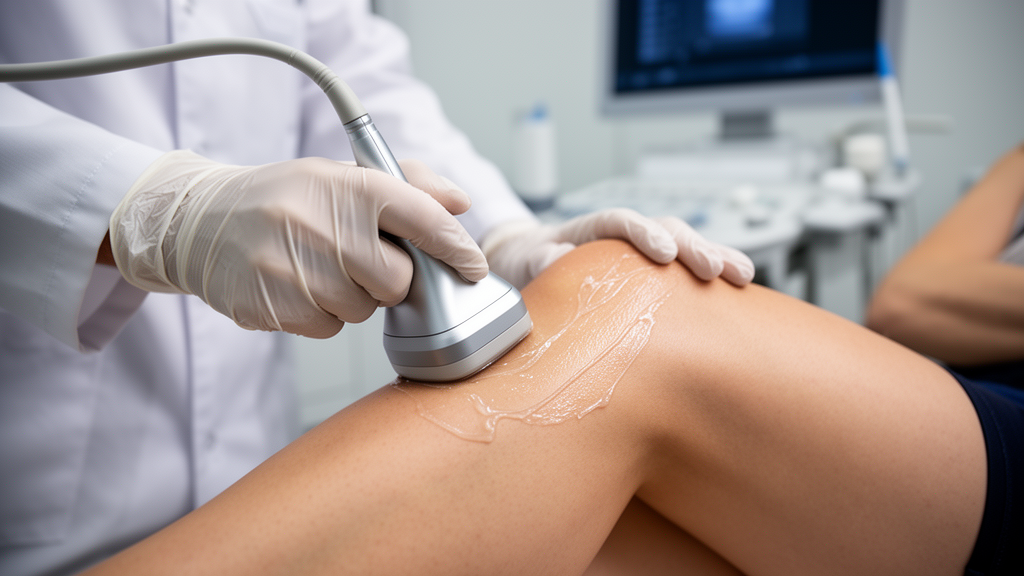
The study, published in BMC Medical Imaging, indicates that this imaging technique offers a reliable method for assessing ligament properties before surgery.
The investigation focused on the clinical value of STE in the quantitative assessment of MCL stiffness. The research team enrolled 36 patients diagnosed with varus-type knee osteoarthritis who were scheduled for primary unilateral total knee arthroplasty. Patients were enrolled between May 2025 and May 2026.
To establish a baseline for comparison, the researchers recruited 30 healthy volunteers who were matched to the patient group by age and sex. All subjects underwent STE to measure the shear wave velocity at the mid-substance of the MCL.
Before analyzing the differences between groups, the study evaluated the reliability of the STE measurements. The researchers calculated the intraclass correlation coefficient (ICC) to assess both intra-observer and inter-observer repeatability. The intra-observer ICC values for the two sonographers involved were 0.80 and 0.85, respectively, indicating moderate-to-good consistency when the same operator repeated the measurement.
The primary comparison revealed that patients with varus-type knee osteoarthritis exhibited significantly higher MCL shear wave velocity than the healthy volunteers. The mean SWV in the patient group was 4.62 meters per second, with a standard deviation of 0.86, whereas the control group averaged 3.21 meters per second, with a standard deviation of 0.49. This difference was statistically significant, with a P-value of less than 0.01.
To determine the diagnostic utility of these measurements, the team performed receiver operating characteristic (ROC) curve analysis. The area under the curve (AUC) for SWV in diagnosing MCL contracture was 0.938, with a 95% confidence interval ranging from 0.886 to 0.991. The analysis also identified an optimal diagnostic cutoff value of 3.65 meters per second, determined using the maximum Youden index.
The sensitivity of the test was 94.4%, meaning it correctly identified nearly all patients with MCL contracture. The specificity was 80.0%, indicating that the test correctly identified the majority of healthy ligaments as non-contracted. The Youden index was 0.74.
The study concludes that patients with varus-type knee osteoarthritis have significantly elevated MCL shear wave velocity compared with healthy individuals. STE allows for a stable and quantitative evaluation of MCL stiffness, providing a potential preoperative imaging reference.
Subject of Research: Quantitative assessment of medial collateral ligament stiffness using sound touch elastography in varus-type knee osteoarthritis.
Article Title: Quantitative evaluation of medial collateral ligament using sound touch elastography in patients with varus-type knee osteoarthritis
Article References: Guo, C., Wei, Y., & Yuan, Y. (2026). Quantitative evaluation of medial collateral ligament using sound touch elastography in patients with varus-type knee osteoarthritis. BMC Medical Imaging. https://doi.org/10.1186/s12880-026-03012-9
Image Credits: AI Generated
DOI: 10.1186/s12880-026-03012-9
Keywords: sound touch elastography, medial collateral ligament, knee osteoarthritis, shear wave velocity, total knee arthroplasty, biomechanics, medical imaging, diagnostic accuracy, Quantitative, evaluation, medial, collateral
Cite Scienmag News
Ophelia Keating. (November 10, 2026). Elastography Detects Stiffness Changes in Knee Ligaments. Scienmag. https://scienmag.com/elastography-detects-stiffness-changes-in-knee-ligaments/
Ophelia Keating. "Elastography Detects Stiffness Changes in Knee Ligaments." Scienmag, 10 November 2026, https://scienmag.com/elastography-detects-stiffness-changes-in-knee-ligaments/. Accessed 10 November 2026.
Ophelia Keating. "Elastography Detects Stiffness Changes in Knee Ligaments." Scienmag. November 10, 2026. https://scienmag.com/elastography-detects-stiffness-changes-in-knee-ligaments/




