


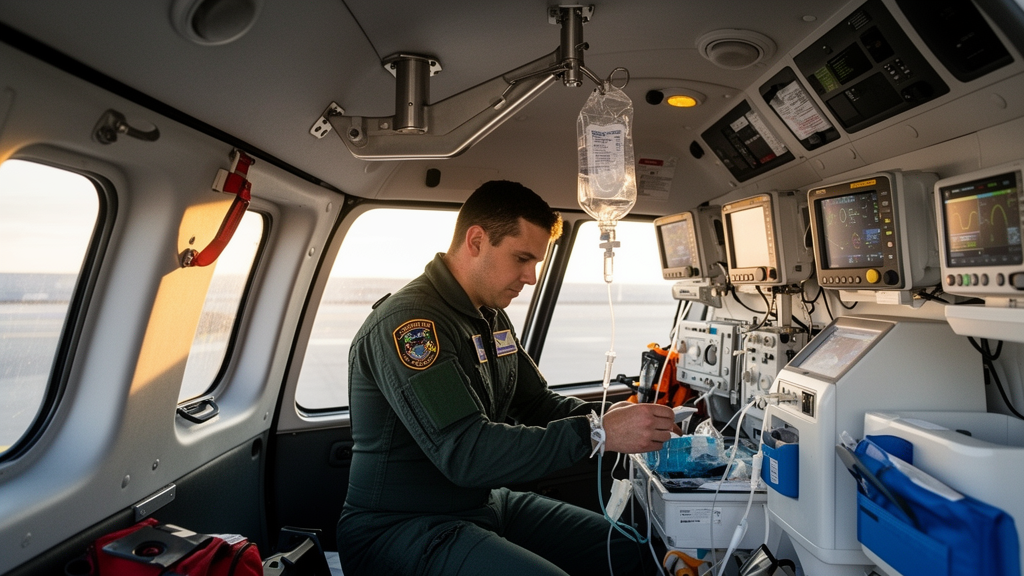
Hydroxyethyl starch, a synthetic colloid solution historically used for emergency fluid resuscitation, has seen a significant and steady decline in prehospital emergency care in Germany. An analysis of mission data from two major helicopter emergency medical service operators, ADAC Luftrettung and DRF Luftrettung, reveals that the administration of hydroxyethyl starch solutions has nearly disappeared by 2022. This trend reflects broader shifts in clinical practice following regulatory actions and evolving safety concerns regarding the use of these products in critically ill patients. The study provides a comprehensive look at how prehospital fluid management has changed over nearly two decades, highlighting the transition away from synthetic colloids toward crystalloid solutions as the primary means of resuscitation.
The research aimed to evaluate the use of hydroxyethyl starch solutions in missions carried out by these two operators. Prehospital fluid resuscitation is a critical treatment for emergency patients experiencing shock or at risk of hemodynamic deterioration. For decades, both crystalloid solutions and synthetic hydroxyethyl starch solutions have been standard components of prehospital emergency care. The proposed advantages of hydroxyethyl starch included better hemodynamic effects compared to crystalloid solutions, lower costs, wider availability, and the absence of risks associated with blood product transfusions. However, these benefits were weighed against emerging concerns regarding hemostatic issues, bleeding complications, and organ failure that surfaced in the mid-2000s.
Regulatory changes played a pivotal role in the observed decline. Beginning in 2013, the Pharmacovigilance Risk Assessment Committee of the European Medicines Agency initiated a phase-out of hydroxyethyl starch products, which was almost complete by 2022. This decision was based on the results of randomized controlled trials in critically ill patients and was made pending the submission of data demonstrating the safe use of these products. Despite these regulatory measures, there were no randomized controlled trials specifically available for emergency patients, and no published data existed on the current use of hydroxyethyl starch products in prehospital emergency medical service settings prior to this analysis.
The study analyzed data from the ADAC database regarding hydroxyethyl starch infusion use from 2004 to 2022. This period encompassed a total of 811,000 missions with patient contact. During this observation period, the number of active helicopters increased from 31 in 2004 to 39 in 2022. The number of hydroxyethyl starch administrations decreased steadily over this timeframe. In 2004, there were 3,104 cases, representing 13.4% of missions. By 2012, this number had dropped to 1,459 cases, or 3.3%, and by 2022, it had fallen to just 81 cases, accounting for only 0.2% of missions. This downward trend was statistically significant, as indicated by the Mann–Kendall test, which yielded a Kendall tau of -0.942 and a p-value of less than 0.001.
The analysis also examined the DRF database for hydroxyethyl starch infusions from 2012 to 2022. This dataset comprised a total of 364,386 missions with patient contact. During this period, the number of active helicopters increased slightly from 30 in 2012 to 31 in 2022. The administration of hydroxyethyl starch decreased continuously from 1,564 cases, or 4.6%, in 2012 to 105 cases, or 0.3%, in 2022. Similar to the ADAC data, the Mann–Kendall test revealed a statistically significant downward trend for DRF, with a Kendall tau of -0.964 and a p-value of less than 0.001. The Theil–Sen slope indicated a negative linear trend, further confirming the consistent decline in usage over the decade.
A Pearson correlation analysis was performed on the data from the two operators from 2012 to 2022 to compare their trends. The analysis identified a statistically significant positive correlation between ADAC and DRF, with an r-value of 0.984 and a p-value of less than 0.001. The combined data from both operators cover over one million missions, providing a robust dataset for assessing changes in prehospital fluid resuscitation practices.
The primary findings indicate that the use of hydroxyethyl starch resuscitation decreased significantly over time, nearly disappearing by 2022. These changes are likely to reflect evolving practice patterns resulting from the implementation of legal measures and guideline recommendations. As a result, crystalloid solutions are now primarily used in the prehospital setting. However, the same guidelines that recommended the phase-out of hydroxyethyl starch also suggested limiting the use of crystalloid volumes to avoid overinfusion and the dilution of coagulation factors, particularly in trauma patients. This creates a dilemma for prehospital emergency medical service providers, who must balance the need for adequate fluid resuscitation with the risk of complications from excessive crystalloid administration.
Currently, there are no infusion products available to fill the gap left by the discontinuation of synthetic colloids. The increasing prehospital use of blood products indicates that colloid fluid resuscitation remains a relevant treatment component for patients experiencing massive shock and bleeding.
Recent randomized controlled trials and systematic reviews of patients undergoing elective surgery have suggested that the perioperative use of hydroxyethyl starch 130/04 solutions was noninferior to crystalloid solutions with regard to short-term outcomes and organ impairment. However, these studies did not include patients with major bleeding, circulatory shock, or those with impaired permeability, as present in sepsis or septic shock. As these conditions may be present in prehospital emergency patients, the safe use of hydroxyethyl starch 130/04 products for emergency medical service purposes still needs to be proven.
Operators should be aware of the reasons for abandoning hydroxyethyl starch products and consider the potential risks of organ failure and bleeding complications. Future research is needed to determine if the current crystalloid infusion regimen should be maintained or if 130/04 hydroxyethyl starch products can safely be used for prehospital fluid resuscitation.
The study was classified as a quality assurance initiative and did not include patient details or require formal ethical approval. The data were extracted into tables and presented as absolute numbers and percentages. Temporal trends were analyzed using the nonparametric Mann–Kendall trend test and the Theil–Sen slope, with 95% confidence intervals provided to estimate the stability of the slopes and correlations. All reported p-values were two-sided, and p < 0.05 indicated statistical significance.
The analysis was endorsed by the review boards of both ADAC and DRF, leading to its classification as a quality assurance initiative.
To investigate relative changes during the observation period, the researchers plotted annual descriptive data for total emergency response missions, specifically excluding those without patient contact.
The analyses were conducted using Microsoft Excel and numiqo, a software tool based in Graz, Austria.
The combined dataset from both operators covers a total of 1,175,386 missions, as indicated in the figure caption for the time course of hydroxyethyl starch infusion use. The ADAC data span from 2004 to 2022, while the DRF data cover the period from 2012 to 2022.
Subject of Research: Decline in prehospital hydroxyethyl starch use in German helicopter emergency medical services
Article Title: Hydroxyethyl starch for prehospital fluid resuscitation: results of two helicopter emergency medical service operators in Germany
Article References: Struck, M. F., Werner, D., Rudolph, M., & Hilbert-Carius, P. (2026). Hydroxyethyl starch for prehospital fluid resuscitation: results of two helicopter emergency medical service operators in Germany. Critical Care, 30(1), Article 537. https://doi.org/10.1186/s13054-026-06417-8
Image Credits: AI Generated
DOI: 10.1186/s13054-026-06417-8
Keywords: hydroxyethyl starch, prehospital care, fluid resuscitation, emergency medicine, helicopter EMS, clinical practice, regulatory changes, crystalloid solutions, safety concerns, Germany, Hydroxyethyl, starch
Cite Scienmag News
Ophelia Keating. (November 10, 2026). Helicopter EMS Data Shows Hydroxyethyl Starch Use Declining. Scienmag. https://scienmag.com/helicopter-ems-data-shows-hydroxyethyl-starch-use-declining/
Ophelia Keating. "Helicopter EMS Data Shows Hydroxyethyl Starch Use Declining." Scienmag, 10 November 2026, https://scienmag.com/helicopter-ems-data-shows-hydroxyethyl-starch-use-declining/. Accessed 10 November 2026.
Ophelia Keating. "Helicopter EMS Data Shows Hydroxyethyl Starch Use Declining." Scienmag. November 10, 2026. https://scienmag.com/helicopter-ems-data-shows-hydroxyethyl-starch-use-declining/




