

Monday, November 9, 2026
Science
No Result
View All Result
  • Login
  • HOME
  • SCIENCE NEWS
  • CONTACT US
  • HOME
  • SCIENCE NEWS
  • CONTACT US
No Result
View All Result
Scienmag
No Result
View All Result
Home Science News Biotechnology

Research report: Recreating cellular dedifferentiation processes using weak electric fields

November 9, 2026
in Biology, Biotechnology
Gregory Coleman
By Gregory Coleman Scienmag Editorial Profile - Synthetic Biology
Reading Time: 2 mins read
0
Research report: Recreating cellular dedifferentiation processes using weak electric fields

Research report: Recreating cellular dedifferentiation processes using weak electric fields

65
SHARES
587
VIEWS
Share on FacebookShare on Twitter
ADVERTISEMENT

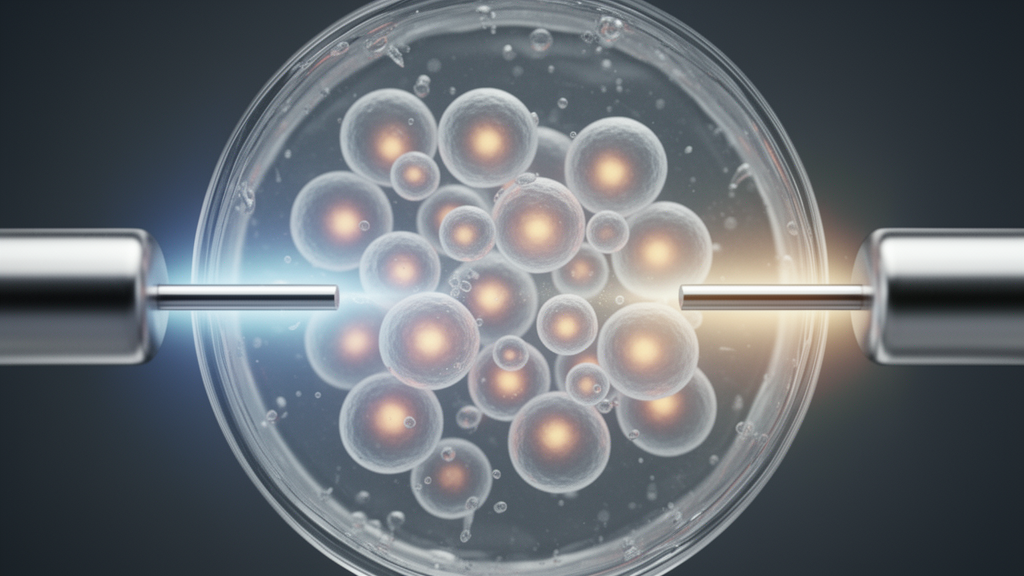
An in-vitro replication study has substantiated earlier findings demonstrating that the application of small electrical currents can induce cellular dedifferentiation in nucleated amphibian red blood cells.

The primary objective of the investigation was to replicate an in-vitro experiment originally conducted by Becker and Murray in 1967. By revisiting this historical work, the researchers aimed to expand the existing body of scientific literature regarding cellular responses to weak electrical currents and investigate whether differentiated amphibian blood cells could reverse their specialized state under electrical stimulation.

According to the authors, bioelectrical signals play a crucial role in controlling the behavior and physiological processes across various types of cells.

The study notes that possessing the capacity to reverse the cellular differentiation process through applied bioelectrical signals carries notable potential for cell biology.

In repeating the experimental conditions on nucleated amphibian red blood cells exposed to small electrical currents, the authors reported that their results substantiated Becker and Murray’s initial findings. In addition to confirming dedifferentiation in the amphibian cells, the obtained results offer further insights into the factors that potentially contribute to the process of cell dedifferentiation.

The authors emphasized that further research remains necessary to refine both the technical aspects and the specific mechanisms involved in electrically inducing dedifferentiation. Furthermore, the report highlights the need for future investigations to explore the possibility of using small electric fields as a means to guide the subsequent redifferentiation process.

Subject of Research: Electrical induction of cellular dedifferentiation in amphibian red blood cells

Article Title: Recreating cellular dedifferentiation processes using weak electric fields

Article References: Van Blerk, P., Potgieter, P., Linde, L., & Birkill, C. F. (2026). Recreating cellular dedifferentiation processes using weak electric fields. Frontiers in Bioengineering and Biotechnology, 14, Article 1927666. https://doi.org/10.3389/fbioe.2026.1927666

Image Credits: AI Generated

DOI: 10.3389/fbioe.2026.1927666

Keywords: Cell Dedifferentiation, Bioelectrical Signals, Weak Electric Fields, Amphibian Red Blood Cells, Replication Study, Pluripotent Stem Cells, Tissue Engineering, Recreating, cellular, dedifferentiation, processes, weak

Cite Scienmag News

Gregory Coleman. (November 9, 2026). Research report: Recreating cellular dedifferentiation processes using weak electric fields. Scienmag. https://scienmag.com/research-report-recreating-cellular-dedifferentiation-processes-using-weak-electric-fields/

Gregory Coleman. "Research report: Recreating cellular dedifferentiation processes using weak electric fields." Scienmag, 9 November 2026, https://scienmag.com/research-report-recreating-cellular-dedifferentiation-processes-using-weak-electric-fields/. Accessed 9 November 2026.

Gregory Coleman. "Research report: Recreating cellular dedifferentiation processes using weak electric fields." Scienmag. November 9, 2026. https://scienmag.com/research-report-recreating-cellular-dedifferentiation-processes-using-weak-electric-fields/

Tags: Amphibian Red Blood Cellsbioelectrical signalsCell Dedifferentiationcellulardedifferentiationpluripotent stem cellsprocessesRecreatingreplication studytissue engineeringWeakWeak Electric Fields
Share26Tweet16
Previous Post

PD-1 Promotes Treg Development in Helminth Infection Through Fatty Acid Oxidation

Next Post

Autopsy Identifies Frequent Diagnostic Errors in Infant Cause of Death

Related Posts

Dysregulated Potassium Channels Reveal Potential Drug Repurposing Candidates for Long COVID
Biotechnology

Dysregulated Potassium Channels Reveal Potential Drug Repurposing Candidates for Long COVID

November 9, 2026
Mathematical Model Reveals How Membrane Tension Regulates Confined Cell Migration
Biology

Mathematical Model Reveals How Membrane Tension Regulates Confined Cell Migration

November 9, 2026
Cryo-EM Unveils Unique Tail Architecture of Pseudomonas aeruginosa Podophage A1002
Biology

Cryo-EM Unveils Unique Tail Architecture of Pseudomonas aeruginosa Podophage A1002

November 9, 2026
Implantable Loggers Successfully Track Core Vital Signs in Growing Broiler Chickens
Biology

Implantable Loggers Successfully Track Core Vital Signs in Growing Broiler Chickens

November 9, 2026
Predatory Yeast Gene Expression Regulated Through Methionine-Responsive MET17 Promoter
Biology

Predatory Yeast Gene Expression Regulated Through Methionine-Responsive MET17 Promoter

November 9, 2026
Study Uncovers Distinct Derived Chromosome Features in Neotropical Grasshopper Leptysma filiformis
Biology

Study Uncovers Distinct Derived Chromosome Features in Neotropical Grasshopper Leptysma filiformis

November 9, 2026
Next Post
Autopsy Identifies Frequent Diagnostic Errors in Infant Cause of Death

Autopsy Identifies Frequent Diagnostic Errors in Infant Cause of Death

  • Mothers who receive childcare support from maternal grandparents show more optimized

    Mothers who receive childcare support from maternal grandparents show more parental warmth, finds NTU Singapore study

    27656 shares
    Share 11059 Tweet 6912
  • University of Seville Breaks 120-Year-Old Mystery, Revises a Key Einstein Concept

    1061 shares
    Share 424 Tweet 265
  • Bee body mass, pathogens and local climate influence heat tolerance

    682 shares
    Share 273 Tweet 171
  • Researchers record first-ever images and data of a shark experiencing a boat strike

    546 shares
    Share 218 Tweet 137
  • Groundbreaking Clinical Trial Reveals Lubiprostone Enhances Kidney Function

    531 shares
    Share 212 Tweet 133
Science

Embark on a thrilling journey of discovery with Scienmag.com—your ultimate source for cutting-edge breakthroughs. Immerse yourself in a world where curiosity knows no limits and tomorrow’s possibilities become today’s reality!

RECENT NEWS

  • Research report: Derived metabolic indices and poor early response to corticosteroids in adults with primary immune thrombocytopenia: a retrospective cohort study
  • Herbal Formulation Wei-Mi-Shu Decoction Protects Gastric Mucosa and Stem Cells in Rats
  • Family Resilience and Coherence Mediate Psychological Distress in Dementia Caregivers
  • Early Caregiving Enrichment Boosts Adult Social Investigation in Female Mice

Categories

  • Agriculture
  • Anthropology
  • Archaeology
  • Athmospheric
  • Biology
  • Biotechnology
  • Blog
  • Bussines
  • Cancer
  • Chemistry
  • Climate
  • Earth Science
  • Editorial Policy
  • Marine
  • Mathematics
  • Medicine
  • Pediatry
  • Policy
  • Psychology & Psychiatry
  • Science Education
  • Science News
  • Social Science
  • Space
  • Technology and Engineering

Subscribe to Blog via Email

Enter your email address to subscribe to this blog and receive notifications of new posts by email.

Join 5,150 other subscribers

© 2025 Scienmag - Science Magazine

Welcome Back!

Login to your account below

Forgotten Password?

Retrieve your password

Please enter your username or email address to reset your password.

Log In
No Result
View All Result
  • HOME
  • SCIENCE NEWS
  • CONTACT US

© 2025 Scienmag - Science Magazine

Discover more from Science

Subscribe now to keep reading and get access to the full archive.

Continue reading

