


Researchers have demonstrated that calcium fluoride nanoparticles doped with europium ions can serve as effective fluorescent probes for the selective detection of iron(III) ions in aqueous solutions. Published in the journal Discover Sensors, the study details the synthesis of these luminescent nanoparticles in various organic media and evaluates their photoluminescence behavior and sensing capabilities. The work highlights a specific material system that responds strongly to the presence of Fe3+ ions while remaining largely unaffected by other common metal ions, offering a potential tool for monitoring water quality and assessing trace element concentrations.
The study, led by Parau Majhi and colleagues, focused on the synthesis of CaF2:Eu3+ nanoparticles using the coprecipitation method at 100 degrees Celsius. The researchers utilized seven different organic media for the synthesis process, including ethylene glycol, dimethyl sulfoxide, 1,4-dioxane, N,N-dimethylformamide, aniline, phenylhydrazine, and salicylaldehyde. By varying the solvent environment, the team aimed to understand how the chemical nature of the medium influences the structural, morphological, and optical properties of the resulting nanoparticles. This approach allows for a detailed comparison of how different synthesis conditions affect the final performance of the luminescent material.
Characterization of the synthesized nanoparticles was performed using a suite of analytical techniques, including X-ray diffraction, field-emission scanning electron microscopy, energy-dispersive X-ray spectroscopy, Fourier-transform infrared spectroscopy, and photoluminescence spectroscopy. The XRD patterns indicated that all samples crystallized in the cubic crystal system, corresponding to the pure CaF2 phase without detectable impurity peaks. The crystallinity of the samples ranged from 90% to 96%, suggesting that the choice of organic medium did not significantly compromise the structural order of the nanoparticles. However, the average crystallite sizes varied depending on the synthesis medium, with values calculated by the Scherrer equation ranging from 22 nm to 40 nm.
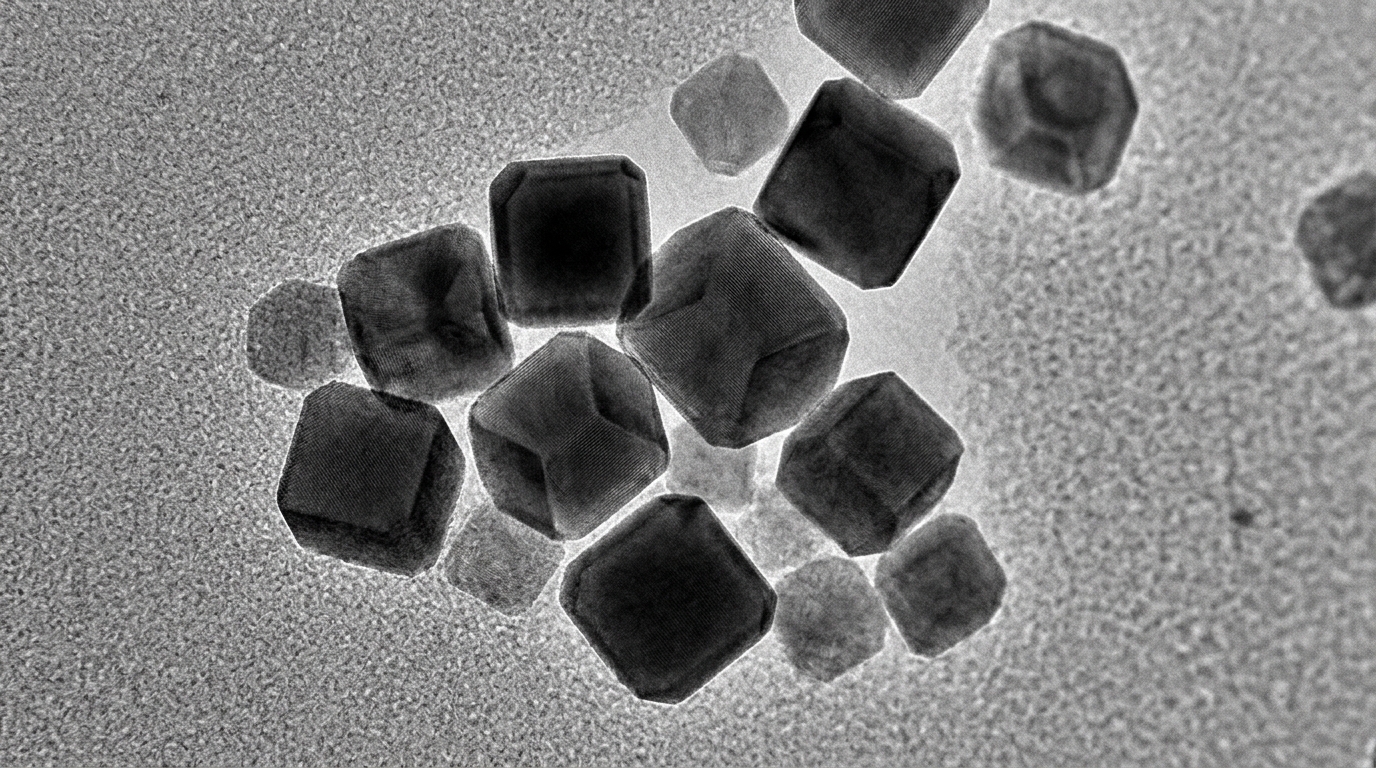
Morphological analysis via FESEM revealed that the nanoparticles prepared in ethylene glycol appeared as rough nanospheroids with diameters around 50 nm. Elemental mapping confirmed the presence of calcium, fluorine, and europium, with atomic percentages of 42.8%, 54.1%, and 3.2%, respectively. The FTIR spectra provided evidence of surface capping by the organic solvents, showing vibrational bands associated with O-H, C-H, and C=O groups. These surface interactions are critical, as they can influence the luminescence efficiency by either stabilizing the nanoparticles or introducing non-radiative decay pathways that quench the emission.
The photoluminescence properties of the nanoparticles were examined under excitation wavelengths of 250 nm and 393 nm. All samples exhibited characteristic Eu3+ emission peaks at 593 nm and 615 nm, corresponding to magnetic dipole and electric dipole transitions, respectively. The magnetic dipole transition was generally more dominant, although the relative intensity varied among samples. Notably, the nanoparticles synthesized in ethylene glycol displayed the highest luminescence intensity compared to those prepared in other media. This variation is attributed to differences in solvent polarity, viscosity, and molecular structure, which affect nanoparticle nucleation, growth, and surface chemistry. The study suggests that moderate polarity solvents like ethylene glycol may favor higher emission intensity by balancing particle size and surface passivation.
The sensing capability of the nanoparticles was evaluated by exposing them to solutions containing various metal ions at a concentration of 40 ppm. The luminescence intensity of the nanoparticles synthesized in ethylene glycol changed significantly in the presence of different ions. While ions such as Pb2+ and Hg2+ caused an enhancement in emission intensity, ions including Fe3+, Cu2+, and Cr3+ led to a quenching of the luminescence. The strongest quenching effect was observed in the presence of Fe3+ ions, where the emission intensity at 615 nm dropped from 20.15 arbitrary units in water to 4.68 arbitrary units. This pronounced response to iron(III) ions suggests a specific interaction mechanism, likely involving the primary inner filter effect, where Fe3+ ions absorb the excitation UV light, thereby reducing the energy available for Eu3+ luminescence.
To quantify the detection capability, the quenching effect was analyzed using the Stern-Volmer equation. The plot of the relative luminescence intensity versus Fe3+ concentration showed a linear response with a correlation coefficient of 0.9973. The Stern-Volmer quenching constant was determined to be 0.3090, indicating a relatively weak quenching mechanism. The limit of detection for Fe3+ ions was calculated to be 0.2916 ppm for the nanoparticles prepared in ethylene glycol. This value is competitive with other reported sensing systems, such as carbon quantum dots and other lanthanide-doped nanoparticles, positioning the CaF2:Eu3+ system as a viable candidate for sensitive iron ion detection.
Selectivity is a crucial aspect of sensing applications, and the study examined the interference of competitive ions such as Cu2+, Cr3+, and K+ on the Fe3+ quenching behavior. The results indicated that the emission intensity remained unchanged in the presence of Fe3+ ions even when these competing ions were present simultaneously. This lack of interference suggests that the quenching response is specific to Fe3+ ions, allowing for selective detection in complex aqueous matrices. The ability to distinguish Fe3+ from other metal ions is a significant advantage for practical applications in environmental monitoring and health diagnostics, where multiple ions may be present in the sample.
The study also investigated the effect of Eu3+ doping concentration on the luminescence intensity. Emission intensities increased gradually up to a doping level of 10 atomic percent, after which they decreased due to concentration quenching. This phenomenon is typical for lanthanide-doped materials and is attributed to cross-relaxation among the lanthanide ions when the mean distance between them falls below a critical value. The optimal doping concentration was found to be 10 at% at pH 7, which provided the highest luminescence output. This finding underscores the importance of optimizing synthesis parameters to achieve the best sensing performance.
The research contributes to the growing field of luminescent nanomaterials for metal ion sensing, offering a new platform based on CaF2:Eu3+ nanoparticles. The ability to tailor the synthesis medium to enhance luminescence and selectivity provides valuable insights into the design of effective fluorescent probes. While the current study demonstrates promising results for Fe3+ detection, the authors note that further studies are needed to optimize sensitivity and selectivity for broader applications. The work highlights the potential of these nanoparticles as effective tools for monitoring iron levels in drinking water, which is essential for assessing water quality and protecting public health.
The reaction mixture was maintained at a neutral pH of 7, which the researchers identified as the optimal condition for maximizing emission intensity. After stirring at 1500 rpm for three hours, the resulting precipitate was separated by centrifugation at 11,800 rpm. The particles were subsequently washed three times with double-distilled water and once with ethanol before being dried under vacuum at 45 degrees Celsius overnight. This standardized procedure was replicated across all seven organic media to ensure that variations in the final material properties could be attributed to the solvent environment rather than procedural inconsistencies.
Structural analysis revealed that while the choice of solvent did not significantly alter the crystallinity, which remained consistently high between 90 and 96 percent, it did influence the physical dimensions of the crystallites. The average crystallite sizes calculated via the Scherrer equation ranged from 22 to 40 nanometers, whereas the Williamson-Hall method yielded a broader range of 30 to 116 nanometers. Nanoparticles synthesized in dimethyl sulfoxide exhibited the smallest average particle size, while those prepared in aniline were the largest. This variation in size suggests that the solvent medium plays a role in controlling nucleation and growth kinetics, even when the fundamental cubic crystal structure remains unchanged across all samples.
The optical response of the nanoparticles was further characterized by the asymmetric ratio, defined as the intensity of the electric dipole transition divided by that of the magnetic dipole transition. Values for this ratio were found to be less than unity, ranging from 0.36 to 0.53 across different doping concentrations. These relatively low values indicate that many europium ions occupy sites with inversion symmetry within the calcium fluoride host matrix. This observation contrasts with the assumption that europium substitution for calcium would necessarily reduce local symmetry to favor strong electric dipole emission, suggesting that charge compensation mechanisms may preserve a higher degree of local symmetry than previously expected in such doped systems.
Fluorescence decay lifetime measurements provided additional insight into the interaction between the nanoparticles and iron ions. The lifetime of the luminescence increased slightly from 1.99 milliseconds in the blank solution to 2.59 milliseconds in the presence of 10 ppm of iron(III) ions, before decreasing to 2.38 milliseconds at 20 ppm. This non-monotonic variation in lifetime suggests a mixed quenching mechanism rather than a single dominant process. The data were fitted to a single-exponential decay equation, confirming that the decay kinetics could be described by a simple model despite the complex chemical environment of the aqueous solution.
The study also compared the limit of detection for iron(III) ions with other reported sensing systems to contextualize the performance of the calcium fluoride nanoparticles. The calculated limit of detection of 0.2916 ppm is higher than that of carbon quantum dots, which have reported limits as low as 0.02 ppm, and significantly higher than europium-doped tin oxide nanoparticles, which achieved a limit of 0.0004 ppm. However, it is lower than the limit of detection for gadolinium oxide doped with europium, which was reported at 2 ppm. This comparison indicates that while the calcium fluoride system offers a viable detection range, it does not surpass the sensitivity of all existing nanomaterial-based sensors for iron ion detection.
Surface chemistry analysis via Fourier-transform infrared spectroscopy identified specific vibrational bands associated with the organic capping agents. For instance, the band at 1683 cm⁻¹ was attributed to the carbonyl stretching vibration of dimethylformamide, while bands around 3043 cm⁻¹ corresponded to aromatic C-H stretches in aniline and salicylaldehyde. The presence of these functional groups on the nanoparticle surface was linked to luminescence quenching, as groups capable of high-energy vibrations, such as hydroxyl and methylene groups, can facilitate non-radiative energy transfer. This surface-mediated quenching explains why solvents with simpler structures or lower vibrational energy densities, such as ethylene glycol, resulted in higher overall emission intensities compared to bulkier aromatic compounds.
Subject of Research: Photoluminescence behaviour of CaF2:Eu3+ nanoparticles synthesized in different organic media and their metal ions sensing capabilities
Article Title: Photoluminescence behaviour of CaF2:Eu3+ nanoparticles synthesized in different organic media and their metal ions sensing capabilities
Article References: Majhi, P., Devi, R. B., Sahoo, S., Yaiphaba, N., & Phaomei, G. (2026). Photoluminescence behaviour of CaF2:Eu3+ nanoparticles synthesized in different organic media and their metal ions sensing capabilities. Discover Sensors, 2(1), Article 37. https://doi.org/10.1007/s44397-026-00070-0
Image Credits: AI Generated
DOI: 10.1007/s44397-026-00070-0
Keywords: Photoluminescence, behaviour, CaF2, nanoparticles, synthesized, different, organic, media, metal, ions, sensing, capabilities
Cite Scienmag News
Denise Maddox. (November 9, 2026). CaF2:Eu3+ Nanoparticles Enable Selective Iron Ion Detection. Scienmag. https://scienmag.com/caf2eu3-nanoparticles-enable-selective-iron-ion-detection/
Denise Maddox. "CaF2:Eu3+ Nanoparticles Enable Selective Iron Ion Detection." Scienmag, 9 November 2026, https://scienmag.com/caf2eu3-nanoparticles-enable-selective-iron-ion-detection/. Accessed 9 November 2026.
Denise Maddox. "CaF2:Eu3+ Nanoparticles Enable Selective Iron Ion Detection." Scienmag. November 9, 2026. https://scienmag.com/caf2eu3-nanoparticles-enable-selective-iron-ion-detection/




