


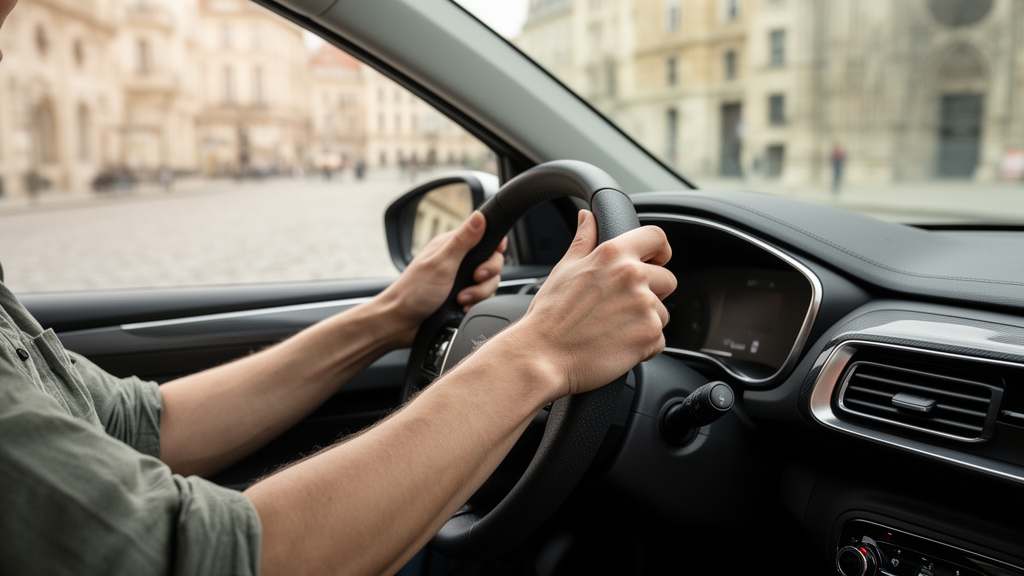
An international cross-sectional survey of 208 licensed drivers has revealed a significant disconnect between perceived confidence and actual safe driving behavior when operating vehicles in foreign countries. The study, published in Discover Vehicles, challenges the common assumption that experienced or confident drivers are inherently better prepared for cross-border driving. Researchers found that higher self-reported overseas driving confidence was statistically associated with lower self-reported safe driving behavior, a phenomenon the authors term confidence-behaviour miscalibration. This finding suggests that subjective feelings of competence may not reliably indicate objective readiness for the distinct safety risks posed by unfamiliar road environments, traffic systems, and culturally embedded driving norms.
The primary objective was to identify predictors of potentially risky overconfidence and to understand drivers’ attitudes toward formal training before driving abroad. By integrating psychological constructs such as General Self-Efficacy (GSE) and Locus of Control (LoC) with behavioral and attitudinal data, the study aims to provide an empirically grounded framework for understanding overseas driving adaptation. This approach moves beyond simple metrics of driving history to explore the internal cognitive and psychological mechanisms that influence driver safety in international contexts.
Participants were recruited through a multi-channel strategy involving social media platforms, academic survey exchange websites, and physical flyers distributed in Bristol (UK), California (USA), and Chengdu (China). The sample was geographically diverse, with the largest residence groups based in the United Kingdom (33.2%), the United States (16.8%), and China (13.9%). The survey instrument was administered online via Qualtrics and provided in both English and Chinese. All respondents reported holding a valid driving licence, and the sample was gender-balanced, with 49.5% identifying as male and 48.6% as female. This international composition allowed the researchers to examine general attitudes toward overseas driving while also enabling a focused sub-analysis of drivers currently navigating the UK’s left-hand traffic system.
The methodology employed a comprehensive questionnaire comprising seven sections covering demographics, driving background, overseas driving attitudes, self-reported driving behavior, psychological traits, training preferences, and UK-specific challenges. Driving behavior was operationalized as a custom composite score ranging from 1 (least safe) to 5 (most safe), evaluating regulatory compliance, spatial awareness, and the frequency of violations such as tailgating or mobile phone usage. Psychological traits were measured using validated Likert-based instruments for General Self-Efficacy and the three dimensions of Locus of Control: internal, powerful others, and chance. This multi-dimensional assessment allowed for a nuanced analysis of how different psychological orientations correlate with driving confidence and behavioral caution.
Statistical analysis revealed that psychological traits were more predictive of driving outcomes than driving experience. Hierarchical regression models showed that demographic variables explained 15.6% of the variance in driving behavior, but adding driving experience variables did not significantly improve the model fit. In contrast, the inclusion of psychological traits resulted in a significant increase in explained variance. Specifically, lower General Self-Efficacy and a higher external locus of control attributed to powerful others were associated with lower safe-driving behavior scores.
Regarding overseas driving confidence, the final regression model explained 46.4% of the variance. Higher General Self-Efficacy and a stronger attribution to powerful others were significant positive predictors of confidence. Age and gender also played significant roles, with older participants and male drivers reporting higher levels of confidence. Notably, driving experience variables, including years of driving and prior overseas exposure, were not significant predictors of confidence once psychological traits were included. This finding underscores that traditional indicators of driving proficiency do not necessarily translate into higher perceived readiness for international driving, highlighting the complex interplay between self-perception and actual capability.
The study also investigated attitudes toward formal training, finding that 80.8% of respondents endorsed the need for structured preparation before driving in another country. However, this support was not uniform across all groups. Drivers without prior overseas driving experience were significantly more likely to support formal training (90.5%) compared to those with experience (65.9%). Logistic regression analysis indicated that increasing age raised the likelihood of endorsing training necessity, whereas greater driving experience and prior overseas driving experience reduced it.
A UK-specific case study involving 33 overseas drivers currently driving in the United Kingdom provided insights into specific scenario-based challenges. The most frequently selected challenge was roundabout navigation (63.6%), followed by speed-limit adaptation (57.5%) and crossing protocols (45.4%). Participants also identified rural driving and special lanes as challenging, with specific difficulties including choosing correct lanes on roundabouts and reacting to vulnerable road users on narrow rural roads. These findings highlight the need for targeted training content that addresses the unique infrastructure and traffic conventions of left-hand traffic jurisdictions. The high interest in technology-based interventions, with 87.8% expressing interest in simulator practice and 81.8% in AR-HUD assistance, suggests that immersive technologies could be effective tools for addressing these specific challenges.
The researchers emphasize that the confidence-behavior miscalibration identified in the study represents a critical risk factor in cross-border driving contexts. Drivers who feel highly confident may engage in less safe behaviors, assuming their competence is sufficient to handle unfamiliar conditions. This is particularly concerning given that prior research links stronger external locus of control with higher crash involvement. The study suggests that experience and confidence alone are insufficient indicators of overseas driving readiness, and that psychologically informed training is necessary to calibrate confidence with competence. By identifying profiles of potentially overconfident drivers, the research provides a basis for developing targeted interventions that address specific psychological risk factors rather than relying on generic awareness campaigns.
Limitations of the study include its reliance on self-reported data, which may introduce social desirability and optimism biases. The cross-sectional design limits causal inference, meaning that while associations between psychological traits and driving behavior were identified, the temporal direction of these relationships cannot be established. Additionally, the UK-specific subsample was relatively small (n = 33), so findings from this section should be interpreted as exploratory. The survey was only available in English and Chinese, which may have introduced sampling bias toward individuals proficient in these languages. Despite these limitations, the study offers valuable insights into the psychological dimensions of overseas driving readiness, contributing to a more nuanced understanding of driver safety in an increasingly mobile world.
Subject of Research: International driver readiness and psychological predictors of safe driving behavior abroad
Article Title: Driver readiness for driving abroad based on an international study of confidence behaviour and training needs
Article References: He, P., Qiu, S., Li, Y., Booth, C. A., & Bremner, P. (2026). Driver readiness for driving abroad based on an international study of confidence behaviour and training needs. Discover Vehicles, 2(1), Article 22. https://doi.org/10.1007/s44465-026-00027-y
Image Credits: AI Generated
DOI: 10.1007/s44465-026-00027-y
Keywords: overseas driving, driver confidence, psychological traits, road safety, driving simulation, cross-border mobility, self-efficacy, locus of control, traffic safety, driver training, Driver, readiness
Cite Scienmag News
Denise Maddox. (November 8, 2026). Confidence Does Not Predict Safe Driving Abroad, Study Finds. Scienmag. https://scienmag.com/confidence-does-not-predict-safe-driving-abroad-study-finds/
Denise Maddox. "Confidence Does Not Predict Safe Driving Abroad, Study Finds." Scienmag, 8 November 2026, https://scienmag.com/confidence-does-not-predict-safe-driving-abroad-study-finds/. Accessed 8 November 2026.
Denise Maddox. "Confidence Does Not Predict Safe Driving Abroad, Study Finds." Scienmag. November 8, 2026. https://scienmag.com/confidence-does-not-predict-safe-driving-abroad-study-finds/




