


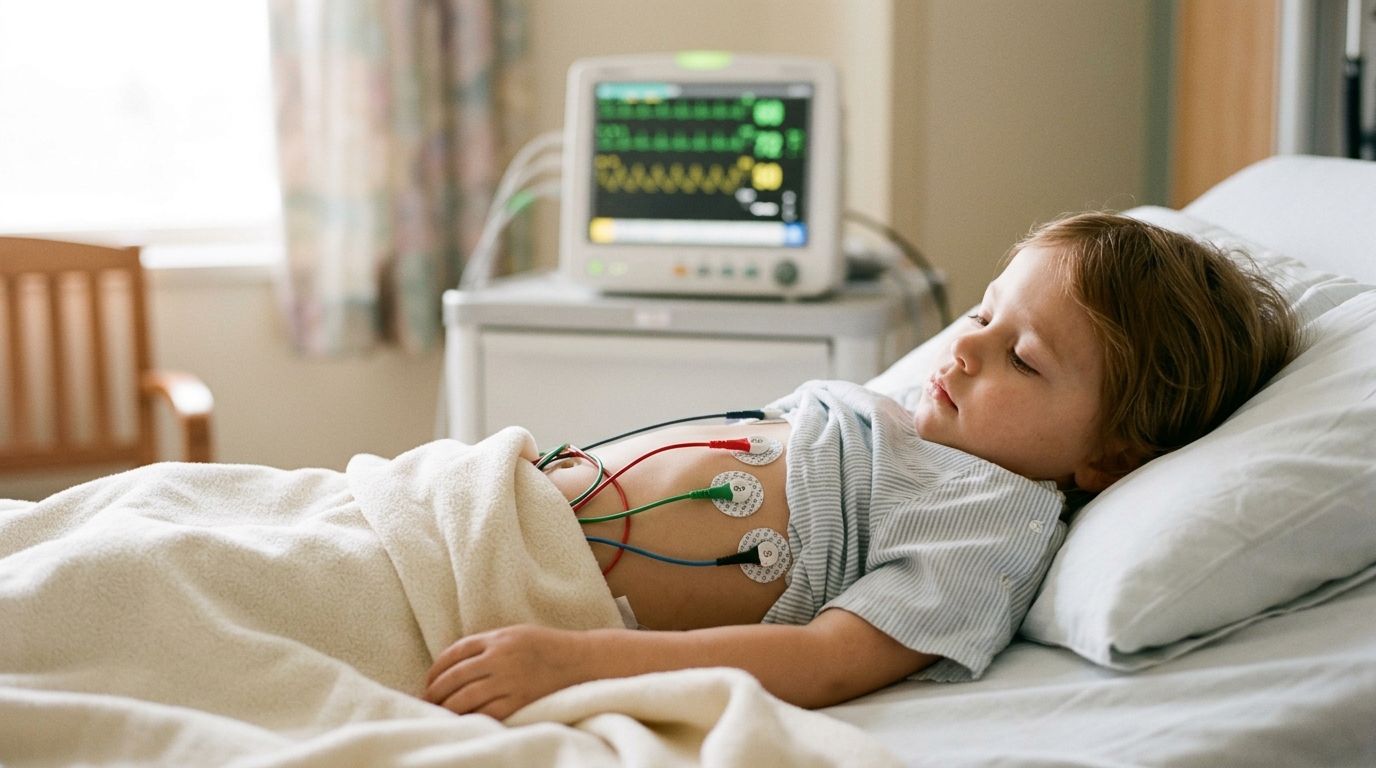
The study, published in BMC Biomedical Engineering, introduces a transfer learning architecture that integrates custom optimization algorithms and regularization methods to improve the stability and accuracy of heart rhythm classification. This approach addresses a specific clinical challenge: the distinct electrocardiogram (ECG) patterns found in children, which differ significantly from those of adults and often make diagnosis more complex and time-consuming for clinicians.
The primary objective of the research was to create a reliable automated detection system for pediatric arrhythmias, a condition that is rarer in children than in adults but can be clinically significant. The authors noted that manual ECG analysis is resource-intensive and dependent on clinician experience. By leveraging deep learning, the team aimed to provide a tool that could assist in faster and more accurate diagnosis, potentially reducing the burden on medical staff and improving patient outcomes through early detection.
A key component of the study was the creation of a custom dataset specifically for pediatric patients. Because public datasets often lack sufficient pediatric ECG data, the researchers compiled a balanced set of 1318 abnormal beats and 1403 normal beats. These records were obtained from Holter devices used for 24-hour cardiac monitoring at the Pediatric Cardiology Clinic of Sakarya University Faculty of Medicine.
The core of the AI system is the MobileNetv2 transfer learning architecture, a lightweight deep neural network known for its efficiency in resource-constrained environments. Transfer learning allows the model to leverage features learned from large datasets and fine-tune them for the smaller pediatric dataset. However, the researchers identified that standard optimization algorithms could lead to unstable results. To address this, they developed six variations of an optimization algorithm based on RMSprop, a method that adapts the learning rate during training to minimize the loss function more effectively.
Among these variations, the Proposed Optimization Algorithm V5 emerged as the most effective. This algorithm modifies the standard RMSprop update rule by incorporating parameters that measure the smoothness, homogeneity, and energy of the data distribution, balanced by variance. By evaluating these factors, the algorithm can adaptively adjust gradient magnitudes, which helps in stabilizing the learning process and preventing the model from taking excessively large steps that could lead to overfitting or convergence issues.
In addition to optimization, the study introduced custom regularization methods to control model complexity. Regularization is crucial in deep learning to prevent overfitting, where a model performs well on training data but fails to generalize to new data. The researchers developed six regularization methods based on the ElasticNet technique, which combines L1 and L2 penalties. The most successful method, Proposed Regularization Method V5, adaptively calculates the balance parameter between L1 and L2 penalties using entropy values. This allows the model to manage uncertainty in the data more effectively, ensuring that the learned features are robust and generalizable.
When the Proposed Optimization Algorithm V5 and Proposed Regularization Method V5 were integrated into the MobileNetv2 architecture, the model achieved high performance on the custom pediatric dataset. The accuracy rate on the training dataset was 0.9801, while the test dataset accuracy was 0.9509. These results represented an improvement over the original MobileNetv2 architecture, which achieved accuracies of 0.9633 and 0.9399 on the training and test datasets, respectively. The close proximity of the training and test accuracies suggests that the model successfully avoided overfitting, a common problem in machine learning with limited data.
To further validate the generalizability of the model, the researchers tested it on a more complex dataset containing six categories of heartbeats. This dataset was derived from the MIT-BIH Arrhythmia Dataset and the PTB Diagnostic ECG Database. The categories included normal beats, supraventricular ectopic beats, ventricular beats, fusion beats, unidentified beats, and other beats. The model was trained on this multi-class dataset to assess its ability to handle diverse and complex ECG patterns beyond simple binary classification.
On the six-class dataset, the model achieved training and test accuracies of 0.9200 and 0.8975, respectively. Although these values were lower than those obtained on the binary pediatric dataset, the researchers noted that a decrease of approximately 5% is expected when moving from a simpler to a more complex classification task. The performance metrics, including precision, sensitivity, and F1 score, were balanced across the different classes, indicating that the model did not favor one category over another. This balanced performance suggests that the integrated optimization and regularization methods contribute to a model that can be applied to real-world clinical scenarios with varied data.
The study also examined the model’s performance on imbalanced datasets, where the number of samples in each class varies. The researchers tested the model on a dataset with varying numbers of beats for each category. Despite the imbalance, the model maintained satisfactory detection performance for most categories, with only partial decreases in performance for supraventricular and ventricular beats. This resilience to data imbalance further supports the robustness of the proposed approach.
The authors acknowledge that the custom optimization and regularization methods increase the computational cost of the model. The additional calculations required for the adaptive parameters, such as entropy and variance, lead to higher memory consumption and longer training times compared to standard algorithms. However, the study emphasizes that in medical applications, diagnostic accuracy is prioritized over speed. The use of the lightweight MobileNetv2 architecture helps mitigate some of these computational bottlenecks, making the system potentially viable for deployment in clinical settings.
This research contributes to the growing field of AI-assisted medical diagnosis by providing a tailored solution for pediatric arrhythmia detection. The findings suggest that by carefully tuning the components of deep learning models, it is possible to achieve high accuracy and stability even with limited and specialized data, paving the way for more precise and accessible diagnostic tools in cardiology.
The study was conducted by Fatma Akalın, Pınar Dervişoğlu Çavdaroğlu, and Mehmet Fatih Orhan, and published in BMC Biomedical Engineering in July 2025. The research team utilized ECG records from Holter devices, specifically the Biomedical Shenzhen China brand, which are used for 24-hour cardiac monitoring. These records were collected at the Pediatric Cardiology Clinic of the Sakarya University Faculty of Medicine. The dataset creation process involved extracting specific heartbeats from Channel 1 of the three-channel ECG results. Channel 1 provides a time-dependent graph of the heart’s electrical activity, presenting a regularly repeating cycle of heartbeats. A pediatric cardiology associate professor determined the coordinates for the normal and abnormal beats, which were then cut from the signal using the labelImg program and the OpenCV library.
The experimental setup for the artificial intelligence-based detection system relied on specific hardware configurations to manage the computational demands of the deep learning models. The experiments were performed on a system equipped with an Intel Core i7-9750 H CPU running at 2.60 GHz, 32 GB of RAM, and a 6 GB NVIDIA GeForce GTX 1660 Ti graphics card. The MobileNetv2 architecture was executed for 100 iterations using the Tensorflow framework. The choice of MobileNetv2 was driven by its status as a lightweight deep neural network that provides an efficient architecture for building low-latency models. This architecture is particularly suitable for resource-constrained environments and focuses on optimizing latency, making it adaptable to the design requirements of mobile applications and embedded visual systems. The researchers noted that since the arrhythmia detection model is intended to support doctors and potentially evolve into a product-oriented output, the efficiency of the training process is a critical factor.
The development of the custom optimization algorithms involved modifying the standard RMSprop adaptive optimization algorithm. The base RMSprop algorithm uses a moving average of squared gradients to adjust the learning rate, which helps in minimizing the loss function. The proposed variations, labeled V1 through V6, introduced specific mathematical functions to the update rule. For instance, Proposed Optimization Algorithm V1 incorporated a homogeneity value to monitor data distribution, while V2 used a smoothness parameter to measure the degree of change in the input. Algorithm V3 evaluated the degree of deviation of the input from the mean, and V4 balanced smoothness, homogeneity, and variance. The final version, V5, integrated an energy factor alongside the smoothness and homogeneity parameters balanced by variance. The energy parameter measures the intensity of the image, allowing the algorithm to account for the overall intensity of the input data during the gradient update process.
The regularization methods were developed to complement the optimization algorithms by controlling the complexity of the model. These methods were based on the ElasticNet technique, which combines the advantages of Ridge and Lasso regularization. The standard ElasticNet formula includes a parameter that determines the balance between the two regularization techniques. In the proposed methods, this balance parameter was calculated adaptively rather than being fixed. Proposed Regularization Method V5, for example, used the entropy value of the probability distribution to assign the balance parameter. This approach aims to manage uncertainties in the data; when entropy is high, indicating high uncertainty, the parameter is adjusted to favor one type of penalty over the other. The integration of the error function and variance calculations into these regularization methods was intended to improve the modeling of classification errors and support stable learning processes.
The study also evaluated the performance of the customized optimization and regularization approaches across various other transfer learning architectures to determine the most suitable base model. The researchers integrated the proposed methods into MobileNetv1, VGG19, ResNet50, Xception, DenseNet121, InceptionV3, and InceptionResNetV2 architectures. The results indicated that the MobileNetv2 transfer learning architecture produced the maximum accuracy rate and F1 score on the test dataset. This outcome suggests that the combination of the lightweight MobileNetv2 structure with the custom adaptive algorithms provides a more balanced prediction success compared to other architectures. The low difference between the accuracy values produced by the MobileNetv2 architecture in the training and test datasets further indicates a strong resistance to overfitting, enabling the production of more precise and balanced outputs for arrhythmia detection.
Subject of Research: Arrhythmia detection with transfer learning architecture integrating the developed optimization algorithm and regularization method
Article Title: Arrhythmia detection with transfer learning architecture integrating the developed optimization algorithm and regularization method
Article References: Akalın, F., Çavdaroğlu, P. D., & Orhan, M. F. (2025). Arrhythmia detection with transfer learning architecture integrating the developed optimization algorithm and regularization method. BMC Biomedical Engineering, 7(1), Article 8. https://doi.org/10.1186/s42490-025-00094-4
Image Credits: AI Generated
DOI: 10.1186/s42490-025-00094-4
Keywords: Arrhythmia, detection, transfer, learning, architecture, integrating, developed, optimization, algorithm, regularization, method, scientific research
Cite Scienmag News
Harold Sullivan. (November 8, 2026). AI Model Improves Pediatric Arrhythmia Detection Using Custom ECG Data. Scienmag. https://scienmag.com/ai-model-improves-pediatric-arrhythmia-detection-using-custom-ecg-data/
Harold Sullivan. "AI Model Improves Pediatric Arrhythmia Detection Using Custom ECG Data." Scienmag, 8 November 2026, https://scienmag.com/ai-model-improves-pediatric-arrhythmia-detection-using-custom-ecg-data/. Accessed 8 November 2026.
Harold Sullivan. "AI Model Improves Pediatric Arrhythmia Detection Using Custom ECG Data." Scienmag. November 8, 2026. https://scienmag.com/ai-model-improves-pediatric-arrhythmia-detection-using-custom-ecg-data/




