


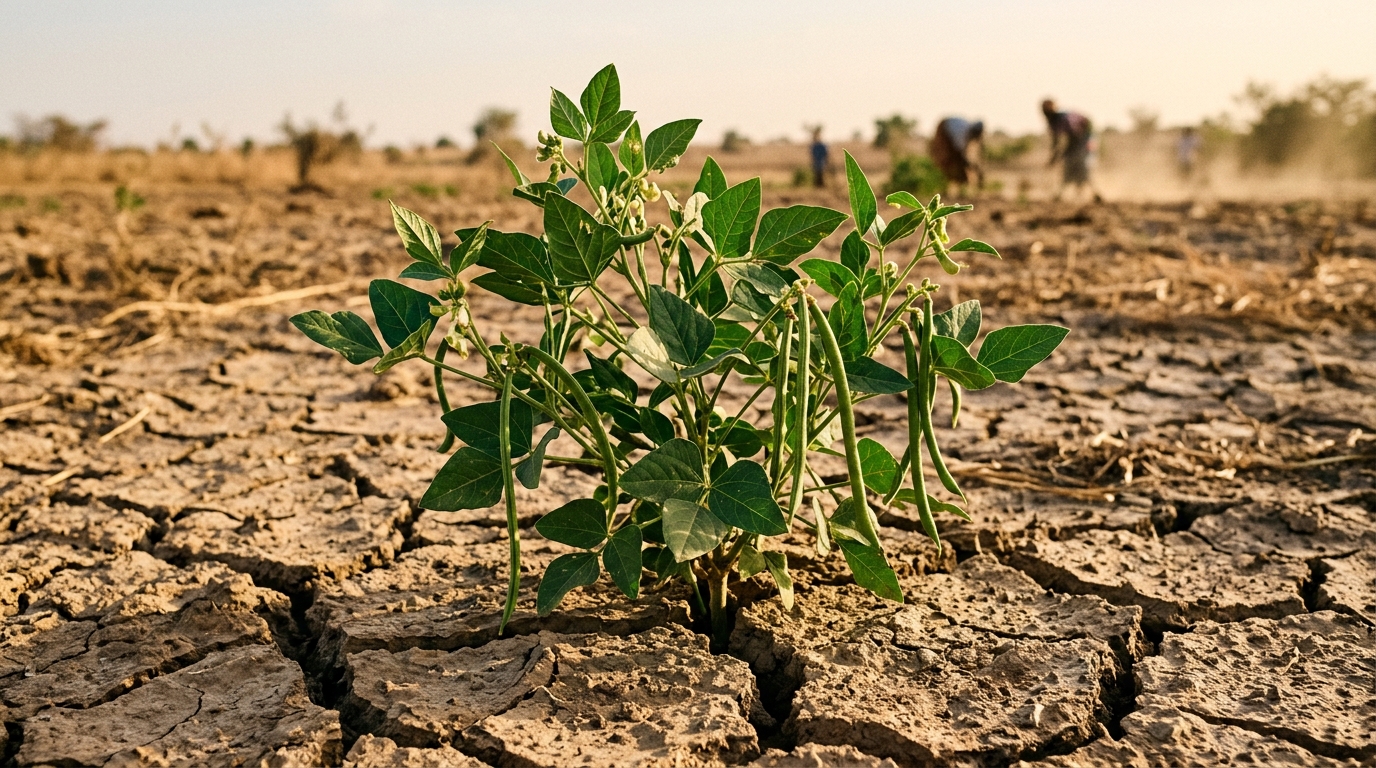
Cowpea is one of the world’s most resilient legumes, prized for its nutritional value, nitrogen-fixing ability and tolerance of marginal environments, yet its commercial varieties remain vulnerable to drought and to viruses such as cowpea aphid-borne mosaic virus (CABMV) and cowpea severe mosaic virus (CPSMV). A research team led by scientists at the Federal University of Pernambuco, working with colleagues at Embrapa and the Agronomic Institute of Pernambuco in Brazil, has now delivered the first genome-wide characterization of the GRAS transcription factor family in this crop, identifying 57 genes named VuGRAS1 through VuGRAS57 and profiling how they respond to water stress and viral challenge. The work, published in the journal Discover Plants, combines genome mining, phylogenetics, promoter analysis and transcriptomic reanalysis with quantitative PCR validation, offering a molecular foundation for future breeding programs.
Transcription factors are DNA-binding proteins that switch target genes on or off by docking at promoter regions, thereby reprogramming gene expression when plants encounter stress. The GRAS family, named after its founding members GIBBERELLIC ACID INSENSITIVE, REPRESSOR OF GAI and SCARECROW, is a group of plant-specific regulators involved in growth, hormone signaling and stress adaptation. GRAS proteins vary considerably in their N-terminal regions but share a highly conserved C-terminal domain built from five ordered motifs known as LHRI, VHIID, LHRII, PFYRE and SAW. Until now, this family had never been systematically cataloged in cowpea, despite extensive characterization in model plants such as Arabidopsis thaliana and in crops including soybean, pigeon pea, kiwifruit, eggplant, radish and alfalfa.
To find every GRAS gene in the cowpea reference genome, the researchers ran two complementary searches against the Vigna unguiculata v1.2 proteome from the Phytozome database. They used BLASTp with previously characterized GRAS protein sequences from seven species as queries, and independently scanned the proteome with HMMER using the Pfam hidden Markov model PF03514.17 that defines the GRAS domain. Merging and de-replicating the results yielded 58 non-redundant sequences, one of which carried an incomplete GRAS domain and was excluded, leaving 57 confirmed loci. Batch CD-Search then verified the presence of intact or truncated GRAS domains in each candidate.
The structural portrait that emerged is distinctive. Coding sequences ranged from 1,176 base pairs in VuGRAS55 to 2,502 base pairs in VuGRAS17, and most VuGRAS genes, 54.4 percent, lack introns entirely, with exon counts spanning one to four. Proteins ranged from 391 to 833 amino acids, with molecular weights between roughly 44.6 and 90.5 kilodaltons. Theoretical isoelectric points spanned 4.25 to 9.23, and 91.2 percent of the proteins were predicted to be acidic. Every VuGRAS protein showed a negative Grand Average of Hydropathicity score, ranging from −0.607 to −0.099, indicating hydrophilic character, and subcellular prediction placed 82.4 percent of them, 47 of 57, in the nucleus, with a subset possibly shuttling between nucleus and cytoplasm, consistent with a role in transcriptional regulation.
Genomic cartography revealed that the 57 genes are unevenly spread across all 11 cowpea chromosomes, with chromosomes Vu05 and Vu11 hosting the largest contingents, 11 and 10 genes respectively, while Vu04 carries only two. Physical mapping showed a preferential localization near chromosomal termini. Three duplication mechanisms drove the family’s expansion: dispersed duplication accounted for 77 percent of duplicated genes, or 44 genes, followed by tandem duplication at 16 percent, nine genes, and proximal duplication at 7 percent, four genes. The nine tandemly duplicated genes formed five paralogous pairs on chromosomes Vu01, Vu05, Vu09 and Vu11, and Ka/Ks analysis of these pairs yielded ratios below 1, the signature of purifying selection that has constrained coding-sequence change over evolutionary time. Tandem duplicates predominantly belonged to the LISCL subfamily, with exceptions in the SCL3 and NSP2 subfamilies.
Phylogenetic reconstruction using maximum-likelihood methods on 166 GRAS proteins from cowpea, the close relative Phaseolus vulgaris and Rosa chinensis resolved 16 subfamilies, each containing at least one cowpea member: SCL3, DELLA, RAM1, RAD1, DLT, SCLA, SCR, SCL4/7, Rc2, HAM, NSP2, LISCL, SHR, NSP1, SCL32 and PAT1. PAT1 was the largest subfamily with 11 VuGRAS genes, followed by LISCL with eight, while RAM1, DLT, SCL4/7 and NSP1 each contained a single member. Notably, the Rc2 subfamily, previously considered specific to Rosaceae, turned up in cowpea with two genes and strong bootstrap support of 100. Motif analysis identified ten conserved motifs concentrated in the C-terminal GRAS domain, and the LISCL and PAT1 subfamilies retained all of them, whereas several motifs were absent in specific subfamilies such as NSP2, SHR, SCL32, Rc2, RAD1 and SCR, indicating subfamily-specific motif architecture.
Promoter analysis of 1.0-kilobase upstream regions uncovered candidate cis-regulatory elements resembling binding profiles of DOF, TCP, NAC and bHLH transcription factor families, with DOF-associated motifs the most frequent, appearing 125 times across the dataset. Three genes, VuGRAS35, VuGRAS36 and VuGRAS51, lacked identifiable motifs under the pipeline’s thresholds, a result the authors attribute to detection parameters rather than an absence of regulation, since elements may lie in distal regions, untranslated regions or introns. Functional annotation through Gene Ontology mapped 15 terms to 36 VuGRAS genes, including regulation of DNA-templated transcription, associated with 32 genes, and response to symbiotic fungus, associated with 27. KEGG pathway annotation linked a single pathway, plant hormone signal transduction, exclusively to the DELLA subfamily members VuGRAS4, VuGRAS33 and VuGRAS39, hinting at a specialized hormonal role for that clade.
The expression experiments drew on RNA-Seq datasets generated by the Cowpea Genomics Consortium and reanalyzed here for the GRAS family. In the root-zone desiccation assay, seedlings of the drought-tolerant cultivar Pingo de Ouro were grown hydroponically for four weeks, then subjected to water stress by removing the nutrient solution, with root samples taken at 25 minutes and 150 minutes after treatment alongside time-matched controls, three biological replicates per condition. Mining across the three assays identified 84 candidate VuGRAS transcripts, of which 22 were differentially expressed at the 25-minute timepoint and 19 at the 150-minute timepoint. Induction skewed strongly toward the early phase, with 14 non-redundant transcripts induced at 25 minutes versus eight at 150 minutes, while repression was more pronounced later, with 11 transcripts repressed at 150 minutes versus eight at 25 minutes.
Quantitative PCR on 11 selected transcripts confirmed the RNA-Seq patterns, showing that VuGRAS6.1, VuGRAS8.1, VuGRAS14.1, VuGRAS22.1, VuGRAS28.1 and VuGRAS54.1 were induced at 25 minutes, while VuGRAS12.1, VuGRAS21.1 and VuGRAS36.3 showed no significant change at that timepoint but were induced at 150 minutes along with VuGRAS6.1, VuGRAS8.1 and VuGRAS17.1. Two transcripts stood out: VuGRAS6.1, from the SHR subfamily, and VuGRAS8.1, from the NSP2 subfamily, were consistently induced at both desiccation timepoints, making them priority candidates for functional validation in cowpea dehydration responses. The SHR subfamily is known to maintain the root stem cell niche and organize radial root tissue, while NSP2 has traditionally been tied to nodulation signaling in legumes, so the drought responsiveness of VuGRAS8.1 adds a new dimension to that subfamily’s functional repertoire.
By contrast, the biotic stress experiments told a quieter story. In resistant genotypes, IT85F-2687 for CABMV and BR-14 Mulato for CPSMV, juvenile trifoliate leaves were mechanically abraded with silicon carbide and inoculated with virus, with tissues sampled at 60 minutes and 16 hours after the combined wounding-plus-inoculation treatment. RNA-Seq detected only four VuGRAS transcripts repressed at the 60-minute CABMV timepoint, and no differentially expressed VuGRAS transcripts at 16 hours after CABMV inoculation or at either CPSMV timepoint. qPCR on six expressed transcripts confirmed no significant differential expression under the specified criteria for either virus at either time. The authors propose two non-mutually exclusive explanations: VuGRAS factors may have limited transcriptional involvement during the initial window examined, or their regulatory roles may emerge at later post-inoculation stages, and they call for extended timelines and mechanistic studies, including overexpression and loss-of-function approaches, to fully assess the biotechnological potential of these transcription factors in cowpea improvement.
Subject of Research: Genome-wide identification and stress-expression profiling of the GRAS transcription factor family in cowpea
Article Title: Genome-wide and transcriptomic characterization of the GRAS transcription factor family in cowpea (Vigna unguiculata)
Article References: Vilanova, E. C. R., da Silva, M. D., Farias, M. L. C., de Barros, A. A. G., de Melo, A. L. T. M., da Silva, J. B., Binneck, E., Marcelino-Guimarães, F. C., Benko-Iseppon, A. M., & Ferreira-Neto, J. R. C. (2026). Genome-wide and transcriptomic characterization of the GRAS transcription factor family in cowpea (Vigna unguiculata). Discover Plants, 3(1), Article 515. https://doi.org/10.1007/s44372-026-00977-3
Image Credits: AI Generated
DOI: 10.1007/s44372-026-00977-3
Keywords: cowpea, GRAS transcription factors, Vigna unguiculata, root-zone desiccation, CABMV, CPSMV, gene family expansion, phylogenetics, cis-regulatory elements, DELLA, qPCR validation, drought response
Cite Scienmag News
Juliet Wilcox. (November 7, 2026). Cowpea’s GRAS gene family mapped, revealing drought-responsive transcription factors. Scienmag. https://scienmag.com/cowpeas-gras-gene-family-mapped-revealing-drought-responsive-transcription-factors/
Juliet Wilcox. "Cowpea’s GRAS gene family mapped, revealing drought-responsive transcription factors." Scienmag, 7 November 2026, https://scienmag.com/cowpeas-gras-gene-family-mapped-revealing-drought-responsive-transcription-factors/. Accessed 8 November 2026.
Juliet Wilcox. "Cowpea’s GRAS gene family mapped, revealing drought-responsive transcription factors." Scienmag. November 7, 2026. https://scienmag.com/cowpeas-gras-gene-family-mapped-revealing-drought-responsive-transcription-factors/




