


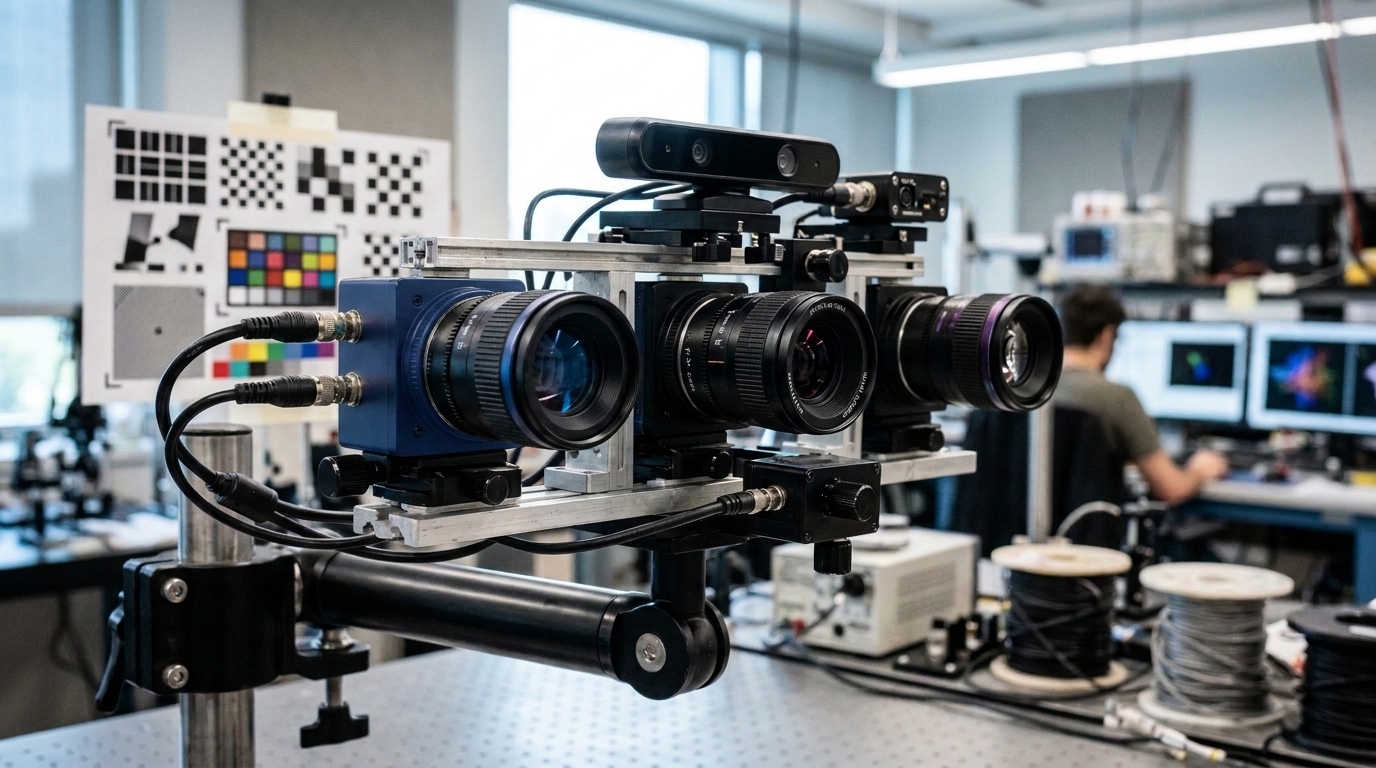
In a survey published in Artificial Intelligence Review, researchers have introduced a formal framework that unifies modern computer vision architectures through the lens of representation learning. Modern computer vision is increasingly propelled by an ongoing search for representations that generalize robustly across diverse tasks, multiple modalities, and varying learning settings, rather than merely excelling at isolated benchmark evaluations. This shift in focus has stimulated the development of a broad collection of architectures and paradigms, prominently including convolutional neural networks, Vision Transformers, state-space models, foundation models, and diffusion-based generative models. Although these distinct approaches differ noticeably in their structural designs and specific optimization targets, they increasingly draw upon a shared set of underlying principles. These common foundations include representation learning, self-attention mechanisms, self-supervision strategies, multimodal alignment techniques, and generative modeling paradigms. Consequently, the traditional boundaries separating discriminative, multimodal, and generative learning paradigms are becoming progressively less distinct across the visual intelligence field.
To systematically analyze this convergence, the survey presents a formal framework that categorizes diverse vision architectures according to which specific component of an encoder–decoder pipeline they modify. Beyond structural classification, the proposed framework unifies diverse training objectives established across the computer vision literature by demonstrating that they represent distinct instances of a single overarching alignment functional. In addition, the authors formalize the long-standing locality–globality trade-off in visual representation learning through two provable theoretical relationships. These provable mathematical formulations directly link an architecture’s operational locality, its required computational cost, and the specific network depth necessary to attain a global receptive field over visual data.
Guided by this theoretical framework, the researchers trace the comprehensive evolution of computer vision architectures across multiple generations of model designs. Their historical and technical examination follows the progression from classical convolutional neural networks and Vision Transformers through hybrid configurations and state-space models, ultimately reaching modern multimodal foundation models and generative frameworks. Rather than reporting only benchmark successes or celebrating performance breakthroughs, the authors critically examine the structural limitations, computational overheads, and practical constraints characteristic of each individual paradigm. To reinforce this critical analysis, the authors complement their conceptual breakdown with a quantitative comparison conducted across representative vision architectures, systematically evidencing how discriminative, multimodal, and generative methodologies are actively converging around shared representational principles.
Synthesizing these findings, the authors advocate for adopting a unified representation-learning perspective to guide future research and development across modern computer vision. By establishing that discriminative, multimodal, and generative paradigms are fundamentally anchored to common representational mechanisms, the survey delivers a cohesive blueprint for interpreting contemporary visual models. Furthermore, the survey outlines persistent open challenges currently confronting the research community and articulates concrete future directions for the field. In particular, the authors identify key priorities for advancing toward general-purpose visual intelligence, creating more capable multimodal foundation models, and achieving reliable, trustworthy deployment in real-world applications.
Subject of Research: Representation learning frameworks in modern computer vision
Article Title: Modern computer vision from CNNs to foundation models: a unified framework for representation learning
Article References: Moujahid, A., Dornaika, F., Mechkouri, S.-E., & Canga, J. C. (2026). Modern computer vision from CNNs to foundation models: a unified framework for representation learning. Artificial Intelligence Review. https://doi.org/10.1007/s10462-026-11735-y
Image Credits: AI Generated
DOI: 10.1007/s10462-026-11735-y
Keywords: computer vision, representation learning, convolutional neural networks, vision transformers, foundation models, generative models, multimodal alignment, state-space models, Modern, computer, vision, CNNs
Cite Scienmag News
Blake Davidson. (November 6, 2026). Unified Framework Traces Computer Vision Evolution From CNNs to Foundation Models. Scienmag. https://scienmag.com/unified-framework-traces-computer-vision-evolution-from-cnns-to-foundation-models/
Blake Davidson. "Unified Framework Traces Computer Vision Evolution From CNNs to Foundation Models." Scienmag, 6 November 2026, https://scienmag.com/unified-framework-traces-computer-vision-evolution-from-cnns-to-foundation-models/. Accessed 10 November 2026.
Blake Davidson. "Unified Framework Traces Computer Vision Evolution From CNNs to Foundation Models." Scienmag. November 6, 2026. https://scienmag.com/unified-framework-traces-computer-vision-evolution-from-cnns-to-foundation-models/




