


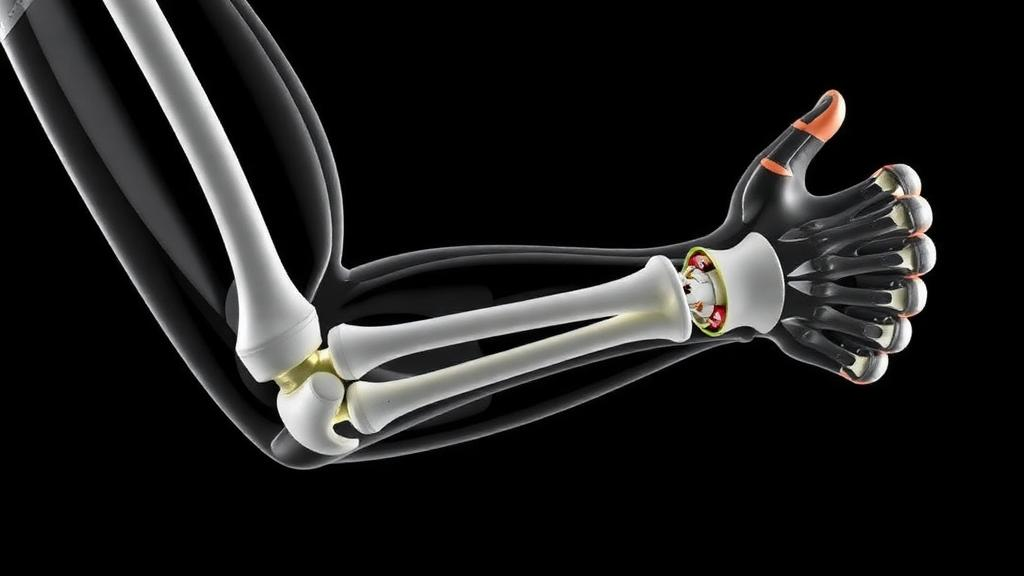
Radial head arthroplasty restored axial construct stiffness in a simulated Monteggia-like elbow injury to levels statistically indistinguishable from those measured with an intact radial head, according to a cadaveric biomechanical study published in Archives of Orthopaedic and Trauma Surgery. The finding addresses a question that has received surprisingly little attention: while much research has examined how ulnar alignment and soft-tissue integrity affect radial head stability, the reverse relationship—how the radial head affects the stability of ulnar fixation—has remained poorly understood.
Monteggia-like lesions are rare but demanding injuries, combining a fracture of the proximal ulna with a fracture-dislocation of the radial head. They account for roughly one to five percent of elbow fractures, a figure first contextualized in work tracing the injury pattern back to Giovanni Battista Monteggia’s original 1814 description. Because the osseous and ligamentous damage is complex, operative treatment is generally required, with locking plate fixation of the ulna representing the current standard. The radial head itself presents a dilemma: reconstruction is preferred whenever feasible, but highly comminuted fractures often force surgeons to choose between prosthetic replacement and simple resection.
The clinical stakes are considerable. Proximal ulna fractures in Monteggia-like lesions carry substantial rates of nonunion and early revision surgery, so the mechanical environment around the plate matters.
To test this, the investigators used eight fresh-frozen human cadaveric elbow specimens, tested under axial loading in a servohydraulic machine. After baseline testing of each intact elbow, they created a standardized five-millimeter-wide segmental defect in the ulnar shaft immediately distal to the coronoid base to simulate a multifragmentary fracture, then bridged it with an olecranon locking plate fixed with one cortical screw and two locking screws on each side. They then resected the radial head while preserving the lateral ligamentous complex, retested, implanted a modular radial head prosthesis sized to the resected head, and performed a final round of testing.
The loading protocol was deliberately conservative and consistent across all specimens. With the elbow flexed to thirty degrees—a posture chosen because it marks the transition from bony to ligamentous stabilization of the joint and reflects a commonly assumed position during daily activities—each specimen received a five-newton preload followed by 1,000 cycles of axial loading up to 450 newtons at one millimeter per second. Failure was predefined as twenty millimeters of vertical displacement. Construct stiffness was calculated as the ratio of peak axial load to peak axial displacement in each cycle, representing secant stiffness at maximum load.
All eight specimens completed the full protocol without reaching the failure criterion, and peak forces remained stable throughout cyclic loading, indicating no relevant fatigue or progressive deformation. The donors averaged 78 years of age, ranging from 53 to 91, and comprised seven women and one man, with four left and four right elbows represented. The sample size was powered on prior cadaveric studies assuming a clinically relevant difference of eight newtons per millimeter, an estimated standard deviation of 6.6, and a within-subject correlation of 0.6, requiring a minimum of six specimens for eighty percent power.
The stiffness measurements traced a clear mechanical story. Native elbows showed a mean stiffness of 49.3 plus or minus 4.29 newtons per millimeter. Creating and plating the ulnar defect dropped this significantly to 36.05 plus or minus 6.71 (p = 0.001). Radial head resection cut stiffness further, to 25.83 plus or minus 6.65 (p < 0.001). Implanting the prosthesis raised stiffness significantly to 33.8 plus or minus 7.89 newtons per millimeter compared with the resection state (p = 0.005), and, critically, the prosthesis condition showed no significant difference from the stabilized ulna with an intact native radial head (p = 0.440).
The mechanistic interpretation centers on load sharing between the two forearm bones. The radial head normally transmits a substantial share of axial load through the radial column; removing it shifts that burden onto the ulna. When the ulna is itself fractured and stabilized with a plate, this redistribution may increase mechanical stress at the bone-implant interface and potentially compromise fixation. Restoring the radial column with a prosthesis appears to partially re-establish physiological load transmission, which the authors suggest could be relevant to fixation durability and the environment for fracture healing.
The findings arrive with important caveats that the authors themselves enumerate. This was a cadaveric model that cannot reproduce in vivo biology: dynamic muscular forces and neuromuscular control were absent, only axial loading was evaluated while rotational and varus-valgus forces also matter clinically, and the injury model excluded the ligamentous injuries and proximal radioulnar instability that commonly accompany Monteggia-like lesions in patients. The specimen count was small and the donor population relatively elderly. The results are therefore biomechanical observations about construct stiffness, not evidence about clinical outcomes, complication rates, or healing in living patients.
The authors also note practical considerations surrounding arthroplasty itself. Prosthesis oversizing has been associated with increased radiocapitellar contact pressures and may contribute to arthrosis or altered joint mechanics, making accurate sizing and restoration of native radial length essential. Clinical studies of radial head management in these injuries have reported variable results, with contemporary data suggesting outcomes depend strongly on surgical expertise and implant design. Whether increasingly rigid ulnar plating techniques might diminish the stabilizing contribution of the radial column remains unclear and, the team concludes, warrants further investigation. Within those limits, the study supports addressing the radial column during initial surgical care of these complex elbow injuries.
Subject of Research: Biomechanical effects of radial head resection and arthroplasty on forearm stiffness in a simulated Monteggia-like elbow injury model.
Article Title: Radial head arthroplasty restores axial construct stiffness in a Monteggia-like injury model: a biomechanical study
Article References: Weber, M. M., Hockmann, J. P., Rosenkranz, T. A., Leschinger, T., Müller, L. P., & Rausch, V. (2026). Radial head arthroplasty restores axial construct stiffness in a Monteggia-like injury model: a biomechanical study. Archives of Orthopaedic and Trauma Surgery, 146(1), Article 384. https://doi.org/10.1007/s00402-026-06515-w
Image Credits: AI Generated
DOI: 10.1007/s00402-026-06515-w
Keywords: radial head arthroplasty, Monteggia-like lesion, elbow fracture, biomechanics, construct stiffness, proximal ulna fracture, cadaveric study, locking plate osteosynthesis, load sharing, orthopaedic trauma, Radial, head
Cite Scienmag News
Ophelia Keating. (October 29, 2026). Radial Head Implants Restore Stiffness in Complex Elbow Fracture Model. Scienmag. https://scienmag.com/radial-head-implants-restore-stiffness-in-complex-elbow-fracture-model/
Ophelia Keating. "Radial Head Implants Restore Stiffness in Complex Elbow Fracture Model." Scienmag, 29 October 2026, https://scienmag.com/radial-head-implants-restore-stiffness-in-complex-elbow-fracture-model/. Accessed 5 November 2026.
Ophelia Keating. "Radial Head Implants Restore Stiffness in Complex Elbow Fracture Model." Scienmag. October 29, 2026. https://scienmag.com/radial-head-implants-restore-stiffness-in-complex-elbow-fracture-model/




