


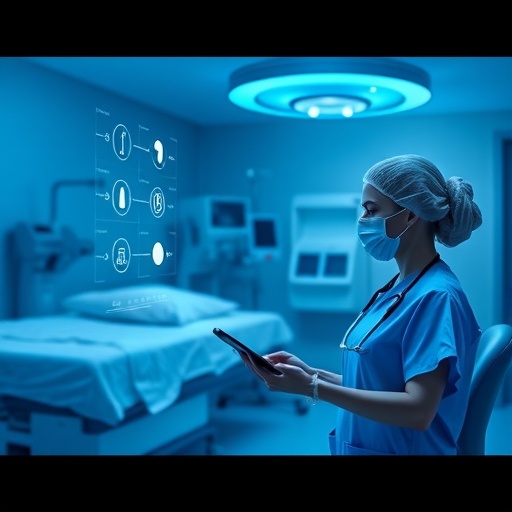
The world of healthcare is increasingly intertwining with advanced technology, and the introduction of 5G networks is fundamentally changing the landscape. In a groundbreaking study conducted in a Chinese hospital, researchers explored the implications of a 5G-based Smart Nursing Information System (SNIS) and associated mobile hardware on the work stress experienced by clinical nurses. This randomized controlled study serves as a seminal investigation into how these technological advancements can alleviate the high levels of stress that healthcare professionals often endure.
Clinical nursing is a demanding profession, with practitioners frequently facing immense pressures that can affect their mental well-being and the quality of patient care. High work-related stress can lead to burnout, diminished job performance, and even compromise patient safety. As the healthcare sector continues to evolve, it is essential to adopt innovative solutions that address these challenges. The integration of a 5G medical private network into smart nursing has emerged as a potential game changer.
The core hypothesis underpinning this study revolves around the notion that enhanced connectivity and advanced mobile hardware can streamline nursing operations, facilitate better communication, and ultimately reduce stress levels among clinical nurses. The researchers aimed to provide substantive evidence supporting the hypothesis that a 5G-enabled infrastructure could lead to improved nursing management and patient care outcomes.
The study enlisted the participation of 226 clinical nurses, who were divided into a control group and a group utilizing the SNIS-SMH system. By comparing the work stress scores between these two groups, researchers endeavored to illuminate the differences attributable to the implementation of this advanced technology. Statistical analyses were employed to ascertain the significance of the findings, paying close attention to multiple dimensions of work-related stress.
The results were telling. Nurses equipped with the SNIS-SMH system reported significantly lower total work stress scores as opposed to their counterparts in the control group. Specifically, the SNIS-SMH group had an average total stress score of 66.16, while the control group averaged 70.65. This marked reduction in stress levels is particularly noteworthy in the context of nursing, where the stakes are often high, and the margin for error is minimal.
Not only did overall stress scores decrease, but the study also revealed specific areas where the SNIS-SMH group exhibited lower scores. In dimensions such as nursing profession and work, workload and time distribution, and patient care, nurses utilizing the system reported markedly reduced stress levels. For example, in the category of nursing profession and work, the SNIS-SMH group scored an average of 14.17 compared to 15.00 in the control group. Similarly, in the workload and time distribution category, the disparity was even more pronounced, with scores of 10.56 against 12.42, indicating a significant improvement in this critical aspect of nursing.
One particularly vital area analyzed was the impact on patient care, where the SNIS-SMH group’s average score was 22.55, compared to 23.70 in the control group. These findings underscore the potential for advanced technological systems not only to enhance nurse satisfaction and reduce stress but also to improve the quality of patient care delivered within healthcare settings.
Interestingly, the study did not identify significant differences in the dimensions of work environment and resources, and management and interpersonal relationships. This indicates that while 5G-based systems can enhance many aspects of nursing work, other factors contributing to workplace stress still require attention and intervention. Addressing these elements is crucial for a holistic approach to reducing overall nurse stress levels.
The findings of this research hold broad implications for nursing management and healthcare policy. As hospitals and clinics grapple with high turnover rates and workforce shortages, the integration of advanced technologies such as the SNIS-SMH system could serve as a strategic intervention. By investing in such systems, healthcare institutions can support their nursing staff more effectively, leading to improved staff retention, better patient outcomes, and a more sustainable work environment.
Moreover, the scientific basis provided by this study could serve as a pivotal reference point for future research in the field of nursing and healthcare technology. As the healthcare landscape continues to adapt to the digital age, understanding the interplay between technology and workforce dynamics becomes increasingly vital. This groundbreaking research not only demonstrates the tangible benefits of a 5G-based nursing information system but also sets the stage for further exploration into digital innovations that can enhance nursing practice.
As healthcare professionals continue to navigate the complexities of their roles, the introduction of 5G and smart technologies could usher in a new era of nursing marked by reduced stress levels, increased efficiency, and enhanced patient care. The positive outcomes observed in this study should spur further investment and research into similar initiatives, with the aim of cultivating a more supportive and effective environment for nurses.
In conclusion, the transformative potential of 5G-enabled smart nursing systems is clear. By alleviating stress and enhancing operational efficiency, these technologies not only benefit the nursing workforce but ultimately contribute to the overarching goal of improving patient care quality and safety. The findings from this randomized controlled study provide compelling evidence for the adoption of such innovations as we move towards a more technologically integrated future in healthcare.
Cite Scienmag News
Arden Whitmore. (April 14, 2025). 5G Smart Nursing System Reduces Clinical Nurses’ Stress. Scienmag. https://scienmag.com/5g-smart-nursing-system-reduces-clinical-nurses-stress/
Arden Whitmore. "5G Smart Nursing System Reduces Clinical Nurses’ Stress." Scienmag, 14 April 2025, https://scienmag.com/5g-smart-nursing-system-reduces-clinical-nurses-stress/. Accessed 28 August 2026.
Arden Whitmore. "5G Smart Nursing System Reduces Clinical Nurses’ Stress." Scienmag. April 14, 2025. https://scienmag.com/5g-smart-nursing-system-reduces-clinical-nurses-stress/


