Friday, October 30, 2026
Science
No Result
View All Result
  • Login
  • HOME
  • SCIENCE NEWS
  • CONTACT US
  • HOME
  • SCIENCE NEWS
  • CONTACT US
No Result
View All Result
Scienmag
No Result
View All Result
Home Science News Biotechnology

Evolutionary Feature Optimization Sharpens Latent Learning in Endoscopy Images

October 28, 2026
in Biology, Biotechnology, Technology and Engineering
Gavin Prescott
By Gavin Prescott Scienmag Editorial Profile - Ecology and Ecosystem Dynamics
Reading Time: 3 mins read
0
Evolutionary Feature Optimization Sharpens Latent Learning in Endoscopy Images

Evolutionary Feature Optimization Sharpens Latent Learning in Endoscopy Images

65
SHARES
587
VIEWS
Share on FacebookShare on Twitter
ADVERTISEMENT

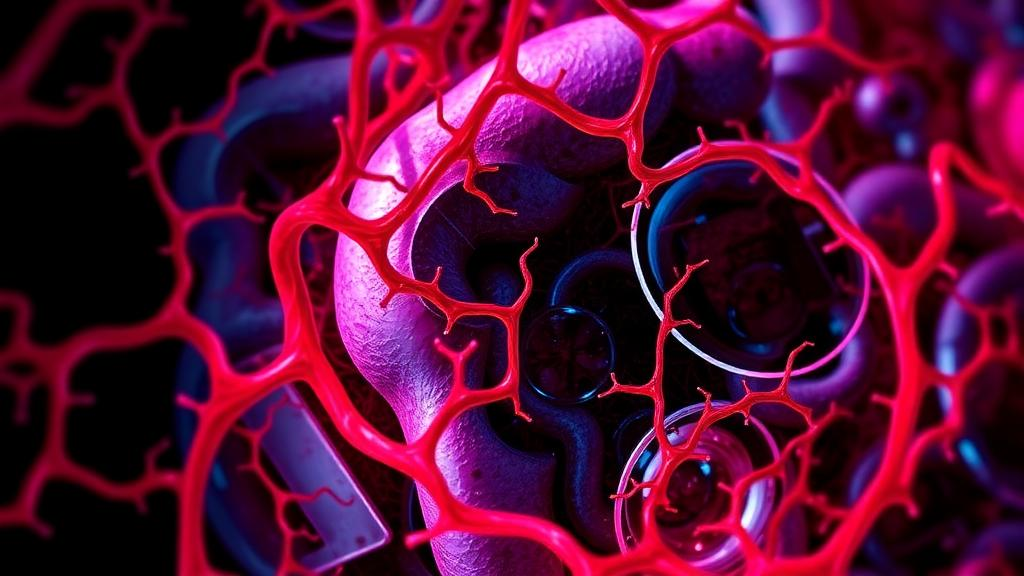
Researchers have introduced EvoLatent-FS, a new deep learning framework that applies evolutionary optimization to feature representations before they are compressed into latent spaces, with the aim of improving how gastrointestinal endoscopy images are analyzed. The work, published as an open access article in BioData Mining on 8 October 2026, addresses a persistent problem in medical image analysis: extracting robust and discriminative representations from endoscopy images that vary widely in appearance, contain subtle pathological differences, and suffer from pronounced class imbalance.

Variational autoencoders, or VAEs, have shown promise for unsupervised and semi-supervised representation learning in this domain. However, the authors note that directly constructing latent spaces from high-dimensional deep features often produces redundant and clinically irrelevant representations. In other words, the latent space may encode visual noise or diagnostically useless patterns rather than the features that actually matter for distinguishing between pathological and healthy tissue.

EvoLatent-FS departs from existing pipelines in the placement of its optimization step. Current approaches either perform feature selection after representation learning has already taken place, or apply latent learning directly to raw deep features. The suggested method instead inserts an intermediary evolutionary optimization stage that refines deep feature representations prior to variational encoding. By optimizing features before the latent model is built, the framework aims to preserve diagnostically relevant patterns while suppressing superfluous visual input.

The architecture consists of three primary components. First, a convolutional backbone extracts deep features from the endoscopy images. Second, a population-based evolutionary feature optimization stage uses binary feature masking, in which candidate subsets of features are encoded as binary masks and evolved by a population of solutions. Third, latent representation learning is carried out with a variational autoencoder operating on the optimized features. This separation of feature optimization from latent modeling, placed directly before variational encoding, creates a representation learning pipeline tailored to the difficulties of gastrointestinal endoscopic imaging.

According to the authors, extensive experiments were carried out on labeled gastrointestinal endoscopy image datasets. The reported results indicate that the suggested framework produces more compact latent representations and better downstream classification performance than traditional pipelines that apply latent modeling directly to unoptimized deep features.

The challenges the framework targets are well known in endoscopic imaging. A latent space that is dominated by redundant or clinically irrelevant features can undermine classification performance, which is why the authors argue that feature optimization should precede latent modeling rather than follow it.

The study is presented as a demonstration of evolutionary-guided pre-latent feature optimization as a novel and principled approach to medical image representation learning. Because the article is being shared early to provide faster access to peer-reviewed, accepted research, it is citable and carries a permanent DOI, though this version remains subject to further edits and will be replaced by the final Version of Record.

Rather than accepting whatever a convolutional backbone produces and hoping a VAE will sort out the useful signals, EvoLatent-FS explicitly curates the feature set before latent encoding begins.

Subject of Research: Evolutionary optimization of deep features before variational latent learning in gastrointestinal endoscopy image analysis

Article Title: An evolutionary guided framework for robust latent representation learning in gastrointestinal endoscopy images: EvoLatent-FS

Article References: Karadayı Ataş, P. (2026). An evolutionary guided framework for robust latent representation learning in gastrointestinal endoscopy images: EvoLatent-FS. BioData Mining. https://doi.org/10.1186/s13040-026-00609-2

Image Credits: AI Generated

DOI: 10.1186/s13040-026-00609-2

Keywords: EvoLatent-FS, variational autoencoder, evolutionary optimization, feature selection, latent representation learning, gastrointestinal endoscopy, medical image analysis, deep learning, binary feature masking, convolutional neural network, class imbalance, BioData Mining

Cite Scienmag News

Gavin Prescott. (October 28, 2026). Evolutionary Feature Optimization Sharpens Latent Learning in Endoscopy Images. Scienmag. https://scienmag.com/evolutionary-feature-optimization-sharpens-latent-learning-in-endoscopy-images/

Gavin Prescott. "Evolutionary Feature Optimization Sharpens Latent Learning in Endoscopy Images." Scienmag, 28 October 2026, https://scienmag.com/evolutionary-feature-optimization-sharpens-latent-learning-in-endoscopy-images/. Accessed 30 October 2026.

Gavin Prescott. "Evolutionary Feature Optimization Sharpens Latent Learning in Endoscopy Images." Scienmag. October 28, 2026. https://scienmag.com/evolutionary-feature-optimization-sharpens-latent-learning-in-endoscopy-images/

Tags: binary feature maskingBioData Miningclass imbalanceclass imbalance in medical datasetsconvolutional neural networkdeep learningdeep learning in medical imagingDiagnostic Accuracy ImprovementEndoscopy image analysisEvoLatent-FSevolutionary feature selectionevolutionary optimizationfeature selectionGastrointestinal endoscopylatent representation learninglatent space optimizationmedical image analysismedical image representation enhancementnoise reduction in deep featuresrobust feature extraction in medical imagessemi-supervised learning in endoscopyunsupervised learning for gastrointestinal imagesvariational autoencodervariational autoencoders for endoscopy
Share26Tweet16
Previous Post

Computational Pipeline Flags New EthR Inhibitor Candidates Against Tuberculosis

Next Post

Biosensors Move Cancer Detection Toward the Point of Care, Review Finds

Related Posts

Silicon Chips That Process Light With Light Push Optical Networks Toward 800 Gb/s
Technology and Engineering

Silicon Chips That Process Light With Light Push Optical Networks Toward 800 Gb/s

October 30, 2026
Scientists discover protein that keeps egg chromosomes glued together for decades
Biology

Scientists discover protein that keeps egg chromosomes glued together for decades

October 30, 2026
Bioelectronic Medicine Summit Charts Neurotechnologies for Patients and Communities
Medicine

Bioelectronic Medicine Summit Charts Neurotechnologies for Patients and Communities

October 30, 2026
New Probe Combines Ion Energy Analysis and Heat Sensing in One Plasma Diagnostic
Technology and Engineering

New Probe Combines Ion Energy Analysis and Heat Sensing in One Plasma Diagnostic

October 30, 2026
Subtelomeric TelKO Elements Stabilize Short Telomeres in Telomerase-Lacking Yeast
Biology

Subtelomeric TelKO Elements Stabilize Short Telomeres in Telomerase-Lacking Yeast

October 30, 2026
New MATLAB Toolkit Reads Protein Polymerization Directly from Cryo-Electron Tomography Data
Biotechnology

New MATLAB Toolkit Reads Protein Polymerization Directly from Cryo-Electron Tomography Data

October 30, 2026
Next Post
Biosensors Move Cancer Detection Toward the Point of Care, Review Finds

Biosensors Move Cancer Detection Toward the Point of Care, Review Finds

  • Mothers who receive childcare support from maternal grandparents show more optimized

    Mothers who receive childcare support from maternal grandparents show more parental warmth, finds NTU Singapore study

    27656 shares
    Share 11059 Tweet 6912
  • University of Seville Breaks 120-Year-Old Mystery, Revises a Key Einstein Concept

    1061 shares
    Share 424 Tweet 265
  • Bee body mass, pathogens and local climate influence heat tolerance

    682 shares
    Share 273 Tweet 171
  • Researchers record first-ever images and data of a shark experiencing a boat strike

    546 shares
    Share 218 Tweet 137
  • Groundbreaking Clinical Trial Reveals Lubiprostone Enhances Kidney Function

    531 shares
    Share 212 Tweet 133
Science

Embark on a thrilling journey of discovery with Scienmag.com—your ultimate source for cutting-edge breakthroughs. Immerse yourself in a world where curiosity knows no limits and tomorrow’s possibilities become today’s reality!

RECENT NEWS

  • Inflammatory blood markers sharpen machine learning detection of mild frailty
  • Six in Ten Clinicians at Ethiopian Hospital Show Good Pediatric Pain Care
  • Silicon Chips That Process Light With Light Push Optical Networks Toward 800 Gb/s
  • Scientists discover protein that keeps egg chromosomes glued together for decades

Categories

  • Agriculture
  • Anthropology
  • Archaeology
  • Athmospheric
  • Biology
  • Biotechnology
  • Blog
  • Bussines
  • Cancer
  • Chemistry
  • Climate
  • Earth Science
  • Editorial Policy
  • Marine
  • Mathematics
  • Medicine
  • Pediatry
  • Policy
  • Psychology & Psychiatry
  • Science Education
  • Science News
  • Social Science
  • Space
  • Technology and Engineering

Subscribe to Blog via Email

Enter your email address to subscribe to this blog and receive notifications of new posts by email.

Join 5,151 other subscribers

© 2025 Scienmag - Science Magazine

Welcome Back!

Login to your account below

Forgotten Password?

Retrieve your password

Please enter your username or email address to reset your password.

Log In
No Result
View All Result
  • HOME
  • SCIENCE NEWS
  • CONTACT US

© 2025 Scienmag - Science Magazine

Discover more from Science

Subscribe now to keep reading and get access to the full archive.

Continue reading