Friday, October 30, 2026
Science
No Result
View All Result
  • Login
  • HOME
  • SCIENCE NEWS
  • CONTACT US
  • HOME
  • SCIENCE NEWS
  • CONTACT US
No Result
View All Result
Scienmag
No Result
View All Result
Home Science News Biology

Heat shock slows sea anemone development and leaves lasting carryover effects

October 28, 2026
in Biology
Juliet Wilcox
By Juliet Wilcox Scienmag Editorial Profile - Human Genetics
Reading Time: 2 mins read
0
Heat shock slows sea anemone development and leaves lasting carryover effects

Heat shock slows sea anemone development and leaves lasting carryover effects

65
SHARES
587
VIEWS
Share on FacebookShare on Twitter
ADVERTISEMENT

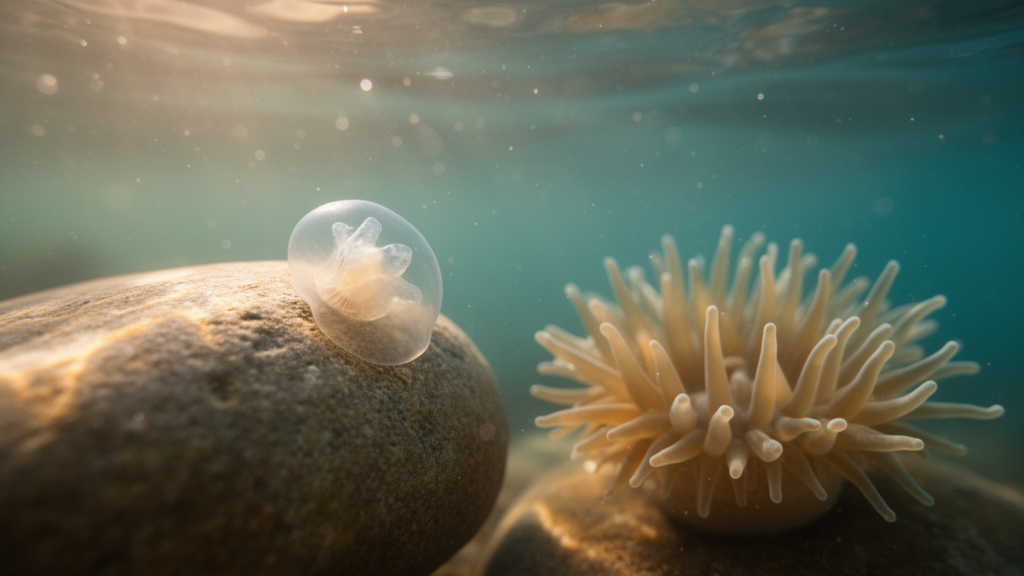
A transient one-hour heat shock during larval development is enough to slow development, disrupt metabolism and leave lasting damage in the starlet sea anemone, Nematostella vectensis, according to a new open-access study published on 24 September 2026 in Developmental Biology Advances by Benjamin H. Glass and Katie L. Barott. The researchers exposed larvae to water at 39 °C for one hour, 21 °C above the ambient temperature of 18 °C, and then tracked the animals’ development, physiology and gene expression as larvae and juveniles.

N. vectensis was chosen because it is an estuarine species adapted to highly variable conditions, including diel temperature fluctuations of more than 20 °C, making it a plausible candidate for strong developmental plasticity. The team hypothesized that such plasticity would allow the animals to lessen the negative effects of thermal stress. Instead, the heat shock led to delayed development after the larvae were returned to ambient conditions, indicating that even a brief, sublethal thermal excursion disrupted the normal pace of development in this hardy species.

Transcriptomic analysis revealed a pronounced stress response in the heat-shocked larvae, including activation of heat shock protein pathways and innate immunity pathways. The animals also showed evidence of metabolic disruption: lipid stores were rapidly depleted, and aerobic respiration rate showed a transient decrease.

The most striking finding emerged long after the heat stress itself had ended. Despite more than a week of recovery under ambient conditions, juveniles that had been exposed to heat shock as larvae displayed negative carryover effects, including reduced body sizes and reduced heat tolerance. The authors attribute these lasting deficits to heat-induced cellular damage and to the metabolic disruption observed earlier in development, rather than to any ongoing thermal exposure.

The study’s conclusions carry two messages. First, the environment demonstrably shapes developmental outcomes in N. vectensis, and the work provides insights into the mechanisms underlying cnidarian developmental plasticity, a process the authors note remains uncharacterized in most species. Second, and perhaps more sobering, even a species adapted to high thermal variability can be negatively affected by hyperthermal stress. Because many marine invertebrates have externally developing early life stages that are threatened by climate change, the authors emphasize the importance of rapid intervention to limit further ocean warming.

Subject of Research: Effects of transient larval heat shock on development, physiology and gene expression in the sea anemone Nematostella vectensis

Article Title: Heat shock induces delayed development leading to carryover effects in the sea anemone Nematostella vectensis

Article References: Glass, B. H., & Barott, K. L. (2026). Heat shock induces delayed development leading to carryover effects in the sea anemone Nematostella vectensis. Developmental Biology Advances. https://doi.org/10.1186/s13227-026-00274-w

Image Credits: AI Generated

DOI: 10.1186/s13227-026-00274-w

Keywords: Nematostella vectensis, heat shock, developmental plasticity, carryover effects, marine invertebrates, climate change, gene expression, lipid depletion, heat tolerance, cnidarians, Heat, shock

Cite Scienmag News

Juliet Wilcox. (October 28, 2026). Heat shock slows sea anemone development and leaves lasting carryover effects. Scienmag. https://scienmag.com/heat-shock-slows-sea-anemone-development-and-leaves-lasting-carryover-effects/
Juliet Wilcox. "Heat shock slows sea anemone development and leaves lasting carryover effects." Scienmag, 28 October 2026, https://scienmag.com/heat-shock-slows-sea-anemone-development-and-leaves-lasting-carryover-effects/. Accessed 30 October 2026.

Juliet Wilcox. "Heat shock slows sea anemone development and leaves lasting carryover effects." Scienmag. October 28, 2026. https://scienmag.com/heat-shock-slows-sea-anemone-development-and-leaves-lasting-carryover-effects/
Tags: carryover effectsclimate changecnidariansdevelopmental plasticitydevelopmental plasticity in estuarine speciesgene expressionheatheat shockheat shock impact on gene expressionheat toleranceimpact of temperature fluctuations on marine organism developmentlarval development delays in Nematostella vectensislasting effects of transient heat exposurelipid depletionlong-term effects ofmarine invertebratesmetabolic disruption in marine larvaeNematostella vectensisSea anemone developmental disruptionshockstress response pathways in sea anemonessublethal heat stress consequences in marine ecosystemsthermal stress effects on marine invertebratestranscriptomic analysis of heat shock in invertebrates
Share26Tweet16
Previous Post

Asymmetric Carotid Stenosis Model Shows Sharper Cognitive Decline in Mice

Next Post

Global South rises as a strategic force in a divided world

Related Posts

Caribbean Anole Lizards Glide Without Wings, Wind Tunnel Study Finds
Biology

Caribbean Anole Lizards Glide Without Wings, Wind Tunnel Study Finds

October 30, 2026
Climate Stress Could Cut Ethiopian Wheat Yields by Half by the 2080s
Biology

Climate Stress Could Cut Ethiopian Wheat Yields by Half by the 2080s

October 30, 2026
Brief Sensory-to-Motor Signal Surge Predicts Success in Mouse Touch Tasks
Biology

Brief Sensory-to-Motor Signal Surge Predicts Success in Mouse Touch Tasks

October 30, 2026
Exercise-linked gene Ticam2 emerges as candidate ALS drug target in mice
Biology

Exercise-linked gene Ticam2 emerges as candidate ALS drug target in mice

October 30, 2026
Knowledge Graph Boosts AI Extraction of Drug Side Effects from Patient Narratives
Biotechnology

Knowledge Graph Boosts AI Extraction of Drug Side Effects from Patient Narratives

October 30, 2026
Maize Stalk Waste Turned Into Carbon Dots That Boost Maize Seedling Photosynthesis
Biotechnology

Maize Stalk Waste Turned Into Carbon Dots That Boost Maize Seedling Photosynthesis

October 30, 2026
Next Post
Global South rises as a strategic force in a divided world

Global South rises as a strategic force in a divided world

  • Mothers who receive childcare support from maternal grandparents show more optimized

    Mothers who receive childcare support from maternal grandparents show more parental warmth, finds NTU Singapore study

    27656 shares
    Share 11059 Tweet 6912
  • University of Seville Breaks 120-Year-Old Mystery, Revises a Key Einstein Concept

    1061 shares
    Share 424 Tweet 265
  • Bee body mass, pathogens and local climate influence heat tolerance

    682 shares
    Share 273 Tweet 171
  • Researchers record first-ever images and data of a shark experiencing a boat strike

    546 shares
    Share 218 Tweet 137
  • Groundbreaking Clinical Trial Reveals Lubiprostone Enhances Kidney Function

    531 shares
    Share 212 Tweet 133
Science

Embark on a thrilling journey of discovery with Scienmag.com—your ultimate source for cutting-edge breakthroughs. Immerse yourself in a world where curiosity knows no limits and tomorrow’s possibilities become today’s reality!

RECENT NEWS

  • Gene Variants Tied to Gestational Diabetes Risk in Iranian Pregnant Women
  • Bacterium and Fungicide Combo Curbs Soybean Root Rot Fungus
  • Solar-Powered Membrane Distillation Moves Closer to Real-World Desalination
  • Gold nanoparticle laser therapy shows strong preclinical tumor-killing power in major meta-analysis

Categories

  • Agriculture
  • Anthropology
  • Archaeology
  • Athmospheric
  • Biology
  • Biotechnology
  • Blog
  • Bussines
  • Cancer
  • Chemistry
  • Climate
  • Earth Science
  • Editorial Policy
  • Marine
  • Mathematics
  • Medicine
  • Pediatry
  • Policy
  • Psychology & Psychiatry
  • Science Education
  • Science News
  • Social Science
  • Space
  • Technology and Engineering

Subscribe to Blog via Email

Enter your email address to subscribe to this blog and receive notifications of new posts by email.

Join 5,151 other subscribers

© 2025 Scienmag - Science Magazine

Welcome Back!

Login to your account below

Forgotten Password?

Retrieve your password

Please enter your username or email address to reset your password.

Log In
No Result
View All Result
  • HOME
  • SCIENCE NEWS
  • CONTACT US

© 2025 Scienmag - Science Magazine

Discover more from Science

Subscribe now to keep reading and get access to the full archive.

Continue reading