

Friday, November 6, 2026
Science
No Result
View All Result
  • Login
  • HOME
  • SCIENCE NEWS
  • CONTACT US
  • HOME
  • SCIENCE NEWS
  • CONTACT US
No Result
View All Result
Scienmag
No Result
View All Result
Home Science News Technology and Engineering

Space syntax reveals how traditional houses in Évora organise privacy and openness

October 28, 2026
in Social Science, Technology and Engineering
Denise Maddox
By Denise Maddox Scienmag Editorial Profile - Mechanical Engineering
Reading Time: 3 mins read
0
Space syntax reveals how traditional houses in Évora organise privacy and openness

Space syntax reveals how traditional houses in Évora organise privacy and openness

65
SHARES
587
VIEWS
Share on FacebookShare on Twitter
ADVERTISEMENT

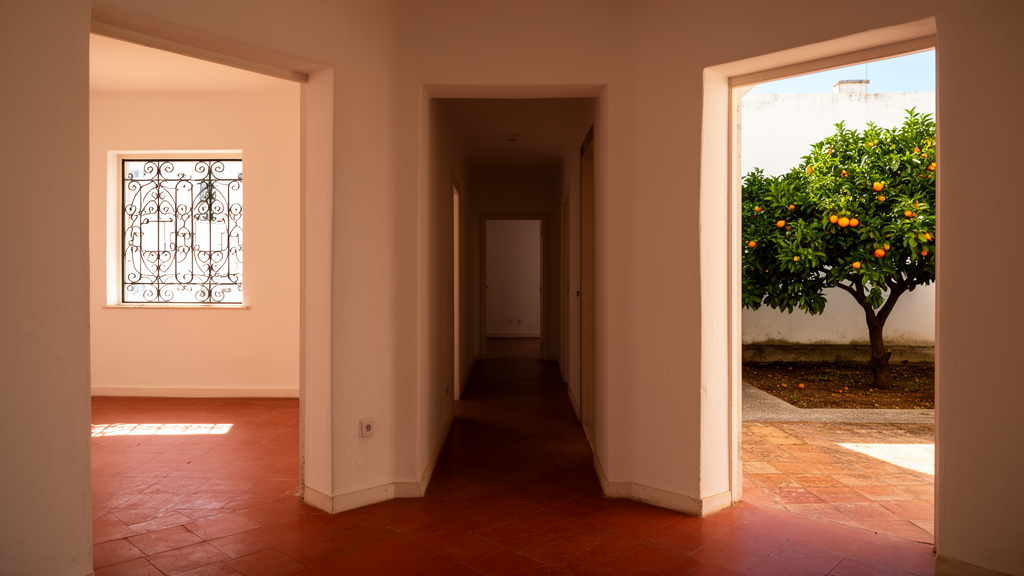
Traditional houses in Évora, Portugal, appear to follow a shared spatial logic built around the patio, according to a new space syntax study of five vernacular dwellings in the UNESCO World Heritage city. The research, published in City, Territory and Architecture, applies configurational analysis to a heritage context where such methods have so far remained limited, particularly within Portuguese vernacular research.

The study, authored by Imran Gümüş Battal, addresses a methodological gap. Earlier work on vernacular housing in the region has concentrated mainly on climate, material culture and typology, while the way accessibility, privacy gradients and patio-related domestic relations are structured through spatial configuration and visibility has received less systematic attention.

Methodologically, the research combines justified graph and visibility graph analyses using the software tools AGRAPH and DepthmapX. Five traditional houses were examined in terms of integration, depth, connectivity, entropy and movement tendencies, measures that describe how easily spaces connect to one another, how deeply rooms are buried within the plan, and how movement is likely to flow through the dwelling.

The analysis identified two dominant configurational tendencies within a shared patio-related domestic logic. In the first model, houses are organised around a clearly defined courtyard or patio that functions as a central spatial core. In the second, the connection to the patio is mediated through less defined external spaces and transitional zones rather than a sharply bounded centre.

Across both models, the houses display shallow spatial hierarchies. This suggests, the study argues, a vernacular logic that prioritises accessibility and controlled openness over strict segregation: domestic space is arranged to keep rooms reachable without isolating them, while the patio mediates relations between household life and the outside.

By positioning space syntax as an interpretive framework for heritage contexts, the study reframes vernacular housing in Évora as a spatial knowledge system. Rather than treating traditional dwellings merely as objects of typological or material study, the approach reads their plans as encoded, analysable knowledge about how domestic life was spatially organised.

The author also presents the work as a contribution of a replicable analytical model intended to bridge spatial analysis and vernacular heritage studies. Because the framework is systematic, it could in principle be applied to other heritage housing stocks where configurational analysis has not previously been used.

It should be noted that the article is being shared early as a peer-reviewed, accepted manuscript, citable under a permanent DOI, and is subject to further edits before the final Version of Record. The published findings rest on a small sample of five houses in a single city, so the two configurational models describe the analysed dwellings rather than a confirmed pattern across all Portuguese vernacular architecture. The study is analytical and interpretive in nature: it documents how the examined houses are configured and what that configuration suggests about domestic logic, rather than testing outcomes for occupants. Within those limits, the work offers a concrete demonstration of how graph-based measures such as integration, depth and connectivity can be brought to bear on heritage housing, and how a patio-centred spatial order of accessibility and controlled openness can be made explicit through formal analysis.

Subject of Research: Space syntax analysis of vernacular housing configuration and patio-related spatial logic in Évora, Portugal

Article Title: Vernacular housing and spatial logic: a space syntax analysis in Évora

Article References: Gümüş Battal, I. (2026). Vernacular housing and spatial logic: a space syntax analysis in Évora. City, Territory and Architecture. https://doi.org/10.1186/s40410-026-00329-4

Image Credits: AI Generated

DOI: 10.1186/s40410-026-00329-4

Keywords: space syntax, vernacular housing, Évora, visibility graph analysis, justified graphs, patio, courtyard, spatial configuration, heritage, accessibility, privacy gradient, Portugal

Cite Scienmag News

Denise Maddox. (October 28, 2026). Space syntax reveals how traditional houses in Évora organise privacy and openness. Scienmag. https://scienmag.com/space-syntax-reveals-how-traditional-houses-in-evora-organise-privacy-and-openness/

Denise Maddox. "Space syntax reveals how traditional houses in Évora organise privacy and openness." Scienmag, 28 October 2026, https://scienmag.com/space-syntax-reveals-how-traditional-houses-in-evora-organise-privacy-and-openness/. Accessed 6 November 2026.

Denise Maddox. "Space syntax reveals how traditional houses in Évora organise privacy and openness." Scienmag. October 28, 2026. https://scienmag.com/space-syntax-reveals-how-traditional-houses-in-evora-organise-privacy-and-openness/

Tags: accessibilityarchitectural analysis using DepthmapX and AGRAPHconfigurational analysis of traditional dwellingscourtyardÉvoraHeritagejustified graphspatiopatio-centered house designPortugalprivacy and openness in Portuguese homesprivacy gradientprivacy gradients in traditional Portuguese residencesspace syntaxspace syntax in vernacular architecturespatial configurationspatial configuration and domestic relationsspatial logic in Évora architectureTraditional house layoutUNESCO World Heritage city housing patternsurban heritage and domestic spatial organizationvernacular housingvisibility and connectivity in historic housesvisibility graph analysis
Share26Tweet16
Previous Post

East Africa’s emissions may bend at lower incomes than expected, study finds

Next Post

Rock Properties at Depth Shape Performance of Deep Borehole Heat Exchangers in Pannonian Basin Study

Related Posts

New PTRU Model Boosts Thai Teachers’ Active Learning Skills in Digital Era
Social Science

New PTRU Model Boosts Thai Teachers’ Active Learning Skills in Digital Era

November 6, 2026
Large Spousal Age Gaps Lower Divorce Risk Exclusively for Older Husbands
Social Science

Large Spousal Age Gaps Lower Divorce Risk Exclusively for Older Husbands

November 6, 2026
Quantum Convolutional Networks Classify Images Directly on Superconducting Hardware
Technology and Engineering

Quantum Convolutional Networks Classify Images Directly on Superconducting Hardware

November 6, 2026
Solid Waste Geopolymer Pervious Concrete Balances Strength and Water Permeability
Technology and Engineering

Solid Waste Geopolymer Pervious Concrete Balances Strength and Water Permeability

November 6, 2026
Research report: Enabling Users to Work Sustainably on Shared Institute Computing Resources
Technology and Engineering

Research report: Enabling Users to Work Sustainably on Shared Institute Computing Resources

November 6, 2026
Study Maps Interdependent Socio-Technical Facilitators of Agricultural Blockchain Adoption
Technology and Engineering

Study Maps Interdependent Socio-Technical Facilitators of Agricultural Blockchain Adoption

November 6, 2026
Next Post
Rock Properties at Depth Shape Performance of Deep Borehole Heat Exchangers in Pannonian Basin Study

Rock Properties at Depth Shape Performance of Deep Borehole Heat Exchangers in Pannonian Basin Study

  • Mothers who receive childcare support from maternal grandparents show more optimized

    Mothers who receive childcare support from maternal grandparents show more parental warmth, finds NTU Singapore study

    27656 shares
    Share 11059 Tweet 6912
  • University of Seville Breaks 120-Year-Old Mystery, Revises a Key Einstein Concept

    1061 shares
    Share 424 Tweet 265
  • Bee body mass, pathogens and local climate influence heat tolerance

    682 shares
    Share 273 Tweet 171
  • Researchers record first-ever images and data of a shark experiencing a boat strike

    546 shares
    Share 218 Tweet 137
  • Groundbreaking Clinical Trial Reveals Lubiprostone Enhances Kidney Function

    531 shares
    Share 212 Tweet 133
Science

Embark on a thrilling journey of discovery with Scienmag.com—your ultimate source for cutting-edge breakthroughs. Immerse yourself in a world where curiosity knows no limits and tomorrow’s possibilities become today’s reality!

RECENT NEWS

  • Trial Compares Text Reminders and Patient Navigation for Bowel Cancer Screening
  • Deep Learning Network MSCF-DM Predicts DNA Methylation Sites Across Multiple Species
  • AI models and experts join forces to map Pakistan’s cloudburst danger zones
  • Breast Cancer Drug Palbociclib Linked to Rare Autoimmune Neuropathy Mimicking CIDP

Categories

  • Agriculture
  • Anthropology
  • Archaeology
  • Athmospheric
  • Biology
  • Biotechnology
  • Blog
  • Bussines
  • Cancer
  • Chemistry
  • Climate
  • Earth Science
  • Editorial Policy
  • Marine
  • Mathematics
  • Medicine
  • Pediatry
  • Policy
  • Psychology & Psychiatry
  • Science Education
  • Science News
  • Social Science
  • Space
  • Technology and Engineering

Subscribe to Blog via Email

Enter your email address to subscribe to this blog and receive notifications of new posts by email.

Join 5,149 other subscribers

© 2025 Scienmag - Science Magazine

Welcome Back!

Login to your account below

Forgotten Password?

Retrieve your password

Please enter your username or email address to reset your password.

Log In
No Result
View All Result
  • HOME
  • SCIENCE NEWS
  • CONTACT US

© 2025 Scienmag - Science Magazine

Discover more from Science

Subscribe now to keep reading and get access to the full archive.

Continue reading

