


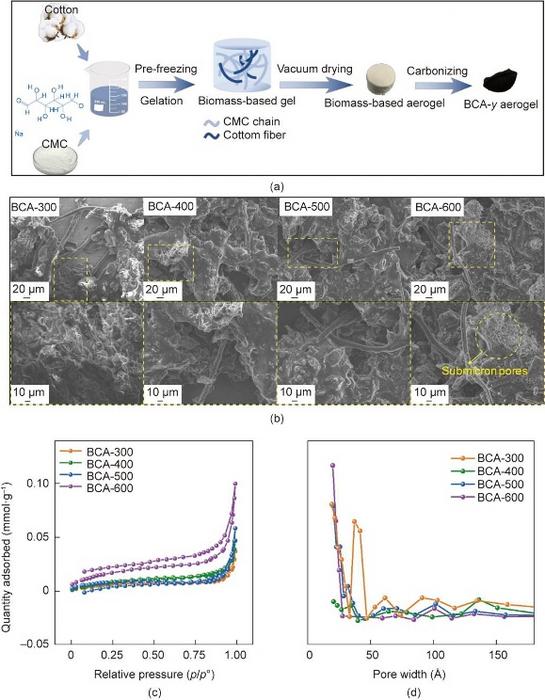
A novel study illuminates a groundbreaking method to tackle the pervasive issues of oily water pollution and oily sludge (OS) through the innovative use of a multifunctional biomass-based carbon aerogel (BCA). This research, conducted by a distinguished group of scientists from various institutions and published in the esteemed journal Engineering, poses a significant step forward in reducing carbon emissions within the petroleum industry. The necessity for alternative pollution mitigation methods has never been more urgent, given the ecological devastation caused by traditional oil extraction and processing operations, which generate significant amounts of oily wastewater and sludge.
Historically, the oil industry has relied on energy-intensive and carbon-heavy methods for treating oily wastewater and sludge. Techniques such as thermal dehydration not only require substantial energy resources but also contribute to the aggravation of carbon emissions, exacerbating the climate crisis. Addressing these pressing environmental concerns, the authors of this research propose a remarkable solar-driven photothermal conversion technology enabled by BCA-600. This innovative approach presents an efficient means to not just dehydrate OS but also purify contaminated water, all while minimizing the carbon footprint associated with such processes.
BCA-600 itself is a fascinating compound synthesized from carboxymethyl cellulose (CMC) and cotton, showcasing a porous three-dimensional structure that enhances its effectiveness in addressing oily wastes. One of the standout features of BCA-600 is its superior photothermal conversion characteristics, allowing it to harness solar energy for its operational processes. This exceptional attribute makes it particularly well-suited for use in regions with ample sunlight, aligning with the growing trend toward renewable energy technologies that promise to mitigate environmental impact.
Moreover, the surface properties of BCA-600 are integral to its functionality. By modifying its surface wettability, this aerogel can efficiently adsorb high-viscosity crude oil floating on the water surface, boasting an impressive adsorption capacity of 4.28 g/g. This capability not only facilitates the targeted removal of oil from water surfaces but also enables effective demulsification of water-in-oil emulsions, achieving an astonishing separation efficiency of up to 97.28% when applied to hexane-water emulsions.
Experimental data from the study further underscores the efficiency of BCA-600 in promoting the evaporation of OS. In trials where BCA-600 was mixed with OS at a mass ratio of 10:2, researchers recorded a dehydration efficiency peak of 90.68%. This sets a new benchmark for the potential of biomass-derived materials in treating oil pollutants. Fascinatingly, the research also revealed that the presence of soil in OS enhances water evaporation, while the oily phase tends to inhibit this process, suggesting complex interactions that could be leveraged for improved liquid waste management strategies.
A critical aspect of this study lies in its implications for carbon reduction. The innovative method utilizing solar photothermal dehydration is reported to significantly lower carbon emissions compared to conventional thermal dehydration technologies, with the emissions being reduced to just about 1/100th of traditional methods. Such a dimension of this new approach not only offers a pathway to address pollution but also aligns seamlessly with global climate efforts targeting carbon neutrality and sustainable industry practices.
Nevertheless, the research does come with a number of challenges and considerations. Evaporating oily sludge may release volatile organic compounds (VOCs) and heavy metals, which must be managed through effective filtering and containment methods. Additionally, the efficiency of solar photothermal dehydration may vary based on local site conditions and the availability of natural sunlight, so further research is essential to optimize this technology for deployment in diverse environments.
In light of these findings, the scientists emphasize that while BCA-600 presents a promising advancement in the treatment of oily pollutants, future investigations will be crucial in refining this method. The focus will be directed toward developing more advanced evaporation technologies that operate effectively under solar irradiation, alongside exploring synergistic solutions that integrate solar photothermal and traditional thermal dehydration techniques. By doing so, researchers aim to overcome current limitations and elevate the treatment processes of oily wastes to new heights.
These ambitious efforts signify a bright future for not only the oil industry but for global environmental health as well. The innovative research presented in the paper titled “Solar-driven dehydration and purification of oily pollutants with a multifunctional biomass-based carbon aerogel: A potential step towards carbon reduction,” unveils the transformative potential of technologically-enhanced materials. Serving as a clarion call, it encourages further exploration into the role of science and technology in environmental remediation, ultimately steering society towards a more sustainable path and sparking discussions on innovative solutions that combine ecological sensitivity with industrial needs.
As we move forward, the scientific community is urged to reflect on the insights gained from this research, encouraging collaboration across disciplines and industries to find synergistic solutions for globally pressing problems. The movement towards cleaner, greener technologies must gain momentum, driven by studies such as this one, which display an unwavering commitment to combat pollution and protect our planet for future generations.
Keywords
– Oily water pollution
– Oily sludge
– Biomass-based carbon aerogel
– Photothermal conversion
– Environmental sustainability
– Carbon emissions reduction
Cite Scienmag News
Sloane Callahan. (April 10, 2025). Biomass-Infused Carbon Aerogel: A Revolutionary Approach to Addressing Oily Pollution. Scienmag. https://scienmag.com/biomass-infused-carbon-aerogel-a-revolutionary-approach-to-addressing-oily-pollution/
Sloane Callahan. "Biomass-Infused Carbon Aerogel: A Revolutionary Approach to Addressing Oily Pollution." Scienmag, 10 April 2025, https://scienmag.com/biomass-infused-carbon-aerogel-a-revolutionary-approach-to-addressing-oily-pollution/. Accessed 3 September 2026.
Sloane Callahan. "Biomass-Infused Carbon Aerogel: A Revolutionary Approach to Addressing Oily Pollution." Scienmag. April 10, 2025. https://scienmag.com/biomass-infused-carbon-aerogel-a-revolutionary-approach-to-addressing-oily-pollution/


