Wednesday, October 28, 2026
Science
No Result
View All Result
  • Login
  • HOME
  • SCIENCE NEWS
  • CONTACT US
  • HOME
  • SCIENCE NEWS
  • CONTACT US
No Result
View All Result
Scienmag
No Result
View All Result
Home Science News Science Education

Improved Problem-Based Learning Boosts Specific Skills in Endodontic Resident Training

October 27, 2026
in Medicine, Science Education
Courtney Benton
By Courtney Benton Scienmag Editorial Profile - Science and Technology Policy
Reading Time: 3 mins read
0
Improved Problem-Based Learning Boosts Specific Skills in Endodontic Resident Training

Improved Problem-Based Learning Boosts Specific Skills in Endodontic Resident Training

65
SHARES
587
VIEWS
Share on FacebookShare on Twitter
ADVERTISEMENT

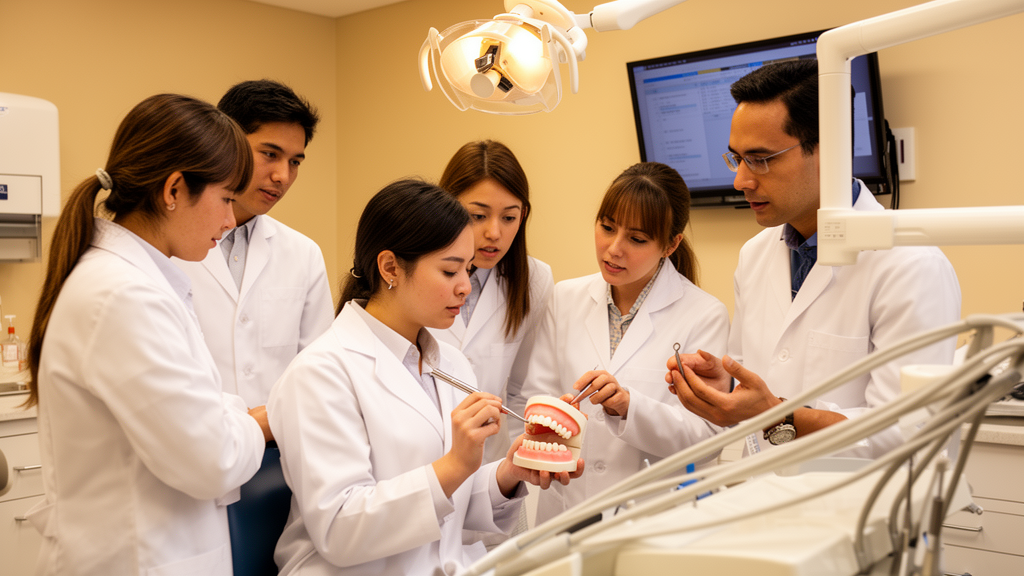
An improved version of problem-based learning (PBL) produced measurable gains in specific clinical competencies among dental residents training in endodontics, according to a randomized study published in BMC Medical Education. The trial, conducted between January 2023 and December 2025, randomly assigned 120 residents undergoing standardized residency training in endodontics to either an experimental group taught with the improved PBL method or a control group taught with conventional PBL, with 60 residents in each arm. The researchers evaluated clinical competency using the Directly Observed Procedural Skills (DOPS) assessment, applied independently at baseline, when the course started, and again upon completion.

Two procedures were assessed: root canal treatment (RCT) and rubber dam isolation (RDI). Feedback questionnaires were also used to capture how residents and teachers perceived each teaching approach. Both groups showed significant within-group improvements across most DOPS dimensions for both procedures, indicating that either form of PBL was associated with skill development over the course of training.

The more meaningful differences emerged in the between-group comparisons, where the improved PBL group outperformed the conventional group in specific, procedure-dependent domains. For root canal treatment, a technically demanding procedure, the improved PBL group showed significant advantages in operational capability and in obtaining patient consent. These findings suggest the refined method may strengthen both hands-on execution and the interpersonal steps involved in preparing patients for complex endodontic work.

The advantages of the improved PBL model were primarily observed in interpersonal domains, including communication skills and humanistic care, while no significant difference was found in operational capability between the two groups. The authors interpret this contrast as evidence that the pedagogical benefits of improved PBL depend on the complexity and technical demands of the specific clinical procedure being taught. Where technical difficulty is high, as in root canal treatment, the improved method appeared to support operational skill; where the procedure is less technically demanding, its effects were more visible in communication and patient-centered care.

The questionnaire findings pointed to generally positive perceptions of the improved PBL method among both residents and teachers. The strongest endorsements related to theoretical understanding, clinical teaching, and autonomous learning, suggesting the approach was well received by the people actually engaged in delivering and receiving the training. Standardized residency training in stomatology is considered essential for developing competent dental professionals, yet improving clinical skills effectively remains a recognized challenge in dental education.

The study addresses that gap by testing whether a modified PBL format could deliver targeted advantages over the conventional version within real clinical practice settings. The researchers caution that further multicenter studies with larger sample sizes are needed to confirm the effectiveness and generalizability of the improved PBL approach. Overall, the study offers a nuanced picture: rather than uniformly outperforming conventional PBL, the improved method demonstrated distinct, procedure-specific strengths, fostering particular clinical competencies in endodontic trainees while leaving other dimensions, such as operational skill in simpler procedures, largely unchanged between the two teaching models.

Subject of Research: Effect of an improved problem-based learning method on clinical competency in endodontic residency training

Article Title: Application of an improved problem-based learning method in clinical endodontic training of standardized residents

Article References: Jiang, W., Yang, J., Yu, Q., Chen, Y., & Tu, Y. (2026). Application of an improved problem-based learning method in clinical endodontic training of standardized residents. BMC Medical Education. https://doi.org/10.1186/s12909-026-10199-6

Image Credits: AI Generated

DOI: 10.1186/s12909-026-10199-6

Keywords: problem-based learning, endodontics, residency training, dental education, DOPS assessment, root canal treatment, rubber dam isolation, clinical competency, randomized trial, medical education, Application, improved

Cite Scienmag News

Courtney Benton. (October 27, 2026). Improved Problem-Based Learning Boosts Specific Skills in Endodontic Resident Training. Scienmag. https://scienmag.com/improved-problem-based-learning-boosts-specific-skills-in-endodontic-resident-training/


Courtney Benton. "Improved Problem-Based Learning Boosts Specific Skills in Endodontic Resident Training." Scienmag, 27 October 2026, https://scienmag.com/improved-problem-based-learning-boosts-specific-skills-in-endodontic-resident-training/. Accessed 28 October 2026.

Courtney Benton. "Improved Problem-Based Learning Boosts Specific Skills in Endodontic Resident Training." Scienmag. October 27, 2026. https://scienmag.com/improved-problem-based-learning-boosts-specific-skills-in-endodontic-resident-training/

Tags: applicationclinical competencyclinical competency assessment in endodonticsdental educationdental residency training outcomesdirect observational skills in dental trainingDOPS assessmenteducational strategies for dental specialistsendodontic resident trainingendodonticsimpact of innovative teaching methods in dentistryimprovedMedical Educationpatient consent in endodontic proceduresproblem-based learningproblem-based learning in dental educationrandomized study on PBL effectivenessrandomized trialresidency trainingroot canal treatmentroot canal treatment skills developmentrubber dam isolationrubber dam isolation proficiencyskill improvement in endodontic procedures
Share26Tweet16
Previous Post

Dissolved iron impurities drive green hydrogen electrolyzer degradation during power interruptions

Next Post

Distrust of Medicine Linked to Delayed Care and Weaker Cancer Screening Attitudes

Related Posts

Community-based health insurance reaches few Ethiopian households, national survey finds
Medicine

Community-based health insurance reaches few Ethiopian households, national survey finds

October 28, 2026
Spermatic Vein Blood Reveals Hidden Inhibin B Drop in Varicocele
Medicine

Spermatic Vein Blood Reveals Hidden Inhibin B Drop in Varicocele

October 28, 2026
Novel ALPL Splice-Site Mutation Identified as Cause of Severe Perinatal Hypophosphatasia
Medicine

Novel ALPL Splice-Site Mutation Identified as Cause of Severe Perinatal Hypophosphatasia

October 28, 2026
Pregnancy testing before radioactive iodine therapy: review urges serum hCG within 24 hours and two weeks of abstinence
Medicine

Pregnancy testing before radioactive iodine therapy: review urges serum hCG within 24 hours and two weeks of abstinence

October 28, 2026
New hierarchical framework rethinks echocardiography in pulmonary hypertension
Medicine

New hierarchical framework rethinks echocardiography in pulmonary hypertension

October 28, 2026
Leukemia cells lacking PTEN reveal a metabolic weakness that approved drugs can exploit
Medicine

Leukemia cells lacking PTEN reveal a metabolic weakness that approved drugs can exploit

October 28, 2026
Next Post
Distrust of Medicine Linked to Delayed Care and Weaker Cancer Screening Attitudes

Distrust of Medicine Linked to Delayed Care and Weaker Cancer Screening Attitudes

  • Mothers who receive childcare support from maternal grandparents show more optimized

    Mothers who receive childcare support from maternal grandparents show more parental warmth, finds NTU Singapore study

    27656 shares
    Share 11059 Tweet 6912
  • University of Seville Breaks 120-Year-Old Mystery, Revises a Key Einstein Concept

    1061 shares
    Share 424 Tweet 265
  • Bee body mass, pathogens and local climate influence heat tolerance

    682 shares
    Share 273 Tweet 171
  • Researchers record first-ever images and data of a shark experiencing a boat strike

    546 shares
    Share 218 Tweet 137
  • Groundbreaking Clinical Trial Reveals Lubiprostone Enhances Kidney Function

    531 shares
    Share 212 Tweet 133
Science

Embark on a thrilling journey of discovery with Scienmag.com—your ultimate source for cutting-edge breakthroughs. Immerse yourself in a world where curiosity knows no limits and tomorrow’s possibilities become today’s reality!

RECENT NEWS

  • Vehicle Movement, Not Lights or Crowds, Dominates Pedestrian Judgments of Automated Cars
  • Community-based health insurance reaches few Ethiopian households, national survey finds
  • Selenium Helps Tomato Seedlings Cope with Saline-Alkali Stress, Study Finds
  • Spermatic Vein Blood Reveals Hidden Inhibin B Drop in Varicocele

Categories

  • Agriculture
  • Anthropology
  • Archaeology
  • Athmospheric
  • Biology
  • Biotechnology
  • Blog
  • Bussines
  • Cancer
  • Chemistry
  • Climate
  • Earth Science
  • Editorial Policy
  • Marine
  • Mathematics
  • Medicine
  • Pediatry
  • Policy
  • Psychology & Psychiatry
  • Science Education
  • Science News
  • Social Science
  • Space
  • Technology and Engineering

Subscribe to Blog via Email

Enter your email address to subscribe to this blog and receive notifications of new posts by email.

Join 5,151 other subscribers

© 2025 Scienmag - Science Magazine

Welcome Back!

Login to your account below

Forgotten Password?

Retrieve your password

Please enter your username or email address to reset your password.

Log In
No Result
View All Result
  • HOME
  • SCIENCE NEWS
  • CONTACT US

© 2025 Scienmag - Science Magazine

Discover more from Science

Subscribe now to keep reading and get access to the full archive.

Continue reading