


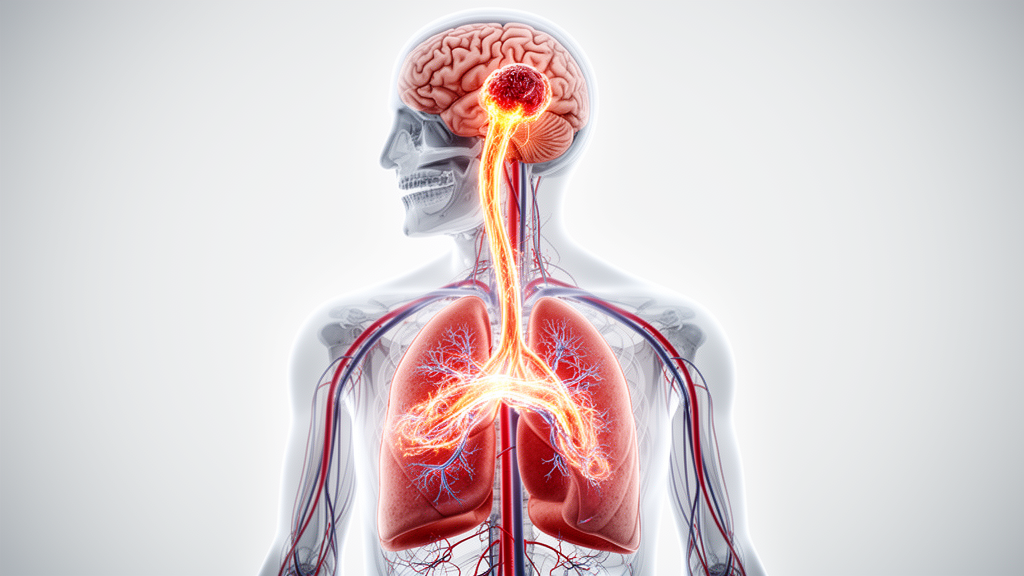
Brain abscess represents one of the most formidable and life-threatening infectious diseases of the central nervous system (CNS), characterized by high rates of both mortality and morbidity. While many cases are attributed to hematogenous spread from distant sites, a subset of brain abscesses remains cryptogenic, meaning the source of infection cannot be readily identified through standard diagnostic protocols. Among the rare etiologies for cryptogenic CNS infections, pulmonary arteriovenous fistulas (PAVFs) have been identified as a significant, albeit uncommon, source.
The microbial landscape associated with brain abscesses linked to PAVFs typically involves oral anaerobes or facultative anaerobes. Common culprits include non-hemolytic streptococci and *Streptococcus intermedius*. The identification of *Campylobacter rectus* (*C. rectus*) as a causative agent in this specific context is highly unusual. To the knowledge of the scientific community, no previous case has been reported where a monomicrobial *C. rectus* brain abscess manifested in a patient who possessed an asymptomatic PAVF, underscoring the unique nature of this reported clinical presentation and its diagnostic implications.
This case report details the clinical course of a 57-year-old man who presented to a hospital setting exhibiting classic symptoms of central nervous system infection, specifically fever and a persistent headache. Initial investigations were critical to determining the etiology of his condition. Magnetic resonance (MR) imaging provided definitive evidence of a significant cerebral lesion: a 5 × 2 cm brain abscess localized within the right temporal and occipital lobes. This abscess was noted to be surrounded by extensive perilesional edema, a finding indicative of the inflammatory response to the infection within the delicate brain tissue. Concurrently, enhanced computed tomography (CT) scanning of the patient’s lungs revealed both pulmonary nodules and the presence of a PAVF, establishing the crucial vascular link between the lung and the brain pathology.
The diagnostic process presented several complexities. Despite the clear evidence of a brain abscess, standard systemic investigations initially failed to yield a definitive source. Initial antimicrobial therapy was initiated, involving the administration of Piperacillin-tazobactam and meropenem, which are broad-spectrum agents intended to cover a wide range of potential pathogens, including oral anaerobes.
Given the refractory nature of the infection and the persistent symptoms, the patient was subsequently transferred to a neurosurgery unit for definitive management. The procedure involved a craniotomy to access and resect the abscess. Following the resection, a postoperative pus culture was performed on the excised material. This culture provided the definitive microbiological answer, confirming the presence of *C. rectus* as the causative agent of the brain abscess. This finding linked the cerebral pathology directly to the pulmonary vascular anomaly previously identified on CT imaging, completing the diagnostic puzzle.
The clinical picture presented by this patient underscores the critical importance of considering rare vascular anomalies, such as PAVFs, when investigating unexplained CNS infections. While PAVFs are known to be a cause of cryptogenic brain abscesses, the specific combination of an asymptomatic shunt and a monomicrobial *C. rectus* infection represents a novel clinical entity.
The conclusion drawn from this case report carries significant weight for clinical practice, particularly in the management of brain abscesses caused by oral anaerobes, such as *C. rectus*. When a patient presents with a brain abscess and standard microbiological workup fails to identify a clear source, or when the causative agent is an oral anaerobe, clinicians should consider a broader differential diagnosis that includes right-to-left shunting diseases like PAVFs.
Subject of Research: A case report detailing a Campylobacter rectus brain abscess in a patient with an asymptomatic pulmonary arteriovenous fistula.
Article Title: An asymptomatic pulmonary arteriovenous fistula presenting with a Campylobacter rectus brain abscess as the initial manifestation: a case report
Article References: Li, J., Ji, X., Zhang, H., Liao, Y., & Li, J. (2026). An asymptomatic pulmonary arteriovenous fistula presenting with a Campylobacter rectus brain abscess as the initial manifestation: a case report. Frontiers in Medicine, 13, Article 2008073. https://doi.org/10.3389/fmed.2026.2008073
Image Credits: AI Generated
DOI: 10.3389/fmed.2026.2008073
Keywords: Brain Abscess, Campylobacter rectus, PAVF, Cryptogenic Abscess, CNS Infection, Anaerobes, Case Study, Pulmonary Fistula, asymptomatic, pulmonary, arteriovenous, fistula
Cite Scienmag News
Cassandra Pierce. (October 27, 2026). Rare Brain Abscess Linked to Asymptomatic Pulmonary Arteriovenous Fistula. Scienmag. https://scienmag.com/rare-brain-abscess-linked-to-asymptomatic-pulmonary-arteriovenous-fistula/
Cassandra Pierce. "Rare Brain Abscess Linked to Asymptomatic Pulmonary Arteriovenous Fistula." Scienmag, 27 October 2026, https://scienmag.com/rare-brain-abscess-linked-to-asymptomatic-pulmonary-arteriovenous-fistula/. Accessed 27 October 2026.
Cassandra Pierce. "Rare Brain Abscess Linked to Asymptomatic Pulmonary Arteriovenous Fistula." Scienmag. October 27, 2026. https://scienmag.com/rare-brain-abscess-linked-to-asymptomatic-pulmonary-arteriovenous-fistula/


