


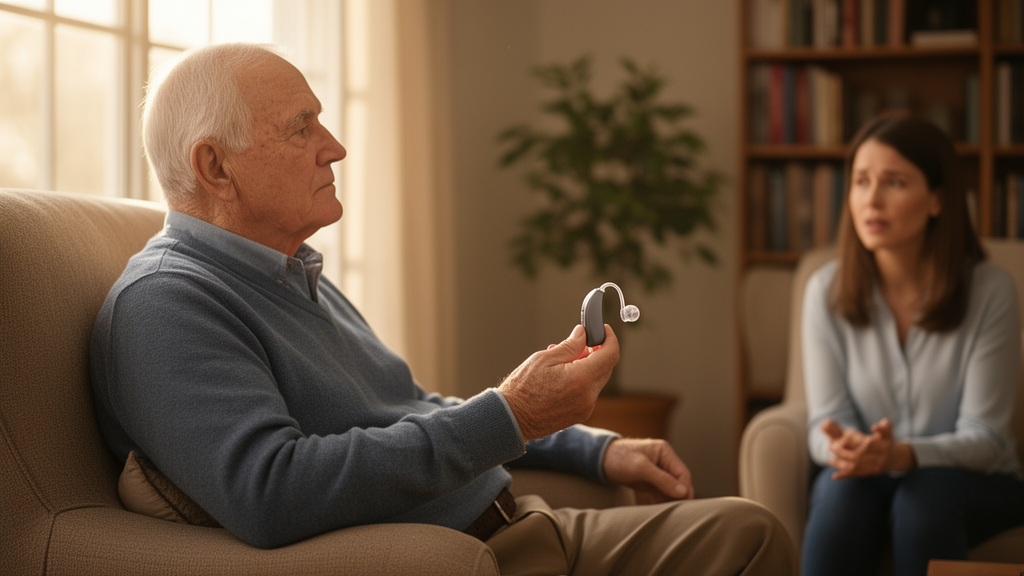
Age-related hearing loss has emerged as one of the most consistently reported correlates of cognitive decline among community-dwelling older adults, according to a new scoping review published in BMC Geriatrics.
The research team searched seven databases—PubMed, Web of Science, CINAHL, ProQuest Dissertations & Theses, RISS, KCI, and ScienceON—for studies published in English or Korean between 2015 and 2025. To be included, sources had to target community-dwelling adults aged 60 years or older and examine the association between age-related hearing loss, also known as presbycusis, and cognitive outcomes. In total, 74 sources met the inclusion criteria. The review protocol was registered in advance with the Open Science Framework Registry.
The methodological picture that emerged was strikingly uneven. Cross-sectional designs predominated across the included studies, followed by longitudinal or cohort designs, while only a single randomized controlled trial made it into the review.
Across the mapped evidence, the review identified predominantly adverse associations between age-related hearing loss and cognitive decline, although mixed findings and null results were also reported in the literature. In other words, while the dominant pattern in the assembled studies points toward poorer cognitive outcomes among older adults with hearing loss, the evidence base is not uniform, and some studies found no association or produced results that did not align cleanly with the majority pattern.
The majority of studies focused on the body functions and structures components of the framework, while relatively few addressed the activities, participation, and environmental components. This concentration means that most research has examined hearing and cognition at the level of bodily systems, leaving questions about how hearing loss affects daily activities, social participation, and environmental factors comparatively underexplored.
The review’s conclusions point to several knowledge gaps that the authors argue should shape future research. They recommend that investigators prioritize the underexplored activities and participation components of the ICF framework, and they suggest that broader application of the framework could provide a more comprehensive understanding of the relationship between hearing and cognition. Such an approach, they write, could also support the development of holistic nursing and public health strategies aimed at promoting hearing and cognitive health among community-dwelling older adults.
As a scoping review, the study was designed to map the existing evidence landscape and identify gaps rather than to pool effect estimates or test a causal hypothesis. Its scope was limited to studies published in English or Korean within a defined ten-year window, targeting a specific population of community-dwelling adults aged 60 and over. The findings therefore describe patterns in the published literature rather than establishing a definitive magnitude of any link between hearing loss and cognitive decline.
Nevertheless, the review offers a consolidated snapshot of a decade of research on age-related hearing loss, which the authors describe as a major health concern among older adults. By cataloguing study designs, assessment methods, analytic directions, and patterns of findings across 74 sources, and by highlighting how rarely research has engaged with participation and environmental dimensions, the authors provide a roadmap for the kinds of studies they argue are still needed to understand how age-related hearing loss and cognitive decline interact in the daily lives of older adults living in the community.
Subject of Research: The relationship between age-related hearing loss and cognitive decline in community-dwelling older adults
Article Title: Age-related hearing loss and cognitive decline among community-dwelling older adults: a scoping review
Article References: Jung, D., De Gagne, J. C., Shin, S., Byeon, S., Seo, H., Shin, Y., Lim, J., Lee, J., & Yoo, L. (2026). Age-related hearing loss and cognitive decline among community-dwelling older adults: a scoping review. BMC Geriatrics. https://doi.org/10.1186/s12877-026-08561-w
Image Credits: AI Generated
DOI: 10.1186/s12877-026-08561-w
Keywords: age-related hearing loss, presbycusis, cognitive decline, dementia, scoping review, older adults, community-dwelling, ICF framework, BMC Geriatrics, nursing, public health, knowledge gaps
Cite Scienmag News
Beatrice Stafford. (October 27, 2026). Hearing Loss Tied to Cognitive Decline in Older Adults, Scoping Review Finds. Scienmag. https://scienmag.com/hearing-loss-tied-to-cognitive-decline-in-older-adults-scoping-review-finds/
Beatrice Stafford. "Hearing Loss Tied to Cognitive Decline in Older Adults, Scoping Review Finds." Scienmag, 27 October 2026, https://scienmag.com/hearing-loss-tied-to-cognitive-decline-in-older-adults-scoping-review-finds/. Accessed 27 October 2026.
Beatrice Stafford. "Hearing Loss Tied to Cognitive Decline in Older Adults, Scoping Review Finds." Scienmag. October 27, 2026. https://scienmag.com/hearing-loss-tied-to-cognitive-decline-in-older-adults-scoping-review-finds/


