

Tuesday, October 27, 2026
Science
No Result
View All Result
  • Login
  • HOME
  • SCIENCE NEWS
  • CONTACT US
  • HOME
  • SCIENCE NEWS
  • CONTACT US
No Result
View All Result
Scienmag
No Result
View All Result
Home Science News

Research report: Untapped potential: phosphorus recovery and reuse options from livestock manure and rendering by-products in the EU-27

October 27, 2026
in Science News
William Thompson
By William Thompson Scienmag Editorial Profile - Livestock Health and Welfare
Reading Time: 2 mins read
0
Research report: Untapped potential: phosphorus recovery and reuse options from livestock manure and rendering by-products in the EU-27

Research report: Untapped potential: phosphorus recovery and reuse options from livestock manure and rendering by-products in the EU-27

65
SHARES
587
VIEWS
Share on FacebookShare on Twitter
ADVERTISEMENT

The researchers estimated the annual quantities of manure and rendered by-products generated within the EU-27 and calculated the phosphorus they contain, including the fraction that is plant-available after conversion into products such as compost, biochar, ash, struvite, bone ash and animal bone char. Pig slurry alone yields an average of about 170,000 tonnes of phosphorus per year, while poultry deep litter contributes roughly 1,067,000 tonnes annually, making these two streams the dominant domestic phosphorus reservoirs identified in the analysis. The impetus behind the work is environmental as much as agricultural.

Poorly managed livestock waste drives nitrogen and phosphorus losses into waterways, fuelling eutrophication, and EU policy has increasingly pushed for sustainable nutrient management and better recirculation of phosphorus within agricultural systems. Treating animal by-products into nutrient-balanced bio-based products offers a route that addresses both the pollution problem and Europe's dependence on imported inorganic phosphorus fertilisers. A central comparison in the study concerned application rates.

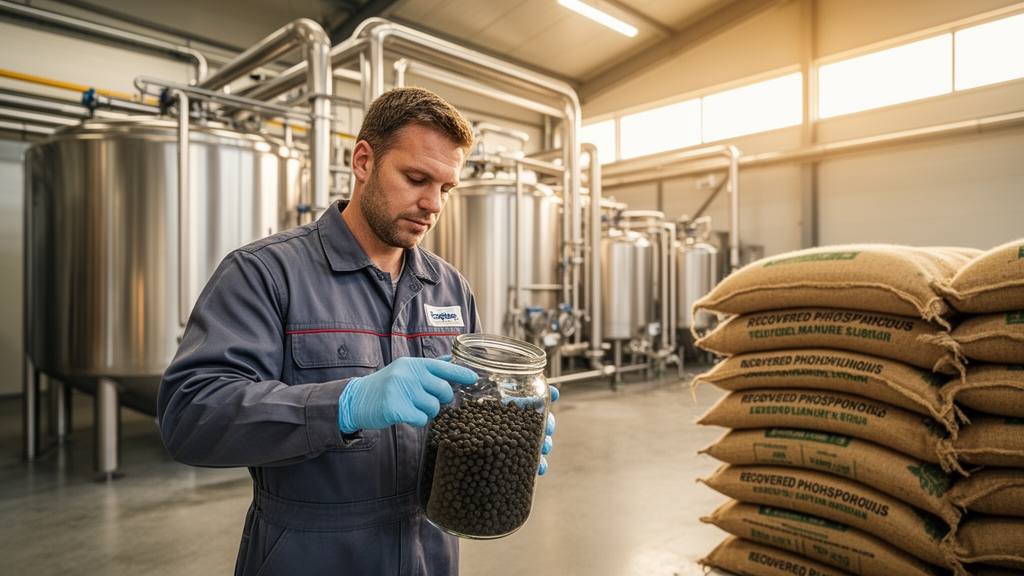
The modelling showed that animal bone char, a phosphorus-rich product made from rendered bones, would need to be applied at 74 to 131 kilograms per hectare per year, a range closely matching the 77 to 107 kilograms per hectare per year typically applied as diammonium phosphate, the most common mineral phosphorus fertiliser. This parity suggests animal bone char could substitute for conventional fertiliser at comparable spreading intensities. From an environmental standpoint, the authors describe animal bone char as an attractive and promising phosphorus fertiliser option for a more sustainable and circular agricultural system, one that would not rely exclusively on imported inorganic phosphorus.

The study is based on data drawn from relevant literature and databases rather than new field trials, so its figures represent modelled estimates of annual phosphorus outputs and application requirements at the scale of the EU-27. The plant-available phosphorus content of each bio-based product was assessed to allow comparison across the different treatment routes, from composting to pyrolysis-based processes producing biochar and bone-derived materials. Despite the promising numbers, the path to market is not straightforward.

The authors note that innovative incentives, techniques and policies are needed to overcome the economic and technical challenges currently affecting the introduction of animal bone char and comparable products. By quantifying how much phosphorus sits in pig slurry, poultry litter and rendering by-products, and by benchmarking bio-based products against diammonium phosphate, the study provides a data-driven baseline for designing the incentives and treatment technologies that a circular phosphorus economy would require.

Subject of Research: Phosphorus recovery and reuse from livestock manure and rendering by-products in the EU-27

Article Title: Untapped potential: phosphorus recovery and reuse options from livestock manure and rendering by-products in the EU-27

Article References: Ekane, N., Nobile, M., Someus, E., Rosemarin, A., & Pugliese, M. (2026). Untapped potential: phosphorus recovery and reuse options from livestock manure and rendering by-products in the EU-27. Frontiers in Sustainable Food Systems, 10, 1926441. https://doi.org/10.3389/fsufs.2026.1926441

Image Credits: AI Generated

DOI: 10.3389/fsufs.2026.1926441

Keywords: phosphorus recovery, animal by-products, pig slurry, poultry manure, animal bone char, bio-based fertilisers, circular agriculture, eutrophication, diammonium phosphate, EU-27, nutrient recycling, struvite

Cite Scienmag News

William Thompson. (October 27, 2026). Research report: Untapped potential: phosphorus recovery and reuse options from livestock manure and rendering by-products in the EU-27. Scienmag. https://scienmag.com/research-report-untapped-potential-phosphorus-recovery-and-reuse-options-from-livestock-manure-and-rendering-by-products-in-the-eu-27/


William Thompson. "Research report: Untapped potential: phosphorus recovery and reuse options from livestock manure and rendering by-products in the EU-27." Scienmag, 27 October 2026, https://scienmag.com/research-report-untapped-potential-phosphorus-recovery-and-reuse-options-from-livestock-manure-and-rendering-by-products-in-the-eu-27/. Accessed 27 October 2026.

William Thompson. "Research report: Untapped potential: phosphorus recovery and reuse options from livestock manure and rendering by-products in the EU-27." Scienmag. October 27, 2026. https://scienmag.com/research-report-untapped-potential-phosphorus-recovery-and-reuse-options-from-livestock-manure-and-rendering-by-products-in-the-eu-27/

Tags: alternative phosphorus fertilizersanimal bone charanimal by-productsapplications of bone ash and animal bone charbio-based fertilisersbio-based nutrient products from animal wastecircular agriculturecircular economy in agriculturecomparison of phosphorus application ratesdiammonium phosphateenvironmental impact of livestock wasteEU policies on nutrient recyclingEU-27eutrophicationmanure management and eutrophication preventionnutrient recyclingphosphorus content in pig slurry and poultry litterphosphorus recoveryphosphorus recovery from livestock manurephosphorus recycling from animal by-productspig slurrypoultry manurestruvitesustainable nutrient management in EU agriculture
Share26Tweet16
Previous Post

Adult Toxocara canis secretome mapped: 468 proteins reveal diagnostic targets

Next Post

Ear Vagus Stimulation Tops Response Rankings While tDCS Leads Symptom Relief in Depression Review

Related Posts

Ear Vagus Stimulation Tops Response Rankings While tDCS Leads Symptom Relief in Depression Review
Medicine

Ear Vagus Stimulation Tops Response Rankings While tDCS Leads Symptom Relief in Depression Review

October 27, 2026
Adult Toxocara canis secretome mapped: 468 proteins reveal diagnostic targets
Science News

Adult Toxocara canis secretome mapped: 468 proteins reveal diagnostic targets

October 27, 2026
Rapamycin impairs viability and reshapes autophagy gene expression in Schistosoma mansoni
Science News

Rapamycin impairs viability and reshapes autophagy gene expression in Schistosoma mansoni

October 27, 2026
Forest Grazing and Ritual Rules Keep Thailand’s Nam Wa Buffalo Alive
Science News

Forest Grazing and Ritual Rules Keep Thailand’s Nam Wa Buffalo Alive

October 27, 2026
Self-attention network cleans seismic noise without any labeled training data
Earth Science

Self-attention network cleans seismic noise without any labeled training data

October 27, 2026
AI Chatbot and Peer Nudges Show Hints of Curbing Holiday Flying Intentions
Science News

AI Chatbot and Peer Nudges Show Hints of Curbing Holiday Flying Intentions

October 27, 2026
Next Post
Ear Vagus Stimulation Tops Response Rankings While tDCS Leads Symptom Relief in Depression Review

Ear Vagus Stimulation Tops Response Rankings While tDCS Leads Symptom Relief in Depression Review

  • Mothers who receive childcare support from maternal grandparents show more optimized

    Mothers who receive childcare support from maternal grandparents show more parental warmth, finds NTU Singapore study

    27656 shares
    Share 11059 Tweet 6912
  • University of Seville Breaks 120-Year-Old Mystery, Revises a Key Einstein Concept

    1061 shares
    Share 424 Tweet 265
  • Bee body mass, pathogens and local climate influence heat tolerance

    682 shares
    Share 273 Tweet 171
  • Researchers record first-ever images and data of a shark experiencing a boat strike

    546 shares
    Share 218 Tweet 137
  • Groundbreaking Clinical Trial Reveals Lubiprostone Enhances Kidney Function

    531 shares
    Share 212 Tweet 133
Science

Embark on a thrilling journey of discovery with Scienmag.com—your ultimate source for cutting-edge breakthroughs. Immerse yourself in a world where curiosity knows no limits and tomorrow’s possibilities become today’s reality!

RECENT NEWS

  • Ear Vagus Stimulation Tops Response Rankings While tDCS Leads Symptom Relief in Depression Review
  • Research report: Untapped potential: phosphorus recovery and reuse options from livestock manure and rendering by-products in the EU-27
  • Adult Toxocara canis secretome mapped: 468 proteins reveal diagnostic targets
  • Rapamycin impairs viability and reshapes autophagy gene expression in Schistosoma mansoni

Categories

  • Agriculture
  • Anthropology
  • Archaeology
  • Athmospheric
  • Biology
  • Biotechnology
  • Blog
  • Bussines
  • Cancer
  • Chemistry
  • Climate
  • Earth Science
  • Editorial Policy
  • Marine
  • Mathematics
  • Medicine
  • Pediatry
  • Policy
  • Psychology & Psychiatry
  • Science Education
  • Science News
  • Social Science
  • Space
  • Technology and Engineering

Subscribe to Blog via Email

Enter your email address to subscribe to this blog and receive notifications of new posts by email.

Join 5,151 other subscribers

© 2025 Scienmag - Science Magazine

Welcome Back!

Login to your account below

Forgotten Password?

Retrieve your password

Please enter your username or email address to reset your password.

Log In
No Result
View All Result
  • HOME
  • SCIENCE NEWS
  • CONTACT US

© 2025 Scienmag - Science Magazine

Discover more from Science

Subscribe now to keep reading and get access to the full archive.

Continue reading