


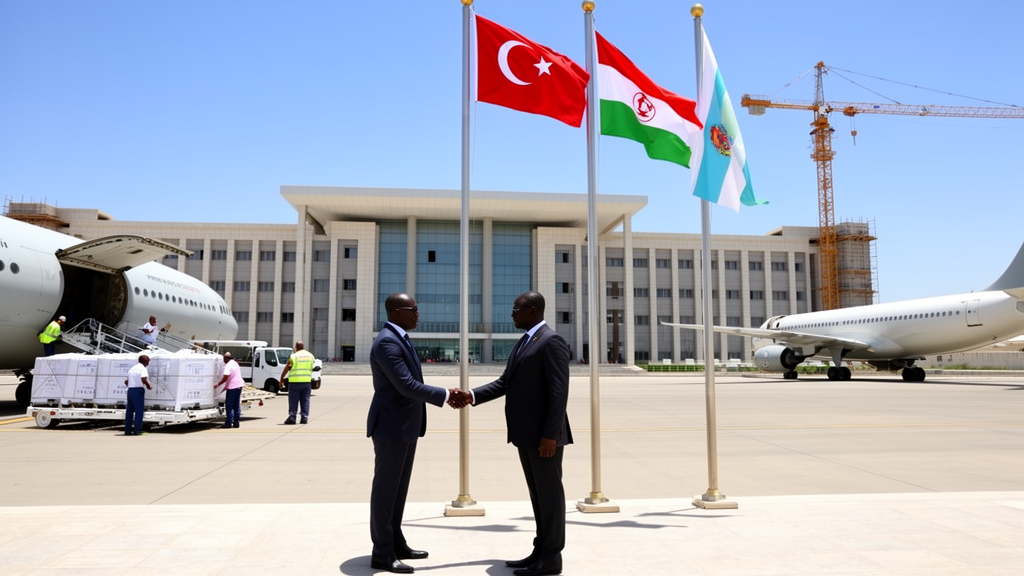
Türkiye has steadily repositioned itself as a significant external actor in Africa, and a new qualitative study argues that this rise rests on a deliberate blend of soft power, security cooperation and South-South partnership rather than on any single instrument of statecraft. The research, authored by Mohammed Torki T. Bani Salameh and Aref H. Bani Hamad of Yarmouk University in Jordan and published in Frontiers in Political Science, analyzes how Ankara has expanded its diplomatic, economic and military footprint across the continent and what that expansion means for regional and global geopolitics. Methodologically, the study combines theoretical perspectives on foreign policy with case study analysis, drawing on academic literature, policy reports and empirical examples from selected African countries.
The authors trace Türkiye’s strategies across three dimensions: humanitarian and development assistance, cultural diplomacy, and growing military and security engagement. This multidimensional framing allows them to assess not only what tools Türkiye uses, but how those tools reinforce one another in practice. According to the study’s findings, Türkiye has successfully expanded its presence in Africa by leveraging soft power instruments such as humanitarian aid, development assistance and cultural diplomacy, deployed alongside and increasingly integrated with military and security cooperation. The authors argue that this integrated approach offers an alternative model of engagement within the framework of South-South relations.
The case studies highlight Somalia, Libya and Ethiopia as countries where this strategy has been particularly visible. In each, the study finds that Türkiye’s combination of aid, diplomatic presence and security ties has strengthened bilateral relations and enhanced its geopolitical influence. At the heart of the analysis is the concept of strategic realignment: the study concludes that Türkiye’s African engagement reflects a broader effort to diversify its global partnerships and increase its international influence, rather than a narrowly commercial or opportunistic venture. By framing its role within South-South cooperation, Türkiye positions itself as a partner that shares development aspirations with African states.
The security dimension receives particular attention. The study documents growing military and security cooperation as a core component of Türkiye’s continental strategy, complementing rather than replacing its civilian instruments. Yet the authors are careful to note that this model is not without constraints. They identify challenges related to sustainability, competition from other external actors, and shifting regional dynamics as potential limits on the strategy’s durability.
Türkiye’s expansion has occurred in a crowded field in which established and emerging powers alike compete for African partnerships, and the study’s overall assessment is measured. Türkiye has, in the authors’ view, successfully expanded its presence through an integrated combination of soft power, security and economic cooperation, strengthening its bilateral ties and raising its geopolitical weight, particularly in Somalia, Libya and Ethiopia. But the long-term significance of that realignment, the authors conclude, will be tested by the sustainability pressures and competitive dynamics they themselves flag as the strategy’s principal vulnerabilities.
Subject of Research: Türkiye's strategic engagement in Africa through soft power, security cooperation and South-South partnerships
Article Title: Türkiye in Africa: strategic realignment through soft power, security, and south–south partnerships
Article References: Bani Salameh, M. T., Mubaideen, R. A., & Bani Hamad, A. H. (2026). Türkiye in Africa: strategic realignment through soft power, security, and south–south partnerships. Frontiers in Political Science, 8, Article 1954716. https://doi.org/10.3389/fpos.2026.1954716
Image Credits: AI Generated
DOI: 10.3389/fpos.2026.1954716
Keywords: Türkiye, Africa, soft power, foreign policy, Somalia, Libya, Ethiopia, military cooperation, South-South partnerships, geopolitics, strategic realignment, international relations
Cite Scienmag News
Sloane Callahan. (October 27, 2026). Türkiye Builds African Influence Through Aid, Diplomacy and Security Ties. Scienmag. https://scienmag.com/turkiye-builds-african-influence-through-aid-diplomacy-and-security-ties/
Sloane Callahan. "Türkiye Builds African Influence Through Aid, Diplomacy and Security Ties." Scienmag, 27 October 2026, https://scienmag.com/turkiye-builds-african-influence-through-aid-diplomacy-and-security-ties/. Accessed 27 October 2026.
Sloane Callahan. "Türkiye Builds African Influence Through Aid, Diplomacy and Security Ties." Scienmag. October 27, 2026. https://scienmag.com/turkiye-builds-african-influence-through-aid-diplomacy-and-security-ties/


