


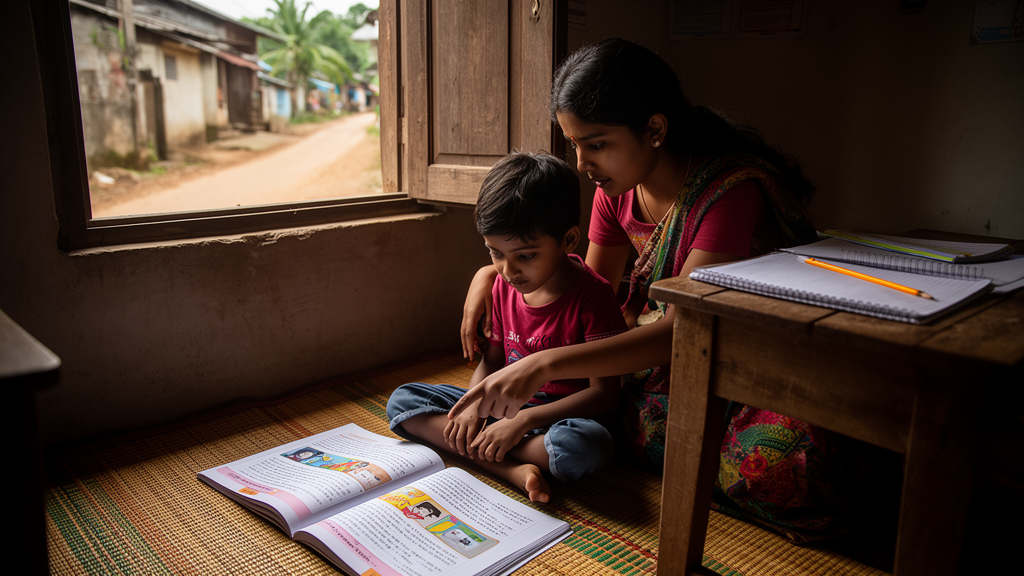
A cross-sectional analysis of 14,278 children aged 6–12 found that primary school dropout in Bangladesh was associated with boys’ sex, older age at the start of the school year, region and reading activity at home. Children who did not read books or were not read to had 14.47 times the adjusted risk of dropout reported for other children, with a 95% confidence interval of 9.30–22.51. Because the study used survey data, the findings identify associations rather than demonstrating that these characteristics directly caused dropout.
The researchers analyzed cross-sectional data from the 2019 Multiple Indicator Cluster Survey, or MICS. Overall, 1.68% of the children in the sample had dropped out of primary school. The study used bivariate analysis along with crude and adjusted log-binomial models to assess relationships between dropout and the measured risk factors. Boys had 2.44 times the adjusted risk of dropout compared with girls, with a 95% confidence interval of 1.63–3.64. Children aged 9–12 years at the beginning of the school year had 1.83 times the adjusted risk of younger children, with a 95% confidence interval of 1.15–2.93.
Regional differences also appeared in the analysis. Mymensingh had the highest reported dropout rate, while the adjusted model estimated that children there had 3.82 times the dropout risk of children in Barishal; the corresponding 95% confidence interval was 1.59–9.18. This interval indicates considerable uncertainty around the regional comparison. The home-learning result was reported in terms of children who did not read books or were not read to at home, a grouping associated with a markedly higher adjusted risk than the comparison group. The source does not present the 14.47 estimate as proof that reading activity itself prevents dropout, and the observational design does not establish causation.
Based on the findings, the authors proposed strengthening early-childhood education initiatives, promoting reading activity at home, supporting older children in their grades and targeting interventions toward disadvantaged regions as possible ways to reduce primary school dropout. These are proposed strategies rather than interventions tested in the study. The analysis identifies groups with higher measured dropout risk in the 2019 survey sample, but it does not show whether the proposed measures would change outcomes. It also cannot determine whether home reading activity, family circumstances and school retention influence one another over time.
Subject of Research: Home learning conditions and primary school dropout among Bangladeshi children aged 6–12
Article Title: Learning environment at home and primary school dropout status in Bangladesh: An analysis of multiple indicator cluster survey
Article References: Prodhan, M. E., Alam, A., Subha, S., Islam, F., Al Amin, M., Hasan, M. N., Haque, M. A., & Uddin, M. J. (2026). Learning environment at home and primary school dropout status in Bangladesh: An analysis of multiple indicator cluster survey. PLOS One, 21(10), e0360931. https://doi.org/10.1371/journal.pone.0360931
Image Credits: AI Generated
DOI: 10.1371/journal.pone.0360931
Keywords: Bangladesh, primary school dropout, home learning, reading activity, MICS, gender differences, regional disparities, cross-sectional study, Learning, environment, home, primary
Cite Scienmag News
Courtney Benton. (October 26, 2026). Home reading gaps associated with primary school dropout in Bangladesh. Scienmag. https://scienmag.com/home-reading-gaps-associated-with-primary-school-dropout-in-bangladesh/
Courtney Benton. "Home reading gaps associated with primary school dropout in Bangladesh." Scienmag, 26 October 2026, https://scienmag.com/home-reading-gaps-associated-with-primary-school-dropout-in-bangladesh/. Accessed 26 October 2026.
Courtney Benton. "Home reading gaps associated with primary school dropout in Bangladesh." Scienmag. October 26, 2026. https://scienmag.com/home-reading-gaps-associated-with-primary-school-dropout-in-bangladesh/


