


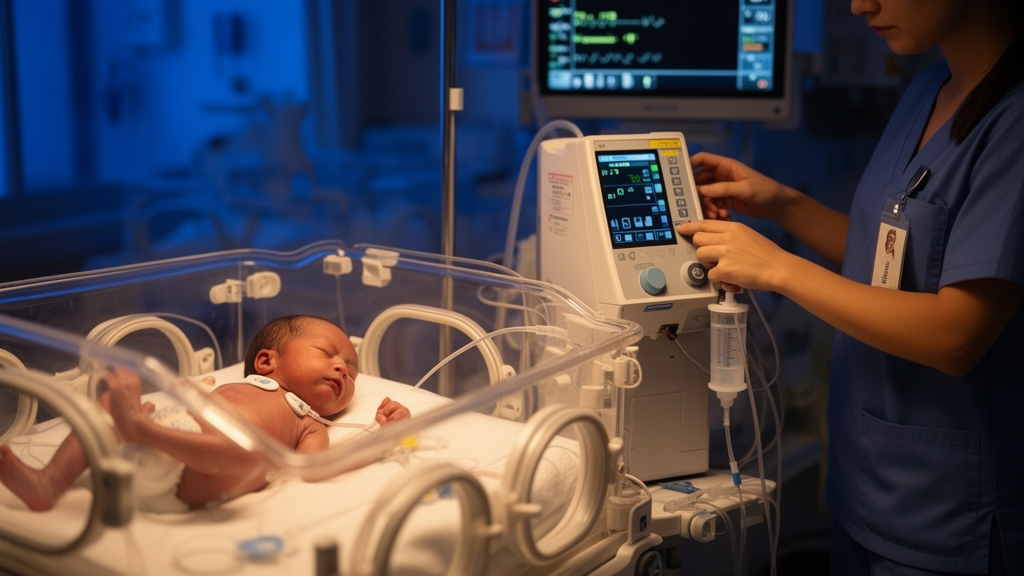
Ketamine, a dissociative anesthetic long used in operating rooms and emergency departments, is quietly finding a new niche at the bedsides of the smallest and sickest patients in medicine. A new 15-year analysis of hospital records from United States children’s hospitals reports that continuous ketamine infusions are being used with growing frequency in extremely preterm infants with severe bronchopulmonary dysplasia, a chronic lung disease of prematurity that leaves babies dependent on oxygen and ventilator support long after birth. The increase is concentrated almost entirely in the years since 2020, and the infants receiving the drug are overwhelmingly those with the most complicated, fragile clinical courses.
The study, published in the Journal of Perinatology, drew on the Pediatric Health Information System, a de-identified administrative database that aggregates demographic data, diagnoses, medication records, procedures, and billing information from participating United States children’s hospitals. The researchers identified every infant born between 22 and 27 weeks of gestation who developed grade 2 or grade 3 bronchopulmonary dysplasia, the severe forms of the disease, and who was admitted to a neonatal intensive care unit between January 1, 2010 and December 31, 2024. Disease severity was classified using the Jensen criteria, which grade bronchopulmonary dysplasia according to the type of respiratory support an infant still requires at 36 weeks postmenstrual age, the equivalent of roughly a month past full term. After excluding infants with missing gestational ages or stays shorter than seven days, the final cohort numbered 8,888 babies.
The headline numbers tell a story of rarity and rapid change. Across the entire 15-year window, 814 infants, or 9.2 percent of the cohort, received ketamine at some point after their bronchopulmonary dysplasia diagnosis. But continuous infusion, defined as ketamine given for two or more consecutive days, was far less common: just 112 infants, or 1.3 percent, ever received one. When the researchers split the study period into three five-year epochs, the pattern was unmistakable. The proportion of infants receiving ketamine infusions was 0.71 percent in 2010 through 2014 and 0.74 percent in 2015 through 2019, essentially flat. Then it jumped to 1.81 percent in 2020 through 2024, a more than twofold rise in a single epoch. After adjusting for gestational age, sex, race, ethnicity, insurance status, disease grade, and a battery of comorbidities, the odds of receiving an infusion in the 2020 through 2024 epoch were 3.39 times those of the 2010 through 2014 epoch, with a 95 percent confidence interval of 1.30 to 8.88. A sensitivity analysis restricted to hospitals that contributed data throughout the entire study produced consistent results.
Who was getting the drug proved as revealing as when. In the multivariable model, three clinical factors stood out as independently associated with ketamine infusion. Pulmonary hypertension, a dangerous elevation of pressure in the lung arteries that is one of the most feared complications of severe bronchopulmonary dysplasia, carried an adjusted odds ratio of 5.47, with a confidence interval of 1.65 to 18.09. Tracheostomy, the surgical airway placed in infants who cannot be liberated from prolonged mechanical ventilation, carried an adjusted odds ratio of 8.32, with a confidence interval of 3.50 to 19.77, the strongest association in the analysis. Stage II or III necrotizing enterocolitis, a devastating inflammatory bowel disease of prematurity, roughly doubled the odds at 2.06, with a confidence interval of 1.24 to 3.43. All three conditions are markers of greater illness severity and prolonged, complex hospitalizations, and the authors interpret the pattern as evidence that ketamine is being reserved for the most critically ill infants rather than adopted broadly across the population.
The pharmacology helps explain why this particular drug appeals to clinicians caring for these particular babies. Ketamine is a non-selective antagonist of the N-methyl-D-aspartate receptor, highly lipophilic and minimally bound to plasma proteins, which allows it to distribute widely through the body and reach the central nervous system quickly. Unlike many sedatives used in intensive care, it preserves spontaneous respiration, maintains upper airway tone, and retains protective airway reflexes, properties that matter enormously in infants whose lungs can barely support them. Ketamine also stimulates beta-2 adrenergic receptors, producing bronchodilation, reducing vagally mediated airway constriction, and dampening airway smooth muscle reactivity. Perhaps most relevantly for this population, ketamine infusions appear to have minimal impact on pulmonary vascular resistance, even in children with pulmonary hypertension, a comorbidity that is common in severe bronchopulmonary dysplasia.
There is also a harm-reduction argument embedded in the trend. Infants with severe bronchopulmonary dysplasia carry one of the heaviest medication burdens in medicine, and anesthetics, analgesics, and sedatives rank as the second most frequently used drug class after diuretics. These babies often require escalating doses of opioids and benzodiazepines to maintain respiratory stability through decompensations, disease exacerbations, pulmonary hypertensive crises, or the period after tracheostomy placement. High cumulative exposure to those agents carries well-recognized risks, including tolerance, withdrawal, and concerns about long-term neurodevelopment. Small studies in older children suggest that ketamine infusions can provide effective sedation when conventional agents such as benzodiazepines, opioids, alpha-2 agonists, barbiturates, and propofol are insufficient, and may even reduce cumulative opioid and benzodiazepine exposure while lessening the frequency and severity of adverse effects from those drug classes. The 2022 guidelines on sedation and analgesia in critically ill pediatric patients, which suggest considering ketamine as adjunct sedation when target sedation depth is not achieved, may have further contributed to the temporal trends observed.
The timing of exposure in these infants underscores how late in the course the drug enters the picture. The median postmenstrual age at first exposure to any ketamine was 44 weeks, with an interquartile range of 40 to 50 weeks, meaning many babies were already months past their due dates. For continuous infusions specifically, the median age at first exposure was 53 weeks postmenstrual age, with an interquartile range of 46 to 60 weeks, and the median infusion lasted seven days, with an interquartile range of three to fourteen days. These are not brief peri-procedural doses but sustained courses of sedation in infants enduring extended intensive care stays, often around major transitions such as tracheostomy or weaning from prolonged neuromuscular blockade, situations in which case reports have described ketamine as rescue therapy when conventional neurosedative agents are insufficient.
Yet the same properties that make ketamine attractive raise the questions that keep neonatal pharmacologists awake. Ketamine is generally hemodynamically supportive in pediatric patients because it increases sympathetic tone and typically preserves or raises heart rate and blood pressure, but clinically important tachycardia and hypertension, along with potential increases in intracranial pressure, demand vigilant monitoring. The drug is metabolized by the cytochrome P450 system to norketamine, an active metabolite whose elimination may be prolonged in neonates and young infants because of immature hepatic function, raising the possibility of adverse hepatotoxic effects. More fundamentally, the neurodevelopmental consequences of ketamine exposure in this age group remain uncertain. Preclinical evidence is genuinely mixed, with some studies pointing to neurotoxicity related to NMDA receptor antagonism and others suggesting possible neuroprotective effects through anti-inflammatory mechanisms. That ambiguity weighs heavily in a population already at elevated risk of impaired neurodevelopment, and delirium, to which these long-stay infants with high neurosedative burdens are already predisposed, adds a further consideration.
The study’s authors are careful about what their data can and cannot show. As a retrospective analysis of billing-derived administrative data, it cannot establish why ketamine was started or stopped, cannot reliably distinguish routes of administration because the database relies on Clinical Transaction Classification codes, and may misclassify some billed observations as administered exposures. Residual confounding is a real concern, particularly because ketamine use appears tightly linked to illness severity, which itself has likely risen over time. The database also cannot capture dosing strategies, and the researchers note that ketamine is sometimes used as rescue therapy for refractory status epilepticus in preterm infants, a use that may overlap with this cohort. Outcomes such as neurodevelopment and long-term safety were simply not assessable, and practice variation across centers, including nursing and provider comfort with the drug, may shape both prescribing and outcomes.
What the analysis does establish is a clear signal of practice change. Ketamine infusion in extremely preterm infants with severe bronchopulmonary dysplasia remains uncommon, touching roughly one in a hundred of these babies, but its use rose significantly over the 15-year period, with the most pronounced increase after 2020, and it clusters around infants with pulmonary hypertension, major gastrointestinal disease, and surgical airways. The authors call for prospective studies to define the developmental pharmacology, safety, efficacy, and optimal role of ketamine in this high-risk population, along with standardized protocols for dosing, monitoring, and integration into multimodal sedation strategies. Until those studies arrive, the trend they document represents growing clinical familiarity and extrapolation from pediatric and adult critical care practice running ahead of neonatal-specific evidence, a familiar and precarious position in neonatal medicine, and one that makes the coming wave of prospective work on this old drug’s newest role something worth watching closely.
Subject of Research: Temporal trends and clinical factors associated with ketamine infusion use in extremely preterm infants with severe bronchopulmonary dysplasia
Article Title: Temporal trends and clinical factors associated with ketamine infusion in hospitalized infants with bronchopulmonary dysplasia
Article References: Ransom, M. A., Levy, P. T., Huber, M., Sucre, J. M. S., Kielt, M. J., Hale, J. M., & Bamat, N. A. (2026). Temporal trends and clinical factors associated with ketamine infusion in hospitalized infants with bronchopulmonary dysplasia. Journal of Perinatology. https://doi.org/10.1038/s41372-026-02935-z
Image Credits: AI Generated
DOI: 10.1038/s41372-026-02935-z
Keywords: ketamine, bronchopulmonary dysplasia, preterm infants, neonatal intensive care, sedation, pulmonary hypertension, necrotizing enterocolitis, tracheostomy, NMDA receptor antagonist, retrospective cohort study, neurodevelopmental safety, Temporal
Cite Scienmag News
Harold Sullivan. (October 26, 2026). Ketamine Infusions Rise Sharply Among the Sickest Preterm Infants With Severe Lung Disease. Scienmag. https://scienmag.com/ketamine-infusions-rise-sharply-among-the-sickest-preterm-infants-with-severe-lung-disease/
Harold Sullivan. "Ketamine Infusions Rise Sharply Among the Sickest Preterm Infants With Severe Lung Disease." Scienmag, 26 October 2026, https://scienmag.com/ketamine-infusions-rise-sharply-among-the-sickest-preterm-infants-with-severe-lung-disease/. Accessed 26 October 2026.
Harold Sullivan. "Ketamine Infusions Rise Sharply Among the Sickest Preterm Infants With Severe Lung Disease." Scienmag. October 26, 2026. https://scienmag.com/ketamine-infusions-rise-sharply-among-the-sickest-preterm-infants-with-severe-lung-disease/


