


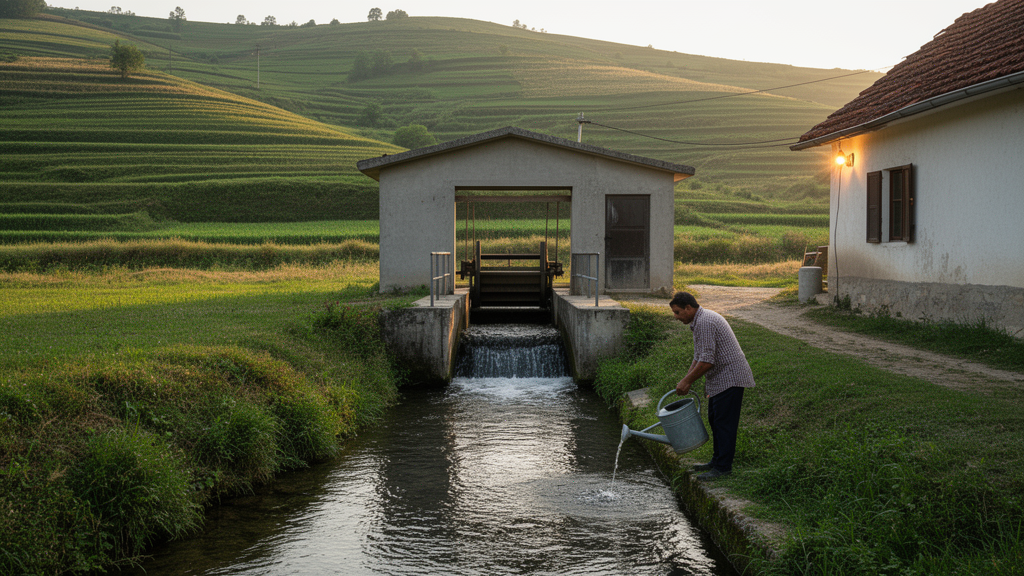
Small hydropower remains a largely untapped tool for advancing the United Nations’ Sustainable Development Goals, according to a review published in Nature Reviews Earth & Environment. The authors argue that the technology’s intrinsic characteristics, including decentralized electrification, poverty alleviation and carbon reduction, position it to contribute to multiple SDGs simultaneously, even as the rapid rise of wind and solar power reshapes its role within an increasingly diversified renewable energy system.
The scale of the remaining opportunity is substantial. The review reports that 64% of global technical potential for small hydropower is still undeveloped, and that construction cycles for such facilities average 34.5 months. Taken together, these figures suggest that small hydropower could provide a rapid and cost-effective energy solution for developing regions where grid extension is slow and centralized infrastructure remains limited. Unlike large dams, small hydropower plants can be deployed close to rural communities, delivering electricity without the extensive transmission networks that large projects require. The review frames this decentralized character as a key mechanism through which the technology can support poverty alleviation and expand energy access, alongside its contribution to reducing carbon emissions from fossil fuel generation.
The authors are careful to note that this promise comes with an environmental caveat. The disordered expansion of hydropower has compromised some riverine environments, and the review treats this as a central challenge rather than a footnote. Unplanned proliferation of small plants can fragment rivers and alter flows, undermining the very sustainability goals the technology is meant to serve. China offers the review’s most detailed case study of how such problems can be addressed. The country holds 53% of current global small hydropower capacity and has shifted from quantity-driven expansion toward what the authors describe as ecological modernization. By 2024, more than 41,000 Chinese small hydropower plants had implemented ecological flows or river connectivity improvements, restoring 100,000 kilometres of river sections in the process.
This Chinese experience illustrates a broader transition in the sector. As wind and solar energy expand rapidly worldwide, the review argues that small hydropower’s role is being redefined within a diversified renewable portfolio rather than standing as a standalone solution. The technology’s value increasingly lies in how it complements variable sources rather than in how much capacity it adds on its own. One pathway the review highlights is the retrofitting of existing small hydropower facilities with pumped storage systems. According to the authors, this presents a viable route to support the increased deployment and grid integration of variable renewable energy, allowing small plants to buffer the intermittency of wind and solar generation while extracting additional value from infrastructure that already exists.
The review also points to gaps in the research base. The authors suggest that future frameworks could benefit from integrating meta-analyses of human–nature interactions with technological innovations and strategic capacity building in developing regions. Such an approach, they argue, would help ensure that small hydropower development advances the SDGs in a sustainable and environmentally friendly manner rather than repeating the ecological costs seen in earlier phases of expansion. For policymakers in developing regions, the review’s core message is one of conditional optimism. With most of the world’s technical potential still available and construction timelines measured in months rather than years, small hydropower can plausibly accelerate electrification and carbon reduction goals. But the Chinese case demonstrates that realizing that potential depends on pairing new deployment with ecological safeguards, including guaranteed environmental flows and river connectivity measures, from the outset of planning rather than as a later correction.
Subject of Research: The role of small hydropower in achieving Sustainable Development Goals
Article Title: The role of small hydropower in achieving Sustainable Development Goals
Article References: Zhang, S., Chen, Q., Zhi, W., Zhang, J., Zhang, X., Yan, X., Li, D., Feng, T., & Qiao, R. (2026). The role of small hydropower in achieving Sustainable Development Goals. Nature Reviews Earth & Environment. https://doi.org/10.1038/s43017-026-00843-6
Image Credits: AI Generated
DOI: 10.1038/s43017-026-00843-6
Keywords: role, small, hydropower, achieving, Sustainable, Development, Goals, scientific research
Cite Scienmag News
Violet Maxwell. (October 26, 2026). Small hydropower could advance Sustainable Development Goals, review finds. Scienmag. https://scienmag.com/small-hydropower-could-advance-sustainable-development-goals-review-finds/
Violet Maxwell. "Small hydropower could advance Sustainable Development Goals, review finds." Scienmag, 26 October 2026, https://scienmag.com/small-hydropower-could-advance-sustainable-development-goals-review-finds/. Accessed 26 October 2026.
Violet Maxwell. "Small hydropower could advance Sustainable Development Goals, review finds." Scienmag. October 26, 2026. https://scienmag.com/small-hydropower-could-advance-sustainable-development-goals-review-finds/


