

Monday, October 26, 2026
Science
No Result
View All Result
  • Login
  • HOME
  • SCIENCE NEWS
  • CONTACT US
  • HOME
  • SCIENCE NEWS
  • CONTACT US
No Result
View All Result
Scienmag
No Result
View All Result
Home Science News Medicine

Burundi’s Traditional Healers Report 121 Plants Used Against Diabetes Symptoms

October 26, 2026
in Medicine
Ophelia Keating
By Ophelia Keating Scienmag Editorial Profile - Health Services Research
Reading Time: 2 mins read
0
Burundi’s Traditional Healers Report 121 Plants Used Against Diabetes Symptoms

Burundi's Traditional Healers Report 121 Plants Used Against Diabetes Symptoms

65
SHARES
587
VIEWS
Share on FacebookShare on Twitter
ADVERTISEMENT

A nationwide ethnobotanical survey has documented the medicinal plants that traditional practitioners across Burundi report using to manage symptoms associated with diabetes. The study, published in BMC Complementary Medicine and Therapies, was conducted between February and August 2024 across 25 public markets throughout the country. Researchers approached 146 traditional practitioners, of whom 64 reported managing diabetes-related symptoms and were included in the analysis. Participants were interviewed using a semi-structured questionnaire, with purposive and snowball sampling used to identify respondents. The result is a nationwide baseline of the plants and therapeutic practices reported by Burundian traditional practitioners for this purpose, a topic the authors describe as previously insufficiently documented.

The survey identified 121 plant species belonging to 111 genera and 51 families. Two families dominated the record: Asteraceae accounted for 14.87 percent of cited species and Fabaceae for 13.22 percent. Practitioners reported 30 signs and symptoms that they associate with diabetes, and the remedies they described fell into 55 multiherbal recipes and eight monoherbal recipes, reflecting a strong preference for combining several species in a single preparation. The most frequently cited species were Gymnanthemum amygdalinum, cited by 17 practitioners for a relative frequency of citation of 0.27, followed by Dicoma anomala with 14 citations (RFC 0.22), Erythrina abyssinica with 13 (RFC 0.20), Parinari curatellifolia with 12 (RFC 0.19) and Ageratum conyzoides with 11 (RFC 0.17).

The botanical profile of the documented species shows clear patterns in both growth form and harvested parts. Most species were phanerophytes at 50.41 percent, followed by hemicryptophytes at 28.93 percent. Leaves were the most commonly used plant part at 52.41 percent of reports, with bark second at 27 percent. Preparation methods were equally consistent: decoction predominated at 65.6 percent of recipes, and 97.6 percent of preparations were administered orally. These details indicate which plant organs and preparation methods were reported, information the authors present as relevant for future laboratory work on the documented remedies.

The authors stress that the documented species should not be interpreted as clinically effective treatments on the basis of ethnobotanical evidence alone. The survey was designed to document plants and practices, not to evaluate their efficacy. Diabetes is a growing global health challenge, and access to appropriate healthcare remains limited in many settings, which the authors note as context for the widespread use of traditional medicine in Burundi.

According to the researchers, the species recorded in this nationwide baseline warrant further phytochemical, pharmacological and toxicological investigations. The authors note that species supported by sufficient preclinical evidence could then become an asset for subsequent clinical research. Until such evidence exists, the survey stands as a documented record of current traditional practice rather than a validation of any remedy.

Subject of Research: An ethnobotanical survey documenting medicinal plants traditionally used by Burundian practitioners for diabetes-related symptoms

Article Title: Medicinal plants traditionally used for the management of diabetes-related symptoms: an ethnobotanical study among traditional practitioners in twenty-five markets in Burundi

Article References: Bukuru, A., Ngezahayo, J., Banzubaze, E., Nsabiyumva, F., Duez, P., & Nkengurutse, J. (2026). Medicinal plants traditionally used for the management of diabetes-related symptoms: an ethnobotanical study among traditional practitioners in twenty-five markets in Burundi. BMC Complementary Medicine and Therapies. https://doi.org/10.1186/s12906-026-05652-4

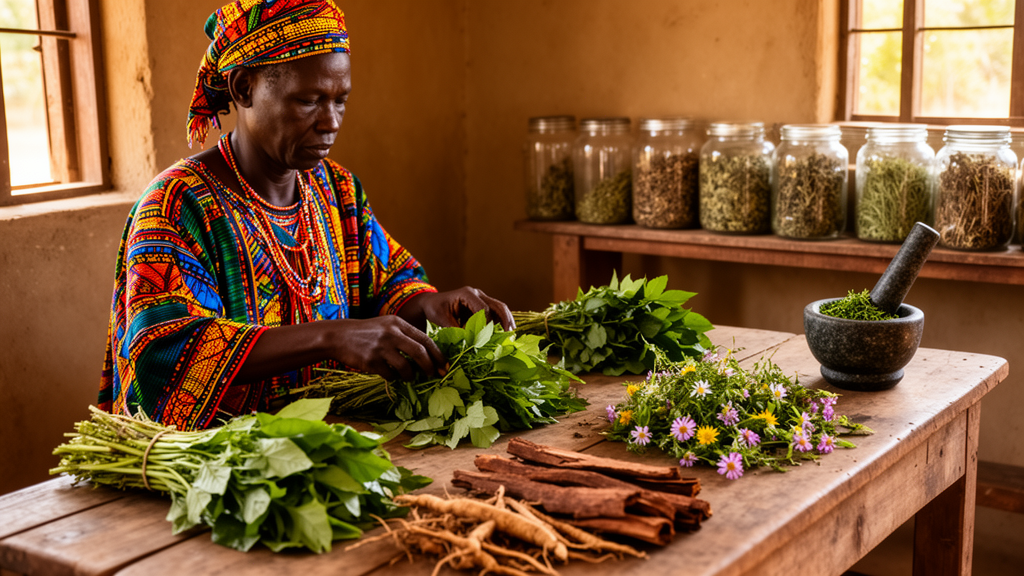
Image Credits: AI Generated

DOI: 10.1186/s12906-026-05652-4

Keywords: ethnobotany, medicinal plants, diabetes, Burundi, traditional medicine, traditional practitioners, phytochemistry, pharmacology, decoction, Asteraceae, Fabaceae, ethnobotanical survey

Cite Scienmag News

Ophelia Keating. (October 26, 2026). Burundi’s Traditional Healers Report 121 Plants Used Against Diabetes Symptoms. Scienmag. https://scienmag.com/burundis-traditional-healers-report-121-plants-used-against-diabetes-symptoms/


Ophelia Keating. "Burundi’s Traditional Healers Report 121 Plants Used Against Diabetes Symptoms." Scienmag, 26 October 2026, https://scienmag.com/burundis-traditional-healers-report-121-plants-used-against-diabetes-symptoms/. Accessed 26 October 2026.

Ophelia Keating. "Burundi’s Traditional Healers Report 121 Plants Used Against Diabetes Symptoms." Scienmag. October 26, 2026. https://scienmag.com/burundis-traditional-healers-report-121-plants-used-against-diabetes-symptoms/

Tags: AsteraceaeBurundiBurundi herbal medicine practicescommonly used plant species for diabetesDecoctiondiabetesdocumentation of medicinal plants by Burundian healersethnobotanical research onethnobotanical surveyethnobotanical survey of anti-diabetic plantsethnobotanyFabaceaeMedicinal plantsmonoherbal remedies in traditional Burundi medicinemultiherbal formulations for diabetes treatmentpharmacologyphytochemistryplant families used in diabetes remediesplant-based remedies for diabetes symptomsprevalence of Asteraceae and Fabaceae in anti-diabetic plantstraditional knowledge of herbal treatments for diabetesTraditional medicinal plants for diabetes management in Burunditraditional medicinetraditional practitioners
Share26Tweet16
Previous Post

Schools Raise Digital Skills but Fail to Close the Socioeconomic Gap, 33-Country Study Finds

Next Post

Phase-aware pose modeling sharpens throw-distance prediction from broadcast video

Related Posts

Review Proposes Biomarker-Based rTMS Strategy for Stroke
Medicine

Review Proposes Biomarker-Based rTMS Strategy for Stroke

October 26, 2026
Kidney metabolic stress and Klotho resilience converge on the brain’s vasculature
Medicine

Kidney metabolic stress and Klotho resilience converge on the brain’s vasculature

October 26, 2026
Viral suppression reached nearly 99 percent in Vietnamese HIV clinic cohort
Medicine

Viral suppression reached nearly 99 percent in Vietnamese HIV clinic cohort

October 26, 2026
Nilotinib targets NEIL3-driven fatty acid oxidation in preclinical liver cancer study
Medicine

Nilotinib targets NEIL3 to restore anoikis in liver cancer cells

October 26, 2026
Natural coumarins from Qinpi rebalance bone cells to fight osteoporosis in mice
Medicine

Natural coumarins from Qinpi rebalance bone cells to fight osteoporosis in mice

October 26, 2026
CLDN18.2 Emerges as Candidate Target for Mucinous Colorectal Cancer
Medicine

Gastric protein CLDN18.2 emerges as candidate biomarker in mucinous colorectal cancer

October 26, 2026
Next Post
Phase-aware pose modeling sharpens throw-distance prediction from broadcast video

Phase-aware pose modeling sharpens throw-distance prediction from broadcast video

  • Mothers who receive childcare support from maternal grandparents show more optimized

    Mothers who receive childcare support from maternal grandparents show more parental warmth, finds NTU Singapore study

    27656 shares
    Share 11059 Tweet 6912
  • University of Seville Breaks 120-Year-Old Mystery, Revises a Key Einstein Concept

    1061 shares
    Share 424 Tweet 265
  • Bee body mass, pathogens and local climate influence heat tolerance

    682 shares
    Share 273 Tweet 171
  • Researchers record first-ever images and data of a shark experiencing a boat strike

    546 shares
    Share 218 Tweet 137
  • Groundbreaking Clinical Trial Reveals Lubiprostone Enhances Kidney Function

    531 shares
    Share 212 Tweet 133
Science

Embark on a thrilling journey of discovery with Scienmag.com—your ultimate source for cutting-edge breakthroughs. Immerse yourself in a world where curiosity knows no limits and tomorrow’s possibilities become today’s reality!

RECENT NEWS

  • Small hydropower could advance Sustainable Development Goals, review finds
  • Phase-aware pose modeling sharpens throw-distance prediction from broadcast video
  • Burundi’s Traditional Healers Report 121 Plants Used Against Diabetes Symptoms
  • Schools Raise Digital Skills but Fail to Close the Socioeconomic Gap, 33-Country Study Finds

Categories

  • Agriculture
  • Anthropology
  • Archaeology
  • Athmospheric
  • Biology
  • Biotechnology
  • Blog
  • Bussines
  • Cancer
  • Chemistry
  • Climate
  • Earth Science
  • Editorial Policy
  • Marine
  • Mathematics
  • Medicine
  • Pediatry
  • Policy
  • Psychology & Psychiatry
  • Science Education
  • Science News
  • Social Science
  • Space
  • Technology and Engineering

Subscribe to Blog via Email

Enter your email address to subscribe to this blog and receive notifications of new posts by email.

Join 5,151 other subscribers

© 2025 Scienmag - Science Magazine

Welcome Back!

Login to your account below

Forgotten Password?

Retrieve your password

Please enter your username or email address to reset your password.

Log In
No Result
View All Result
  • HOME
  • SCIENCE NEWS
  • CONTACT US

© 2025 Scienmag - Science Magazine

Discover more from Science

Subscribe now to keep reading and get access to the full archive.

Continue reading