


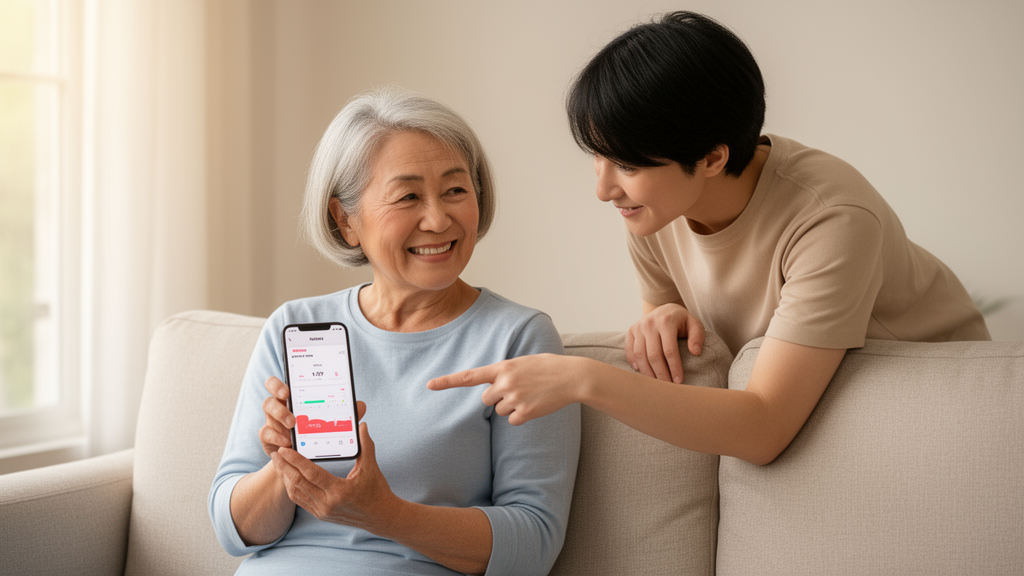
As smartphones become a gateway to medical services, researchers have asked what actually persuades older adults to embrace mobile health applications. A questionnaire-based study by Tianyang Huang and Wenqin Cai addressed this question by surveying elderly users and analyzing 263 valid responses with a structural equation model, extending the classic technology acceptance model with four additional constructs: perceived convenience, perceived quality, perceived risk, and perceived trust.
The analysis showed that three factors positively shaped older users’ intention to use smartphone mHealth apps. Perceived trust was the strongest driver (β = 0.427, p < .001), followed by attitude toward the apps (β = 0.285, p < .001) and perceived quality (β = 0.278, p < .001). Perceived risk, by contrast, had a significant negative effect on usage intention (β = −0.173, p < .001).
The model also traced where trust comes from. Perceived trust was directly and positively influenced by perceived quality (β = 0.434, p < .001) and by perceived ease of use, suggesting that well-built, easy-to-navigate applications build the confidence older users need before committing to a health platform. Perceived convenience, meanwhile, boosted both perceived usefulness (β = 0.358, p < .001) and attitude (β = 0.299, p < .001), positioning convenience as an upstream factor that shapes how valuable and appealing the apps feel.
The authors frame the work as an extension of the technology acceptance model into the context of an aging population, where the drivers of adoption may differ from those of younger users. Because the study relies on self-reported questionnaire data from a single sample of 263 respondents, the findings reflect measured intentions rather than observed long-term behavior, and the cross-sectional design cannot establish causality. Still, the effect sizes offer concrete guidance: for mHealth researchers, designers, marketers, and service providers, strengthening perceived quality and ease of use appears to be the most direct route to building trust, while clearly managing perceived risk could remove a significant barrier. The team reports that these insights can help improve mHealth services and increase older users’ intentions to adopt them, at a time when aging populations worldwide are pushing health systems toward smartphone-based care.
Subject of Research: Factors influencing elderly people's intentions to adopt smartphone mHealth apps
Article Title: Factors influencing elderly people’s intentions to use smartphone mHealth apps: Quantitative research
Article References: Huang, T., & Cai, W. (2026). Factors influencing elderly people’s intentions to use smartphone mHealth apps: Quantitative research. PLOS One, 21(10), e0361137. https://doi.org/10.1371/journal.pone.0361137
Image Credits: AI Generated
DOI: 10.1371/journal.pone.0361137
Keywords: mHealth apps, elderly users, technology acceptance model, perceived trust, perceived risk, structural equation modeling, mobile health adoption, Factors, influencing, elderly, people, intentions
Cite Scienmag News
Beatrice Stafford. (October 25, 2026). Trust Drives Older Adults’ Willingness to Adopt Smartphone Health Apps. Scienmag. https://scienmag.com/trust-drives-older-adults-willingness-to-adopt-smartphone-health-apps/
Beatrice Stafford. "Trust Drives Older Adults’ Willingness to Adopt Smartphone Health Apps." Scienmag, 25 October 2026, https://scienmag.com/trust-drives-older-adults-willingness-to-adopt-smartphone-health-apps/. Accessed 25 October 2026.
Beatrice Stafford. "Trust Drives Older Adults’ Willingness to Adopt Smartphone Health Apps." Scienmag. October 25, 2026. https://scienmag.com/trust-drives-older-adults-willingness-to-adopt-smartphone-health-apps/


