

Saturday, October 24, 2026
Science
No Result
View All Result
  • Login
  • HOME
  • SCIENCE NEWS
  • CONTACT US
  • HOME
  • SCIENCE NEWS
  • CONTACT US
No Result
View All Result
Scienmag
No Result
View All Result
Home Science News Science Education

Self-paid childhood vaccines in China show substantial dose-level delays

October 24, 2026
in Science Education
Kristina Jarvis
By Kristina Jarvis Scienmag Editorial Profile - Infectious Disease Medicine
Reading Time: 3 mins read
0
Self-paid childhood vaccines in China show substantial dose-level delays

Self-paid childhood vaccines in China show substantial dose-level delays

65
SHARES
587
VIEWS
Share on FacebookShare on Twitter
ADVERTISEMENT

Millions of vaccination records from three Chinese cities reveal that delays in self-paid childhood immunization are common, unevenly distributed across vaccines, and remained elevated throughout the COVID-19 pandemic period. A registry-based analysis published in the International Journal for Equity in Health examined 7,946,943 individual dose records for children aged 0 to 6 years, covering five vaccines that Chinese families pay for out of pocket: DTaP-IPV/Hib, the 13-valent pneumococcal conjugate vaccine (PCV13), the EV71 vaccine, RotaTeq, and the LLR vaccine. Unlike vaccines provided free of charge in China’s national immunization program, these self-paid vaccines depend on household purchasing decisions, and the study shows that their timeliness has received far less scrutiny than their coverage.

The scale of the delays varied dramatically by vaccine. Delayed doses accounted for 45.99 percent of DTaP-IPV/Hib doses, 40.69 percent of PCV13 doses, 47.15 percent of EV71 vaccine doses, and 62.13 percent of LLR vaccine doses. By contrast, only 2.40 percent of RotaTeq doses were delayed, a striking exception indicating that timeliness is not an inherent property of self-paid vaccination but varies with vaccine-specific factors such as dosing schedules and administration windows. The severity of delay was also considerable: 32.18 percent of all delayed doses were administered six months or more after the recommended window, meaning that a substantial share of children went without on-time protection for extended periods during their early years.

To move beyond simple delay counts, the research team applied machine learning and statistical modeling to the registry data. Gradient-boosted decision trees combined with SHAP value analysis identified the predictors of delay, while proportional-odds logistic regression assessed delay severity and negative binomial regression modeled the duration of delays across four phases of the COVID-19 pandemic. Vaccine type emerged as the strongest predictor of delay, followed by dose sequence, vaccination year, and city of vaccination. This hierarchy indicates that structural and product-level characteristics, rather than random variation, shape which doses slip past their recommended windows.

The pandemic period left a measurable imprint on the data. Both delay severity and delay-day rates remained higher during 2020 through 2024 than in the pre-pandemic period. As an observational registry analysis, the study documents this persistent elevation but does not establish the mechanisms behind it or the trajectory of timeliness after acute restrictions eased, and the authors do not report a completed recovery for these market-mediated vaccines.

First doses proved to be a particular weak point. The proportion of children receiving a delayed first dose ranged from 0.22 percent for RotaTeq to 15.71 percent for PCV13. Scenario-based estimations suggested that the potential reductions in timely protection would be greatest for EV71-associated disease and pneumococcal disease, the two vaccine-preventable conditions where delayed initiation was most consequential in the models. The authors conclude that immunization programs should monitor timeliness alongside coverage, since a fully covered cohort can still carry substantial gaps in on-time protection, and that recovery efforts should prioritize first doses and the vaccines carrying the highest delay burden.

Subject of Research: Dose-level timeliness of self-paid childhood vaccination in Chinese children aged 0 to 6 years

Article Title: Dose-level timeliness of self-paid vaccination in Chinese children aged 0–6 years: a registry-based analysis

Article References: Chu, L., Chen, K., Fu, C., Zhou, Y., Wang, H., & Lin, L. K. (2026). Dose-level timeliness of self-paid vaccination in Chinese children aged 0–6 years: a registry-based analysis. International Journal for Equity in Health. https://doi.org/10.1186/s12939-026-03084-7

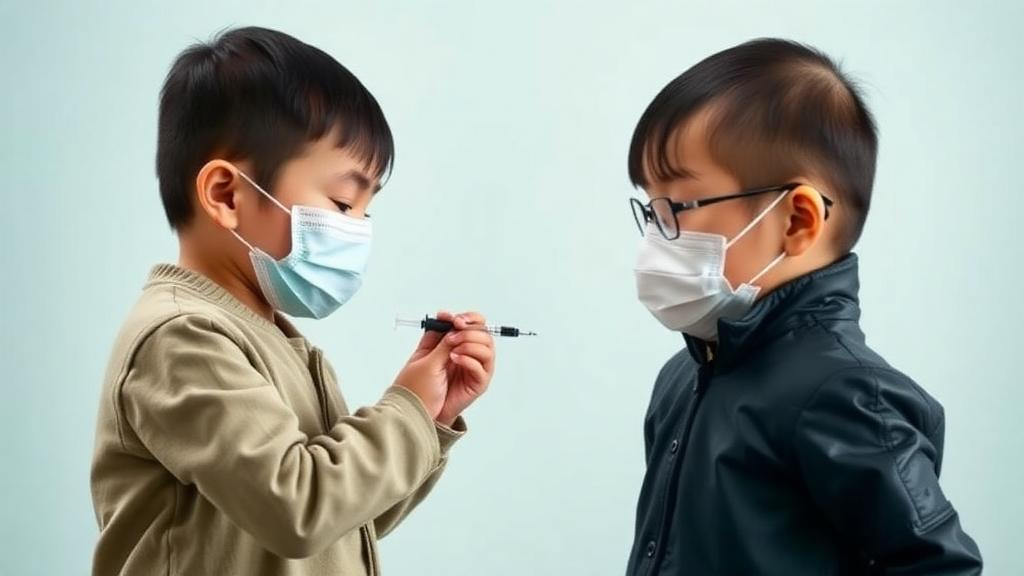
Image Credits: AI Generated

DOI: 10.1186/s12939-026-03084-7

Keywords: vaccination timeliness, self-paid vaccines, childhood immunization, China, COVID-19 pandemic, dose delays, PCV13, EV71 vaccine, registry-based analysis, first-dose delay, vaccine coverage, health equity

Cite Scienmag News

Kristina Jarvis. (October 24, 2026). Self-paid childhood vaccines in China show substantial dose-level delays. Scienmag. https://scienmag.com/self-paid-childhood-vaccines-in-china-show-substantial-dose-level-delays/

Kristina Jarvis. "Self-paid childhood vaccines in China show substantial dose-level delays." Scienmag, 24 October 2026, https://scienmag.com/self-paid-childhood-vaccines-in-china-show-substantial-dose-level-delays/. Accessed 24 October 2026.

Kristina Jarvis. "Self-paid childhood vaccines in China show substantial dose-level delays." Scienmag. October 24, 2026. https://scienmag.com/self-paid-childhood-vaccines-in-china-show-substantial-dose-level-delays/


Tags: childhood immunizationchildhood vaccination delays in ChinaChinaCOVID-19 pandemicdelayed administration of DTaP-IPV/Hib and PCV13 vaccinesdelayed doses in Chinese childrendisparities in vaccine timelinessdose delaysEV71 vaccinefirst-dose delayhealth equityimpact of out-of-pocket vaccination costsinequities in childhood immunizationPCV13registry-based analysisregistry-based analysis of vaccine delaysself-paid immunization coverageself-paid vaccinesvaccination schedule adherencevaccination timelinessVaccine coveragevaccine dose-level delays during COVID-19vaccine timeliness and health equityvaccine-specific factors affecting delay
Share26Tweet16
Previous Post

Rare Lymph Node Disorder Masqueraded as Cancer Spread in Breast Cancer Survivor

Next Post

China’s volume-based drug procurement linked to modest rise in R&D intensity

Related Posts

Competency-based midwifery training linked to less observed mistreatment in Ethiopian maternity care
Science Education

Competency-based midwifery training linked to less observed mistreatment in Ethiopian maternity care

October 24, 2026
Research report: Association of generative artificial intelligence use with perceived academic benefit and reported performance among medical students
Science Education

Research report: Association of generative artificial intelligence use with perceived academic benefit and reported performance among medical students

October 24, 2026
Speech and Language Therapy Students Show High AI Literacy but Clinical Hesitancy
Science Education

Speech and Language Therapy Students Show High AI Literacy but Clinical Hesitancy

October 24, 2026
Professors See Promise and Peril as AI Enters the University Classroom
Science Education

Professors See Promise and Peril as AI Enters the University Classroom

October 24, 2026
Students at schools with social-emotional learning report stronger self-regulation and altruism
Science Education

Students at schools with social-emotional learning report stronger self-regulation and altruism

October 24, 2026
USMLE Step 2 Scores and Red Flags Track Emergency Medicine Resident Performance
Science Education

USMLE Step 2 Scores and Red Flags Track Emergency Medicine Resident Performance

October 24, 2026
Next Post
China’s volume-based drug procurement linked to modest rise in R&D intensity

China's volume-based drug procurement linked to modest rise in R&D intensity

  • Mothers who receive childcare support from maternal grandparents show more optimized

    Mothers who receive childcare support from maternal grandparents show more parental warmth, finds NTU Singapore study

    27656 shares
    Share 11059 Tweet 6912
  • University of Seville Breaks 120-Year-Old Mystery, Revises a Key Einstein Concept

    1061 shares
    Share 424 Tweet 265
  • Bee body mass, pathogens and local climate influence heat tolerance

    682 shares
    Share 273 Tweet 171
  • Researchers record first-ever images and data of a shark experiencing a boat strike

    546 shares
    Share 218 Tweet 137
  • Groundbreaking Clinical Trial Reveals Lubiprostone Enhances Kidney Function

    531 shares
    Share 212 Tweet 133
Science

Embark on a thrilling journey of discovery with Scienmag.com—your ultimate source for cutting-edge breakthroughs. Immerse yourself in a world where curiosity knows no limits and tomorrow’s possibilities become today’s reality!

RECENT NEWS

  • China’s volume-based drug procurement linked to modest rise in R&D intensity
  • Self-paid childhood vaccines in China show substantial dose-level delays
  • Rare Lymph Node Disorder Masqueraded as Cancer Spread in Breast Cancer Survivor
  • POLST Forms Make CPR Orders Visible but Leave Post-Decision Care Unspoken

Categories

  • Agriculture
  • Anthropology
  • Archaeology
  • Athmospheric
  • Biology
  • Biotechnology
  • Blog
  • Bussines
  • Cancer
  • Chemistry
  • Climate
  • Earth Science
  • Editorial Policy
  • Marine
  • Mathematics
  • Medicine
  • Pediatry
  • Policy
  • Psychology & Psychiatry
  • Science Education
  • Science News
  • Social Science
  • Space
  • Technology and Engineering

Subscribe to Blog via Email

Enter your email address to subscribe to this blog and receive notifications of new posts by email.

Join 5,152 other subscribers

© 2025 Scienmag - Science Magazine

Welcome Back!

Login to your account below

Forgotten Password?

Retrieve your password

Please enter your username or email address to reset your password.

Log In
No Result
View All Result
  • HOME
  • SCIENCE NEWS
  • CONTACT US

© 2025 Scienmag - Science Magazine

Discover more from Science

Subscribe now to keep reading and get access to the full archive.

Continue reading