

Saturday, October 24, 2026
Science
No Result
View All Result
  • Login
  • HOME
  • SCIENCE NEWS
  • CONTACT US
  • HOME
  • SCIENCE NEWS
  • CONTACT US
No Result
View All Result
Scienmag
No Result
View All Result
Home Science News Science Education

Competency-based midwifery training linked to less observed mistreatment in Ethiopian maternity care

October 24, 2026
in Science Education
Courtney Benton
By Courtney Benton Scienmag Editorial Profile - Science and Technology Policy
Reading Time: 2 mins read
0
Competency-based midwifery training linked to less observed mistreatment in Ethiopian maternity care

Competency-based midwifery training linked to less observed mistreatment in Ethiopian maternity care

65
SHARES
587
VIEWS
Share on FacebookShare on Twitter
ADVERTISEMENT

Graduates of an Ethiopian midwifery programme trained under a competency-based curriculum showed measurably less mistreatment of women during labour and childbirth than peers trained under the country’s conventional curriculum, according to a comparative cross-sectional study published in BMC Medical Education. Researchers directly observed the care provided by 68 BSc midwifery graduates from third-generation Ethiopian universities, 32 of whom had completed a competency-based curriculum and 36 of whom had trained under a conventional one. Using a validated observation tool, the team scored instances of mistreatment during real childbirth care and compared the mean mistreatment scores between the two groups.

The overall mean mistreatment score across all observed graduates was 34.6%. Conventional-curriculum graduates scored higher, at 38.1%, while competency-based graduates scored 30.8%. The 7.3-percentage-point difference was statistically significant, with t(66) = −3.75 and p < .001, and a large standardized effect size of Cohen’s d = −0.91 favouring the competency-based group. The researchers visualised the between-group difference using a Gardner–Altman plot, an approach that displays the raw mean difference alongside the data distribution rather than relying solely on summary statistics.

Two domains drove much of the gap. Poor-rapport scores were 36.7% in the competency-based group versus 46.5% in the conventional group, and non-response to medical requests was 15.6% versus 30.5%. Both figures were descriptively lower among competency-based graduates, suggesting that the interpersonal and responsiveness dimensions of care differed most clearly between the curricula. The competency-based curriculum at Debre Tabor University was adopted in 2013 specifically to address a recognised weakness in Ethiopian midwifery education, which has emphasised theory over practice and limited clinical competence, including professional behaviours.

Despite the advantage for competency-based graduates, the study documented deficiencies in both groups. Recorded problems included failures in obtaining consent, gaps in supportive care, breaches of privacy, and instances of verbal abuse. The authors are explicit that these shared shortcomings warrant further attention, and that lower mistreatment scores do not demonstrate comprehensive respectful maternity care. In other words, even the better-performing group fell short of the full standard of respectful care across all observed domains.

The study’s design also constrains what can be concluded. Because it was cross-sectional and comparative rather than experimental, the association between curriculum background and lower observed mistreatment does not establish a causal curriculum effect. Graduates from the two curricula may differ in ways unrelated to their training, and workplace conditions after graduation could shape observed behaviour independently of preservice education. The authors call for longitudinal and multilevel research to disentangle the contributions of preservice education and workplace conditions to respectful maternity care.

Subject of Research: Respectful maternity care among midwifery graduates trained under competency-based versus conventional curricula in Ethiopia: a comparative cross-sectional study

Article Title: Respectful maternity care among midwifery graduates trained under competency-based versus conventional curricula in Ethiopia: a comparative cross-sectional study

Article References: Wondie, A. G., Siebeck, M., Sendekie, T. Y., Fischer, M. R., & Berndt, M. (2026). Respectful maternity care among midwifery graduates trained under competency-based versus conventional curricula in Ethiopia: a comparative cross-sectional study. BMC Medical Education. https://doi.org/10.1186/s12909-026-10661-5

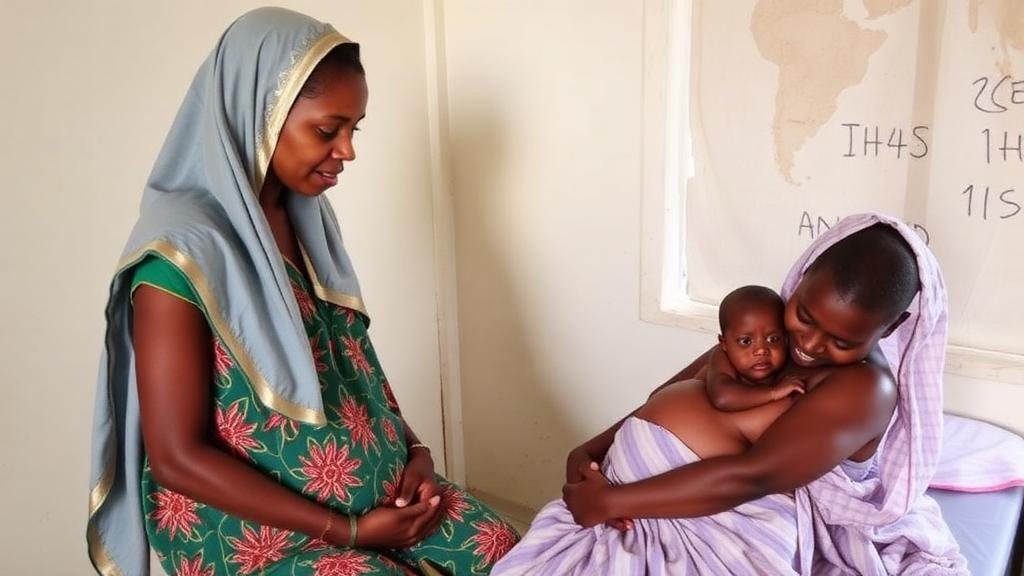
Image Credits: AI Generated

DOI: 10.1186/s12909-026-10661-5

Keywords: Respectful, maternity, care, midwifery, graduates, trained, under, competency-based, versus, conventional, curricula, Ethiopia

Cite Scienmag News

Courtney Benton. (October 24, 2026). Competency-based midwifery training linked to less observed mistreatment in Ethiopian maternity care. Scienmag. https://scienmag.com/competency-based-midwifery-training-linked-to-less-observed-mistreatment-in-ethiopian-maternity-care/


Courtney Benton. "Competency-based midwifery training linked to less observed mistreatment in Ethiopian maternity care." Scienmag, 24 October 2026, https://scienmag.com/competency-based-midwifery-training-linked-to-less-observed-mistreatment-in-ethiopian-maternity-care/. Accessed 24 October 2026.

Courtney Benton. "Competency-based midwifery training linked to less observed mistreatment in Ethiopian maternity care." Scienmag. October 24, 2026. https://scienmag.com/competency-based-midwifery-training-linked-to-less-observed-mistreatment-in-ethiopian-maternity-care/

Tags: Carechildbirth care qualityclinical observation toolscomparative cross-sectional studycompetency-basedcompetency-based curriculumconventionalcurriculaEthiopiaEthiopian maternity caregraduateshealthcare education researchhealthcare quality improvementhealthcare worker trainingmaternal health outcomesmaternitymidwiferyMidwifery trainingmistreatment reductionpatient-provider interactionsRespectfultrainedunderversus
Share26Tweet16
Previous Post

Multidrug-resistant urinary infection bacteria highly prevalent in East Africa, review finds

Next Post

POLST Forms Make CPR Orders Visible but Leave Post-Decision Care Unspoken

Related Posts

Research report: Association of generative artificial intelligence use with perceived academic benefit and reported performance among medical students
Science Education

Research report: Association of generative artificial intelligence use with perceived academic benefit and reported performance among medical students

October 24, 2026
Speech and Language Therapy Students Show High AI Literacy but Clinical Hesitancy
Science Education

Speech and Language Therapy Students Show High AI Literacy but Clinical Hesitancy

October 24, 2026
Professors See Promise and Peril as AI Enters the University Classroom
Science Education

Professors See Promise and Peril as AI Enters the University Classroom

October 24, 2026
Students at schools with social-emotional learning report stronger self-regulation and altruism
Science Education

Students at schools with social-emotional learning report stronger self-regulation and altruism

October 24, 2026
USMLE Step 2 Scores and Red Flags Track Emergency Medicine Resident Performance
Science Education

USMLE Step 2 Scores and Red Flags Track Emergency Medicine Resident Performance

October 24, 2026
One-hour medical Spanish session linked to higher self-rated comfort on Peru mission trip
Science Education

One-hour medical Spanish session linked to higher self-rated comfort on Peru mission trip

October 24, 2026
Next Post
POLST Forms Make CPR Orders Visible but Leave Post-Decision Care Unspoken

POLST Forms Make CPR Orders Visible but Leave Post-Decision Care Unspoken

  • Mothers who receive childcare support from maternal grandparents show more optimized

    Mothers who receive childcare support from maternal grandparents show more parental warmth, finds NTU Singapore study

    27656 shares
    Share 11059 Tweet 6912
  • University of Seville Breaks 120-Year-Old Mystery, Revises a Key Einstein Concept

    1061 shares
    Share 424 Tweet 265
  • Bee body mass, pathogens and local climate influence heat tolerance

    682 shares
    Share 273 Tweet 171
  • Researchers record first-ever images and data of a shark experiencing a boat strike

    546 shares
    Share 218 Tweet 137
  • Groundbreaking Clinical Trial Reveals Lubiprostone Enhances Kidney Function

    531 shares
    Share 212 Tweet 133
Science

Embark on a thrilling journey of discovery with Scienmag.com—your ultimate source for cutting-edge breakthroughs. Immerse yourself in a world where curiosity knows no limits and tomorrow’s possibilities become today’s reality!

RECENT NEWS

  • POLST Forms Make CPR Orders Visible but Leave Post-Decision Care Unspoken
  • Competency-based midwifery training linked to less observed mistreatment in Ethiopian maternity care
  • Multidrug-resistant urinary infection bacteria highly prevalent in East Africa, review finds
  • Dogs and Cats Harbor Drug-Resistant Pseudomonas aeruginosa Lineages of Human Concern, Review Finds

Categories

  • Agriculture
  • Anthropology
  • Archaeology
  • Athmospheric
  • Biology
  • Biotechnology
  • Blog
  • Bussines
  • Cancer
  • Chemistry
  • Climate
  • Earth Science
  • Editorial Policy
  • Marine
  • Mathematics
  • Medicine
  • Pediatry
  • Policy
  • Psychology & Psychiatry
  • Science Education
  • Science News
  • Social Science
  • Space
  • Technology and Engineering

Subscribe to Blog via Email

Enter your email address to subscribe to this blog and receive notifications of new posts by email.

Join 5,152 other subscribers

© 2025 Scienmag - Science Magazine

Welcome Back!

Login to your account below

Forgotten Password?

Retrieve your password

Please enter your username or email address to reset your password.

Log In
No Result
View All Result
  • HOME
  • SCIENCE NEWS
  • CONTACT US

© 2025 Scienmag - Science Magazine

Discover more from Science

Subscribe now to keep reading and get access to the full archive.

Continue reading