

Saturday, October 24, 2026
Science
No Result
View All Result
  • Login
  • HOME
  • SCIENCE NEWS
  • CONTACT US
  • HOME
  • SCIENCE NEWS
  • CONTACT US
No Result
View All Result
Scienmag
No Result
View All Result
Home Science News

Experts Map Barriers to Teenage Pregnancy Prevention in Low- and Middle-Income Countries

October 24, 2026
in Science News
Harold Sullivan
By Harold Sullivan Scienmag Editorial Profile - Maternal and Child Health
Reading Time: 2 mins read
0
Experts Map Barriers to Teenage Pregnancy Prevention in Low- and Middle-Income Countries

Experts Map Barriers to Teenage Pregnancy Prevention in Low- and Middle-Income Countries

65
SHARES
587
VIEWS
Share on FacebookShare on Twitter
ADVERTISEMENT

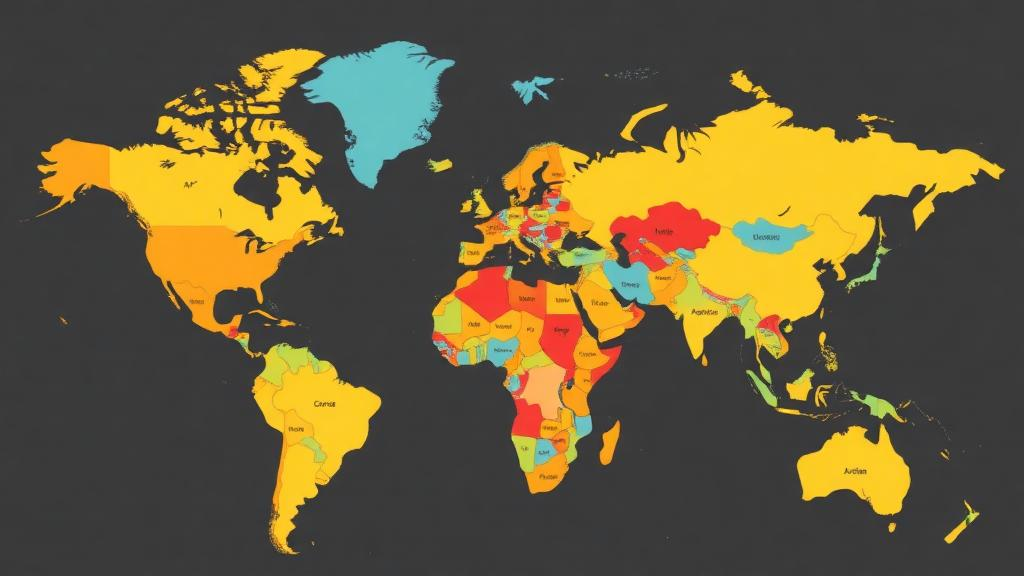
Adolescent pregnancy prevention programmes in low- and middle-income countries (LMICs) are being undermined by seven interrelated challenges, according to a qualitative exploratory study of the people who implement such interventions on the ground. The research, conducted by Aimable Nkurunziza and colleagues, involved in-depth virtual individual interviews with 19 adolescent pregnancy prevention programme implementers working across 24 LMICs. The responses were organized using Dedoose software and analysed thematically, with the aim of identifying why so many interventions fail to achieve positive outcomes despite years of investment in the field.

The first cluster of barriers concerned how adolescents themselves engage with prevention programmes. Implementers reported that young people’s participation depended heavily on whether a programme felt useful to them, and, at times, on the material or social benefits of attending. Stigma made attendance socially risky, pushing adolescents toward private information-seeking rather than open participation. Prevention efforts were further constrained by gendered dynamics: the unequal allocation of resources and decision-making power between girls and boys limited boys’ involvement in programmes while simultaneously restricting girls’ agency over their own reproductive choices.

A second set of challenges operated at the household and community level. Poverty and material insecurity within families, together with transactional marriage practices such as bride price, were reported to contribute to early unions and subsequent childbearing. Programme legitimacy was also contested in many settings. Implementers described how taboos surrounding adolescent sexuality, religious opposition, persistent myths about contraception, and the normalization of violence all made it harder for prevention initiatives to gain acceptance among the communities they serve.

The third cluster of barriers was administrative and structural. Respondents cited bureaucratic delays, weak institutional backing, resistance at school level, and unstable or poorly enforced policy environments as factors that limited the continuity and scale-up of interventions. These implementation conditions, the study suggests, determine whether even well-designed programmes can survive beyond their initial pilot phase or donor funding cycles.

The authors conclude that effective teenage pregnancy prevention in LMICs requires more than delivering sexual and reproductive health information. Programmes must be designed to feel relevant to adolescents while reducing stigma and protecting confidentiality to support genuine engagement. Interventions also need to address gendered power dynamics and gatekeeper control, alongside the community-level legitimacy barriers of taboo, religious opposition, contraception myths, and normalized violence. Sustainable impact, the study argues, will depend on enabling implementation conditions, including reduced bureaucratic delays, stronger institutional and school support, coherent policies, reliable financing beyond donor cycles, and better data to guide targeted action.

Subject of Research: Barriers to implementing adolescent pregnancy prevention interventions in low- and middle-income countries

Article Title: Exploring barriers to implementing adolescent pregnancy prevention interventions in low- and middle-income countries: Perspectives from international experts

Article References: Nkurunziza, A., Nkurikiyintwali, J. M. V., Ndayisenga, J. P., Kasine, Y., Twagirayezu, I., & Uwera, Y. D. N. (2026). Exploring barriers to implementing adolescent pregnancy prevention interventions in low- and middle-income countries: Perspectives from international experts. PLOS One, 21(10), e0360943. https://doi.org/10.1371/journal.pone.0360943

Image Credits: AI Generated

DOI: 10.1371/journal.pone.0360943

Keywords: adolescent pregnancy, low- and middle-income countries, sexual and reproductive health, qualitative research, programme implementation, public health, gender inequality, stigma, Exploring, barriers, implementing, adolescent

Cite Scienmag News

Harold Sullivan. (October 24, 2026). Experts Map Barriers to Teenage Pregnancy Prevention in Low- and Middle-Income Countries. Scienmag. https://scienmag.com/experts-map-barriers-to-teenage-pregnancy-prevention-in-low-and-middle-income-countries/


Harold Sullivan. "Experts Map Barriers to Teenage Pregnancy Prevention in Low- and Middle-Income Countries." Scienmag, 24 October 2026, https://scienmag.com/experts-map-barriers-to-teenage-pregnancy-prevention-in-low-and-middle-income-countries/. Accessed 24 October 2026.

Harold Sullivan. "Experts Map Barriers to Teenage Pregnancy Prevention in Low- and Middle-Income Countries." Scienmag. October 24, 2026. https://scienmag.com/experts-map-barriers-to-teenage-pregnancy-prevention-in-low-and-middle-income-countries/

Tags: adolescentadolescent engagement in pregnancy prevention programsadolescent pregnancybarriersbarriers to adolescent participation in pregnancy preventioncommunity and household influences on teenage pregnancyExploringgender dynamics in adolescent reproductive healthgender inequalityimpact of poverty on adolescent reproductive healthimplementation barriers for pregnancy prevention programsImplementinglow-and-middle-income countrieslow-resource settings and adolescent reproductive healthprogramme implementationPublic healthqualitative researchqualitative study of adolescent pregnancy prevention challengesresource allocation and gender inequality in pregnancy preventionsexual and reproductive healthsocial stigma and teenage pregnancystigmaTeenage pregnancy prevention in low- and middle-income countriestransactional marriage and teenage pregnancy risk
Share26Tweet16
Previous Post

Osteopontin Fingerprints in Tissue Scans Predict Pancreatic Cancer Survival

Next Post

Denmark’s two-decade medication map shows the famous female-male drug gap is collapsing

Related Posts

Denmark’s two-decade medication map shows the famous female-male drug gap is collapsing
Medicine

Denmark’s two-decade medication map shows the famous female-male drug gap is collapsing

October 24, 2026
Osteopontin Fingerprints in Tissue Scans Predict Pancreatic Cancer Survival
Medicine

Osteopontin Fingerprints in Tissue Scans Predict Pancreatic Cancer Survival

October 24, 2026
Efficiency scoring method picks winning ETFs and sizes each bet
Biology

Efficiency scoring method picks winning ETFs and sizes each bet

October 24, 2026
Willingness Outpaces Action: Parental HPV Vaccine Beliefs Across the Middle East
Medicine

Willingness Outpaces Action: Parental HPV Vaccine Beliefs Across the Middle East

October 24, 2026
Mobility patterns dominate explainable machine learning forecasts of COVID-19 cases in India
Medicine

Mobility patterns dominate explainable machine learning forecasts of COVID-19 cases in India

October 24, 2026
Ataxia Rating Scales May Not Measure Up Across Cultures, Researchers Warn
Medicine

Ataxia Rating Scales May Not Measure Up Across Cultures, Researchers Warn

October 24, 2026
Next Post
Denmark’s two-decade medication map shows the famous female-male drug gap is collapsing

Denmark's two-decade medication map shows the famous female-male drug gap is collapsing

  • Mothers who receive childcare support from maternal grandparents show more optimized

    Mothers who receive childcare support from maternal grandparents show more parental warmth, finds NTU Singapore study

    27656 shares
    Share 11059 Tweet 6912
  • University of Seville Breaks 120-Year-Old Mystery, Revises a Key Einstein Concept

    1061 shares
    Share 424 Tweet 265
  • Bee body mass, pathogens and local climate influence heat tolerance

    682 shares
    Share 273 Tweet 171
  • Researchers record first-ever images and data of a shark experiencing a boat strike

    546 shares
    Share 218 Tweet 137
  • Groundbreaking Clinical Trial Reveals Lubiprostone Enhances Kidney Function

    531 shares
    Share 212 Tweet 133
Science

Embark on a thrilling journey of discovery with Scienmag.com—your ultimate source for cutting-edge breakthroughs. Immerse yourself in a world where curiosity knows no limits and tomorrow’s possibilities become today’s reality!

RECENT NEWS

  • Denmark’s two-decade medication map shows the famous female-male drug gap is collapsing
  • Experts Map Barriers to Teenage Pregnancy Prevention in Low- and Middle-Income Countries
  • Osteopontin Fingerprints in Tissue Scans Predict Pancreatic Cancer Survival
  • Efficiency scoring method picks winning ETFs and sizes each bet

Categories

  • Agriculture
  • Anthropology
  • Archaeology
  • Athmospheric
  • Biology
  • Biotechnology
  • Blog
  • Bussines
  • Cancer
  • Chemistry
  • Climate
  • Earth Science
  • Editorial Policy
  • Marine
  • Mathematics
  • Medicine
  • Pediatry
  • Policy
  • Psychology & Psychiatry
  • Science Education
  • Science News
  • Social Science
  • Space
  • Technology and Engineering

Subscribe to Blog via Email

Enter your email address to subscribe to this blog and receive notifications of new posts by email.

Join 5,152 other subscribers

© 2025 Scienmag - Science Magazine

Welcome Back!

Login to your account below

Forgotten Password?

Retrieve your password

Please enter your username or email address to reset your password.

Log In
No Result
View All Result
  • HOME
  • SCIENCE NEWS
  • CONTACT US

© 2025 Scienmag - Science Magazine

Discover more from Science

Subscribe now to keep reading and get access to the full archive.

Continue reading