


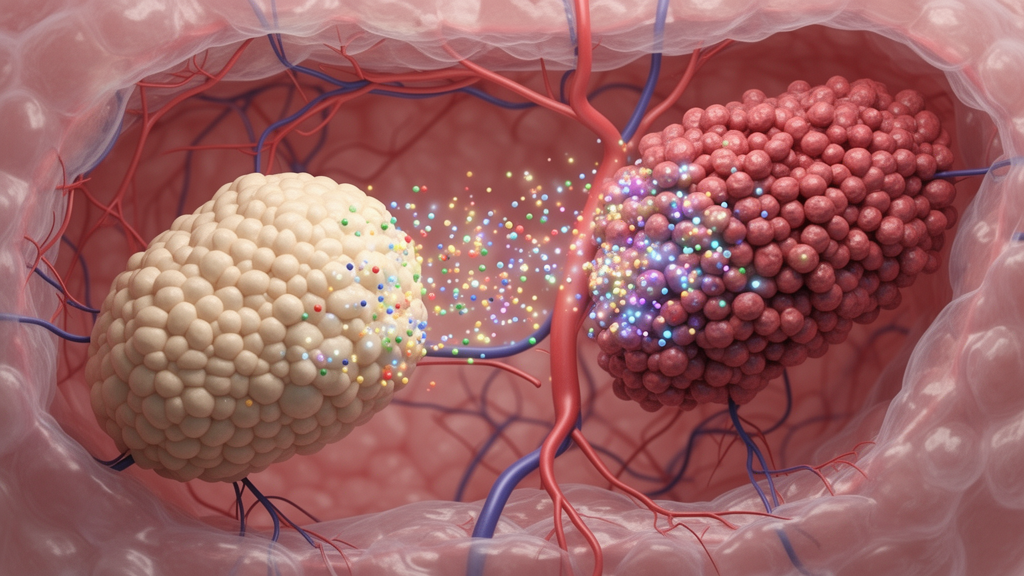
A 2026 review assembles evidence that diabetes and pancreatic ductal adenocarcinoma, or PDAC, are linked in both directions: long-standing type 2 diabetes is associated with a roughly twofold increase in pancreatic cancer risk, while pancreatic tumors can trigger a distinct form of diabetes before the cancer is visible on scans. The analysis, published in Frontiers in Endocrinology, describes new-onset diabetes in about 30%–74% of people with PDAC, usually within 24–36 months before tumor detection. Clinical observations also suggest that the tumor is often responsible for the metabolic disturbance: approximately 25%–40% of patients experience improvement or normalization of blood glucose after complete surgical removal of the cancer, with recovery reaching 57% in some groups with new-onset diabetes.
The review defines long-standing diabetes as type 2 diabetes diagnosed more than three years before PDAC is detected, while new-onset diabetes is diagnosed within the preceding two to three years. In the pancreatic cancer setting, this form is usually classified as type 3c pancreatogenic diabetes, arising from pancreatic disease rather than the insulin resistance that defines classic type 2 diabetes. The distinction is biologically meaningful. PDAC-associated type 3c diabetes more often features a normal or low body mass index, rapid unexplained weight loss, low insulin and C-peptide concentrations, reduced pancreatic polypeptide, and exocrine pancreatic insufficiency. By contrast, classic type 2 diabetes is commonly linked with obesity, insulin resistance, and normal or elevated insulin concentrations. These differences can help identify people whose diabetes may be a warning sign of an occult pancreatic tumor rather than simply a common metabolic disorder.
Epidemiological findings underpin the apparent bidirectionality. A meta-analysis of 36 studies reported a pooled relative risk of 1.94 for PDAC among people with pre-existing type 2 diabetes, while larger updates have placed the overall association near 1.8–2.2. Risk rises with longer diabetes duration and poor glycemic control, and Mendelian randomization studies using genetic variants associated with type 2 diabetes have supported a causal contribution rather than explaining the entire association through reverse causation. People diagnosed with type 2 diabetes before age 55 had a particularly high standardized incidence ratio of 5.73 in one analysis. Obesity, nonalcoholic fatty liver disease, pancreatic fat infiltration, smoking, heavy alcohol use, chronic pancreatitis, medication exposure, and inherited susceptibility can modify or confound these estimates and must be addressed in population studies.
Mechanistically, type 2 diabetes may help create conditions favorable to tumor initiation and progression. Persistent hyperglycemia and hyperinsulinemia activate insulin-receptor and insulin-like growth factor 1 receptor pathways in pancreatic ductal epithelial cells, stimulating proliferation, survival, and protein synthesis through signaling including PI3K/AKT and MAPK. Advanced glycation end products engage RAGE receptors and activate NF-κB and ERK signaling, processes linked in preclinical studies to epithelial-mesenchymal transition. Chronic low-grade inflammation involving IL-1β, TNF-α, and IL-6 can reshape tumor-associated macrophages, fibrosis, and antitumor immunity. Pancreatic stellate cells may become cancer-associated fibroblasts that deposit collagen, fibronectin, and hyaluronan, creating dense desmoplastic tissue that shields tumors from treatment. Changes in the gut and pancreatic microbiomes and the resulting circulation of lipopolysaccharide and secondary bile acids add another possible route, although much of this molecular evidence comes from cell and animal experiments rather than demonstrated clinical interventions.
The reverse pathway appears to begin with pancreatic cancer actively disturbing the insulin-producing islets. PDAC-derived extracellular vesicles called exosomes carry proteins including adrenomedullin and CA19-9. In experimental systems, these vesicles enter beta cells, suppress insulin secretion, and increase endoplasmic reticulum stress and reactive oxygen or nitrogen species; blocking the adrenomedullin receptor removed part of the inhibitory effect. The relative contributions of circulating tumor-derived signals and direct injury within the pancreatic tumor microenvironment remain unresolved. Single-cell RNA sequencing and histopathology described in the review found smaller beta-cell areas and lower islet density near tumors than in more distant pancreatic tissue, with greater loss in patients who had type 3c diabetes. Transcriptomic analyses showed reduced expression of INS and GCG and of genes governing glucose sensing, ion channels, insulin exocytosis, and beta-cell differentiation. A candidate S100A8 N-terminal peptide also impaired glucose metabolism in cultured myoblasts, pointing to a possible systemic component in addition to local islet injury.
These pathways resemble a molecular feedback circuit. Insulin resistance and hyperglycemia can activate proliferative, inflammatory, and fibrotic programs that favor PDAC, while the developing tumor damages endocrine tissue and releases factors that undermine glucose regulation. Shared candidates include PI3K/AKT/mTOR signaling, transforming growth factor beta-driven fibrosis, endoplasmic reticulum stress, and inflammatory remodeling by macrophages and stellate cells. The scale of this bidirectional biology remains an important limitation. Much of the mechanistic evidence comes from cultured cells or animals, and researchers still need to establish how systemic tumor products compare with local microenvironmental injury in people, how endocrine and exocrine tissues communicate, and how changes in islet blood flow and matrix-bound growth factors affect glucose homeostasis.
The most immediate translational opportunity is to use unusual new-onset diabetes as a signal for targeted pancreatic cancer investigation. Prospective cohort data cited by the review indicate that roughly 0.8%–1.0% of people older than 50 with new-onset diabetes develop PDAC within three years, corresponding to an approximately six- to eightfold increase in risk compared with the general population. The END-PAC score uses age at diabetes onset, weight change, and change in blood glucose; a score of at least 3 has been reported to identify a high-risk group with 78% sensitivity and 82% specificity. Machine-learning models have produced area under the curve values as high as 0.9073 in some datasets, but they require prospective validation across populations.
Cost-effectiveness remains the central obstacle to broad screening. Modeling cited in the review estimated that screening becomes viable when three-year cancer incidence exceeds 2% and a sufficient share of cases is found at a localized stage, whereas the reported incidence among new-onset diabetes patients is below that threshold. A modeled evaluation of a circulating DNA epigenomic test in high-risk patients estimated 68% sensitivity and 97% specificity, with a cost of $56,564 per quality-adjusted life-year, but this was a modeling exercise rather than proof of reduced mortality. A separate analysis estimated 2.4 scans per detected case among 200,000 people with new-onset diabetes. The Early Detection Initiative is now randomizing 12,500 participants to test whether END-PAC-guided computed tomography can improve detection of operable, sporadic PDAC; whether it changes survival remains unknown.
Diabetes medicines have also been investigated for prevention or treatment, but the evidence does not support routine repurposing. In a 21-year follow-up from the Diabetes Prevention Program, metformin at 850 milligrams twice daily did not reduce cancer incidence compared with placebo among adults at high risk of diabetes. A phase II randomized trial in 76 patients with completely resected PDAC found no significant improvement in two-year overall survival when metformin was added to S-1 chemotherapy. Observational studies have sometimes linked metformin or GLP-1 receptor agonists with better outcomes, but umbrella reviews have rated much of the metformin literature as low or critically low quality, often because of immortal time bias. Meta-analyses of GLP-1 receptor agonists have found no overall increase in pancreatic cancer risk, while pancreatitis risk has appeared in some trial syntheses. These findings provide reassurance about use for diabetes but do not establish anticancer efficacy.
Perhaps the most immediate obstacle is diagnostic confusion. The review reports that type 3c diabetes may be misclassified as type 2 diabetes in as many as 80%–88% of cases, delaying pancreatic imaging and leaving exocrine insufficiency unrecognized. Pancreatic exocrine dysfunction occurs in about 80% of PDAC-associated type 3c diabetes, compared with roughly 30% in type 2 diabetes, and can be assessed with measures such as fecal elastase. The Ewald and Bretzel framework calls for pancreatic exocrine disease, abnormal glucose metabolism, absence of typical type 1 autoimmune markers, and objective evidence of exocrine dysfunction, but no globally unified criteria are in regular use. Closing that gap will require prospective validation of multi-omic markers, population-specific calibration of screening algorithms, standardized type 3c diabetes definitions, randomized screening trials, and closer collaboration between diabetes specialists and oncologists. The emerging picture is not that diabetes causes every pancreatic tumor or that every new diabetes signals cancer, but that the two conditions can reveal one another through a measurable biological dialogue.
Subject of Research: Bidirectional biological and clinical links between type 2 diabetes and pancreatic ductal adenocarcinoma
Article Title: Bidirectional relationship between diabetes and pancreatic cancer: from mechanistic investigation to clinical application
Article References: Wu, J., Jiang, T., Li, X., Xie, D., & Xie, K. (2026). Bidirectional relationship between diabetes and pancreatic cancer: from mechanistic investigation to clinical application. Frontiers in Endocrinology, 17, Article 1995824. https://doi.org/10.3389/fendo.2026.1995824
Image Credits: AI Generated
DOI: 10.3389/fendo.2026.1995824
Keywords: pancreatic cancer, type 2 diabetes, type 3c diabetes, new-onset diabetes, PDAC, cancer screening, tumor exosomes, hyperglycemia, metformin, GLP-1 receptor agonists, Bidirectional, relationship
Cite Scienmag News
Nathaniel Bowman. (October 24, 2026). Diabetes and pancreatic cancer reveal a two-way molecular warning system. Scienmag. https://scienmag.com/diabetes-and-pancreatic-cancer-reveal-a-two-way-molecular-warning-system/
Nathaniel Bowman. "Diabetes and pancreatic cancer reveal a two-way molecular warning system." Scienmag, 24 October 2026, https://scienmag.com/diabetes-and-pancreatic-cancer-reveal-a-two-way-molecular-warning-system/. Accessed 24 October 2026.
Nathaniel Bowman. "Diabetes and pancreatic cancer reveal a two-way molecular warning system." Scienmag. October 24, 2026. https://scienmag.com/diabetes-and-pancreatic-cancer-reveal-a-two-way-molecular-warning-system/


