

Friday, October 23, 2026
Science
No Result
View All Result
  • Login
  • HOME
  • SCIENCE NEWS
  • CONTACT US
  • HOME
  • SCIENCE NEWS
  • CONTACT US
No Result
View All Result
Scienmag
No Result
View All Result
Home Science News Technology and Engineering

Brain Foundation Models Shift From Borrowed AI Designs to Neuro-Native Architectures

October 23, 2026
in Technology and Engineering
Cassandra Pierce
By Cassandra Pierce Scienmag Editorial Profile - Systems Neuroscience
Reading Time: 3 mins read
0
Brain Foundation Models Shift From Borrowed AI Designs to Neuro-Native Architectures

Brain Foundation Models Shift From Borrowed AI Designs to Neuro-Native Architectures

65
SHARES
587
VIEWS
Share on FacebookShare on Twitter
ADVERTISEMENT

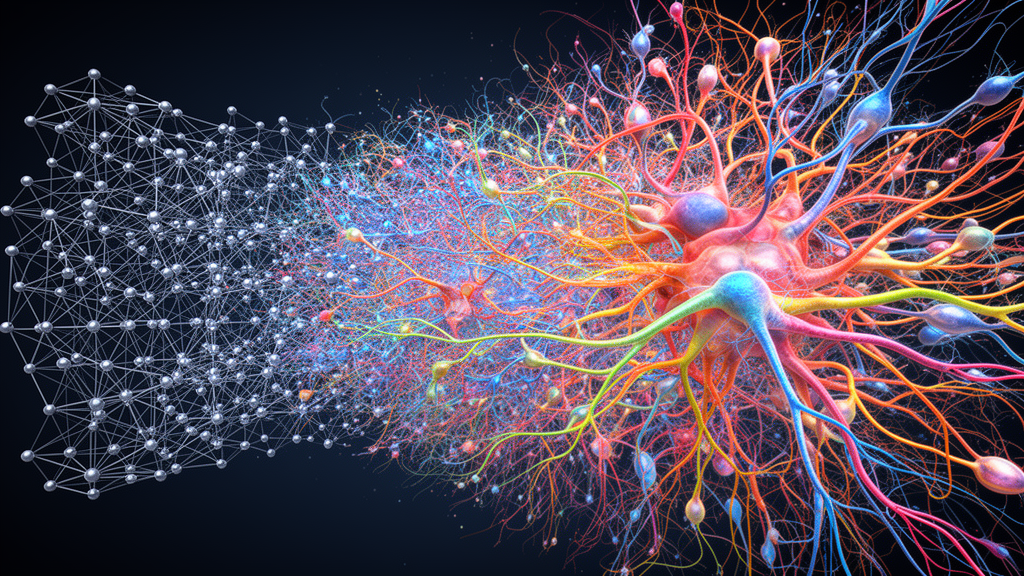
A new review traces how artificial intelligence systems built to decode brain signals have outgrown their borrowed blueprints. Writing in the journal Artificial Intelligence Review, Zepeng Li, Bin Hu and colleagues survey EEG-centered neuroelectrophysiological foundation models published between 2021 and 2025, arguing that the field has moved from simply porting architectures designed for language and vision toward designs that explicitly encode the structure of neurophysiological data.

Foundation models are large neural networks trained on vast, largely unlabeled datasets to learn transferable neural representations. Applied to brain recordings, the first generation of these models relied on what the authors call isomorphic transfer: migrating architectures from large language models and vision transformers into the neural signal domain. These approaches demonstrated the value of scale, but the literature also reveals recurring mismatches between general-purpose architectural assumptions and the spatial, temporal, and acquisition properties of neurophysiological recordings.

Those mismatches matter because the review identifies them as a recurring obstacle across the literature. A transformer or language-model architecture carries no built-in understanding of the spatial, temporal, and acquisition properties that define neurophysiological recordings, so the authors argue that such general-purpose assumptions often fail to transfer cleanly across subjects and devices.

The review’s central contribution is a taxonomy. Rather than simple parameter expansion, second-generation architectures are characterized by the explicit incorporation of neuro-inductive biases: structural assumptions drawn from neuroscience itself and built directly into the model. The authors organize these models into four core neuro-native paradigms based on their design principles.

The first paradigm is topology awareness, achieved through coordinate manifold mapping. The second is brain-like efficiency, implemented with linear state space models, a class of architectures the review associates with computational efficiency in modeling neural signals.

The third paradigm is multi-scale hierarchy, mirroring the recursive organization of the brain. The fourth is semantic fusion, which aims to bridge the neuro-semantic gap, connecting neural representations to semantic content.

Taken together, the authors conclude that neurophysiological priors can improve transfer and computational efficiency when they match the task and the acquisition setting. In other words, the benefit of neuro-native design is conditional rather than universal: an architecture that encodes neurophysiological structure helps most when those priors align with the data at hand, and the review frames this matching as a key design consideration rather than a blanket prescription.

The review is also explicit about the limits of current evidence. The broader clinical and causal value of these models, the authors write, remains to be established through controlled, cross-subject, cross-device, and intervention-aware validation. Because the field lacks a unified account of how models moved from general-purpose architectural transfer to neuro-native designs, and why that transition matters for cross-subject and cross-device generalization, the paper positions its taxonomy as a framework for organizing future work rather than a demonstration of clinical readiness.

For readers following the intersection of AI and neuroscience, the review marks a shift in emphasis: from scaling general-purpose architectures to designing models that respect the structure of the signals they consume. Whether that shift translates into reliable performance across patients, devices, and clinical tasks is, on the evidence assembled here, still an open empirical question that the next generation of validation studies will need to answer.

Subject of Research: Evolution and taxonomy of EEG-based brain foundation models

Article Title: Neuro-native paradigms of brain foundation models: evolution, taxonomy, and perspectives

Article References: Li, Z., Zhang, M., Li, T., Lu, J., Jiang, H., Zhang, X., Zhang, Z., & Hu, B. (2026). Neuro-native paradigms of brain foundation models: evolution, taxonomy, and perspectives. Artificial Intelligence Review. https://doi.org/10.1007/s10462-026-11748-7

Image Credits: AI Generated

DOI: 10.1007/s10462-026-11748-7

Keywords: brain foundation models, EEG, neuro-inductive biases, isomorphic transfer, linear state space models, topology awareness, multi-scale hierarchy, semantic fusion, neurophysiological priors, cross-subject generalization, Artificial Intelligence Review, neuro-native architectures

Cite Scienmag News

Cassandra Pierce. (October 23, 2026). Brain Foundation Models Shift From Borrowed AI Designs to Neuro-Native Architectures. Scienmag. https://scienmag.com/brain-foundation-models-shift-from-borrowed-ai-designs-to-neuro-native-architectures/


Cassandra Pierce. "Brain Foundation Models Shift From Borrowed AI Designs to Neuro-Native Architectures." Scienmag, 23 October 2026, https://scienmag.com/brain-foundation-models-shift-from-borrowed-ai-designs-to-neuro-native-architectures/. Accessed 23 October 2026.

Cassandra Pierce. "Brain Foundation Models Shift From Borrowed AI Designs to Neuro-Native Architectures." Scienmag. October 23, 2026. https://scienmag.com/brain-foundation-models-shift-from-borrowed-ai-designs-to-neuro-native-architectures/

Tags: Advances in Brain Signal Model DesignArtificial Intelligence Reviewbrain foundation modelsChallenges of Isomorphic Transfer in Brain Modelingcross-subject generalizationDevelopment of Neuro-Native ArchitecturesEEGEEG-based neural signal decodingImproving Brain Signal Model Transferabilityisomorphic transferLarge Neural Networks for Brain SignalsLarge-Scale Unlabeled Brain Data AnalysisLimitations of Borrowed AI Models for Brain Datalinear state space modelsmulti-scale hierarchyneuro-inductive biasesneuro-native architecturesNeuro-Native Brain Foundation ModelsNeurophysiological Data Architectureneurophysiological priorsNeurophysiological Signal Structure Encodingsemantic fusiontopology awarenessTransfer Learning in Neuroelectrophysiology
Share26Tweet16
Previous Post

AI Reads Preoperative Endoscopic Biopsies to Gauge Lymph Node Spread in Early Gastric Cancer

Next Post

Fungal Compound Sapinopyridione Shows Anti-SARS-CoV-2 Activity in Cells

Related Posts

Research report: Mechanism-resolved topological protection of qubit coherence: disentangling localization and chiral symmetry in the Su–Schrieffer–Heeger model
Technology and Engineering

Research report: Mechanism-resolved topological protection of qubit coherence: disentangling localization and chiral symmetry in the Su–Schrieffer–Heeger model

October 23, 2026
Lanthanum-Doped Nickel Tungstate Boosts Electrode Capacity in New Aqueous Supercapacitor
Technology and Engineering

Lanthanum-Doped Nickel Tungstate Boosts Electrode Capacity in New Aqueous Supercapacitor

October 23, 2026
Swarm of digital particles trains medical AI without sharing patient data
Technology and Engineering

Swarm of digital particles trains medical AI without sharing patient data

October 23, 2026
Blood proteins reveal right ventricular remodeling after tetralogy of Fallot repair
Technology and Engineering

Blood proteins reveal right ventricular remodeling after tetralogy of Fallot repair

October 23, 2026
Blocking CD44 Reprograms Support Cells in Pancreatic Tumors
Technology and Engineering

Blocking CD44 Reprograms Support Cells in Pancreatic Tumors

October 23, 2026
Privacy-first federated model improves cross-enterprise labor risk prediction
Technology and Engineering

Privacy-first federated model improves cross-enterprise labor risk prediction

October 23, 2026
Next Post
Fungal Compound Sapinopyridione Shows Anti-SARS-CoV-2 Activity in Cells

Fungal Compound Sapinopyridione Shows Anti-SARS-CoV-2 Activity in Cells

  • Mothers who receive childcare support from maternal grandparents show more optimized

    Mothers who receive childcare support from maternal grandparents show more parental warmth, finds NTU Singapore study

    27656 shares
    Share 11059 Tweet 6912
  • University of Seville Breaks 120-Year-Old Mystery, Revises a Key Einstein Concept

    1061 shares
    Share 424 Tweet 265
  • Bee body mass, pathogens and local climate influence heat tolerance

    682 shares
    Share 273 Tweet 171
  • Researchers record first-ever images and data of a shark experiencing a boat strike

    546 shares
    Share 218 Tweet 137
  • Groundbreaking Clinical Trial Reveals Lubiprostone Enhances Kidney Function

    531 shares
    Share 212 Tweet 133
Science

Embark on a thrilling journey of discovery with Scienmag.com—your ultimate source for cutting-edge breakthroughs. Immerse yourself in a world where curiosity knows no limits and tomorrow’s possibilities become today’s reality!

RECENT NEWS

  • G20 Digital Expansion Linked to Higher Carbon Emissions
  • LLMs Fail to Replace Human Coding of Adolescent Meaning-Making
  • Review reveals gaps in climate-driven road landslide risk
  • Fungal Compound Sapinopyridione Shows Anti-SARS-CoV-2 Activity in Cells

Categories

  • Agriculture
  • Anthropology
  • Archaeology
  • Athmospheric
  • Biology
  • Biotechnology
  • Blog
  • Bussines
  • Cancer
  • Chemistry
  • Climate
  • Earth Science
  • Editorial Policy
  • Marine
  • Mathematics
  • Medicine
  • Pediatry
  • Policy
  • Psychology & Psychiatry
  • Science Education
  • Science News
  • Social Science
  • Space
  • Technology and Engineering

Subscribe to Blog via Email

Enter your email address to subscribe to this blog and receive notifications of new posts by email.

Join 5,152 other subscribers

© 2025 Scienmag - Science Magazine

Welcome Back!

Login to your account below

Forgotten Password?

Retrieve your password

Please enter your username or email address to reset your password.

Log In
No Result
View All Result
  • HOME
  • SCIENCE NEWS
  • CONTACT US

© 2025 Scienmag - Science Magazine

Discover more from Science

Subscribe now to keep reading and get access to the full archive.

Continue reading