


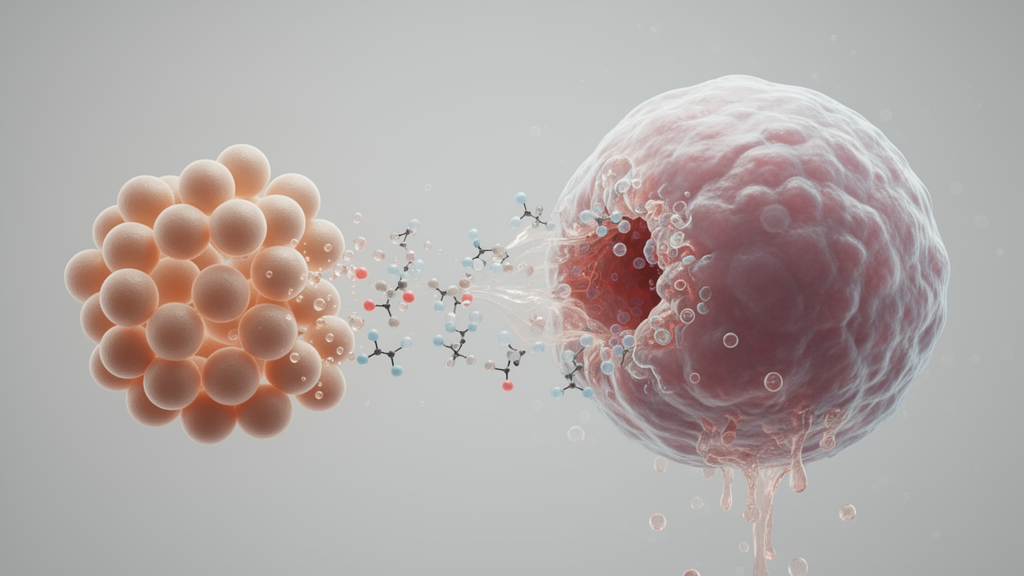
Breast cancer remains the most common malignant neoplasm among women worldwide, with an estimated 2.3 million new cases and 670,000 deaths reported in 2022. This disease accounts for approximately 25% of new cancer diagnoses and 15% of cancer-related deaths in women. Projections indicate that by 2050, the annual number of new cases may reach 3.2 million, while deaths could exceed 1.1 million. These increases, estimated at 38% and 68% respectively, are expected to have a greater impact in low- and middle-income countries. In Brazil, breast cancer is the most prevalent type of cancer among women, second only to non-melanoma skin cancer, with higher incidence rates in the South and Southeast regions associated with increased urbanization and improved access to health services. Given the persistence of inequalities in clinical outcomes and the high incidence of the disease, the development of new therapeutic approaches that are more effective, accessible, and safe remains essential to reduce mortality and improve patients’ quality of life.
In this context, sophorolipids have attracted increasing attention due to their pharmacological properties. These natural glycolipids are produced as secondary metabolites by the non-pathogenic yeast Starmerella bombicola. Sophorolipids exhibit promising characteristics, such as biodegradability, low environmental toxicity, and efficient production by fermentation, which make them attractive for both industrial and biomedical applications. Structurally, sophorolipids consist of a hydrophilic sophorose portion, composed of two glucose molecules linked by a β-1,2-glycosidic bond, and a hydrophobic fatty acid part. Depending on the presence or absence of lactonization, they are classified as acidic or lactonic forms. Recent studies have investigated the antiproliferative potential of sophorolipids, demonstrating their ability to interfere with cell cycle progression and induce cell death in various tumor cell lines, including esophageal, cervical, lung, and breast cancers.
A recent study published in 3 Biotech investigated the molecular mechanisms of action of sophorolipids in MCF-7 cells, a human breast ductal adenocarcinoma cell line. The research team utilized a mixture of lactonic and acidic sophorolipids, with the lactonic and acidic fractions accounting for 63.15% and 36.85% respectively. The study aimed to better understand the antiproliferative effects of these biosurfactants and assess their potential as a therapeutic alternative for the management of breast cancer. By examining the cellular and molecular responses to sophorolipid treatment, the researchers sought to elucidate the pathways involved in the cytotoxic effects observed in in vitro models.
The cytotoxicity of the sophorolipid mixture was assessed using the resazurin assay, which revealed a concentration-dependent reduction in cell viability. The half-maximal inhibitory concentration (IC50) was determined to be 82.54 µg/mL, with IC25 and IC12.5 values calculated at 70.90 µg/mL and 63.05 µg/mL, respectively. Phase-contrast microscopy revealed significant morphological alterations in the treated cells, including cell swelling, loss of adhesion, and impaired membrane integrity. These changes were consistent with cell death and were observed at higher concentrations, where reduced confluency and increased detachment were noted. The morphological evidence supported the cytotoxic potential of sophorolipids in MCF-7 cells.
Flow cytometry analysis provided further insights into the mechanisms of cell death. The study demonstrated cell cycle arrest in the S phase, particularly at the IC50 concentration, where a significant increase in the S phase fraction was observed. This arrest was accompanied by a reduction in the G2/M phase. Additionally, mitochondrial membrane depolarization was detected, indicating mitochondrial dysfunction. The analysis also revealed a predominance of necrosis-like cell death at higher concentrations, with necrosis reaching 59.31% of the cells treated at IC50. This finding suggests that sophorolipids primarily induce cell death through membrane disruption rather than classical apoptotic pathways.
Transcriptional profiling by RT-qPCR identified significant changes in gene expression associated with cellular stress and cell death pathways. The study found overexpression of CDKN1A, GADD45A, ERN1, and BBC3, alongside repression of ACTB and GAPDH. The upregulation of CDKN1A and GADD45A indicates activation of DNA damage and stress-response pathways, leading to cell cycle arrest. The increased expression of ERN1, a marker of endoplasmic reticulum stress, suggests that both mitochondrial and endoplasmic reticulum stress pathways are involved in the cellular response to sophorolipids. The repression of ACTB and GAPDH points to structural collapse and metabolic dysfunction, respectively.
The coexistence of mitochondrial depolarization and endoplasmic reticulum stress suggests that sophorolipids simultaneously trigger both stress pathways, resulting in a severe homeostatic imbalance. This multifactorial cellular stress is characterized by the simultaneous activation of mitochondrial and endoplasmic reticulum pathways, accompanied by cell cycle arrest and structural and metabolic disruption. The predominance of necrosis-like death, rather than apoptosis, may be explained by the caspase-3 deficiency of MCF-7 cells, which impairs the execution of the classical apoptotic pathway. The amphiphilic nature of sophorolipids likely plays a central role in membrane disruption, leading to cell death.
Although the study provides evidence of the potential of sophorolipids as antiproliferative agents, several limitations should be considered. The experiments were conducted exclusively using the MCF-7 cell line in vitro, which is characterized by an inherent caspase-3 deficiency. This deficiency may explain the observed predominance of necrosis-like cell death. Furthermore, the assays were performed using a mixture of different sophorolipid isoforms, making it impossible to distinguish the individual effects of each structural form. Future studies should address these limitations by evaluating isolated sophorolipid fractions individually and extending the analysis to complex models that better resemble in vivo conditions.
Despite these limitations, the findings position sophorolipids as promising candidates for the development of natural antiproliferative therapies. The ability of sophorolipids to induce mitochondrial and endoplasmic reticulum stress, culminating in homeostatic failure and cell death, highlights their potential as therapeutic agents. Further investigations are needed to explore the efficacy and safety of sophorolipids in in vivo models, including non-malignant controls, and to validate the proposed pathways at the protein level. The development of new therapeutic approaches based on sophorolipids could contribute to reducing breast cancer mortality and improving patients’ quality of life.
Subject of Research: Investigation of the molecular mechanisms of action of sophorolipids in MCF-7 cells: therapeutic potential against breast cancer
Article Title: Investigation of the molecular mechanisms of action of sophorolipids in MCF-7 cells: therapeutic potential against breast cancer
Article References: Martins, L. H. S., de Lima, L. V. A., da Silva, M. F., da Silva, N. G., de Assis, M. C. T., Carvalho, I. C. O., Fuzzinato, I. M., Silva, B. B., da Costa, D. A., de Azevedo Silva, M. P., Celligoi, M. A. P. C., & Mantovani, M. S. (2026). Investigation of the molecular mechanisms of action of sophorolipids in MCF-7 cells: therapeutic potential against breast cancer. 3 Biotech, 16(11), Article 471. https://doi.org/10.1007/s13205-026-05096-0
Image Credits: AI Generated
DOI: 10.1007/s13205-026-05096-0
Keywords: Investigation, molecular, mechanisms, action, sophorolipids, MCF-7, cells, therapeutic, potential, against, breast, cancer
Cite Scienmag News
Nathaniel Bowman. (October 23, 2026). Yeast-Derived Sophorolipids Kill Breast Cancer Cells via Membrane Disruption. Scienmag. https://scienmag.com/yeast-derived-sophorolipids-kill-breast-cancer-cells-via-membrane-disruption/
Nathaniel Bowman. "Yeast-Derived Sophorolipids Kill Breast Cancer Cells via Membrane Disruption." Scienmag, 23 October 2026, https://scienmag.com/yeast-derived-sophorolipids-kill-breast-cancer-cells-via-membrane-disruption/. Accessed 23 October 2026.
Nathaniel Bowman. "Yeast-Derived Sophorolipids Kill Breast Cancer Cells via Membrane Disruption." Scienmag. October 23, 2026. https://scienmag.com/yeast-derived-sophorolipids-kill-breast-cancer-cells-via-membrane-disruption/


