


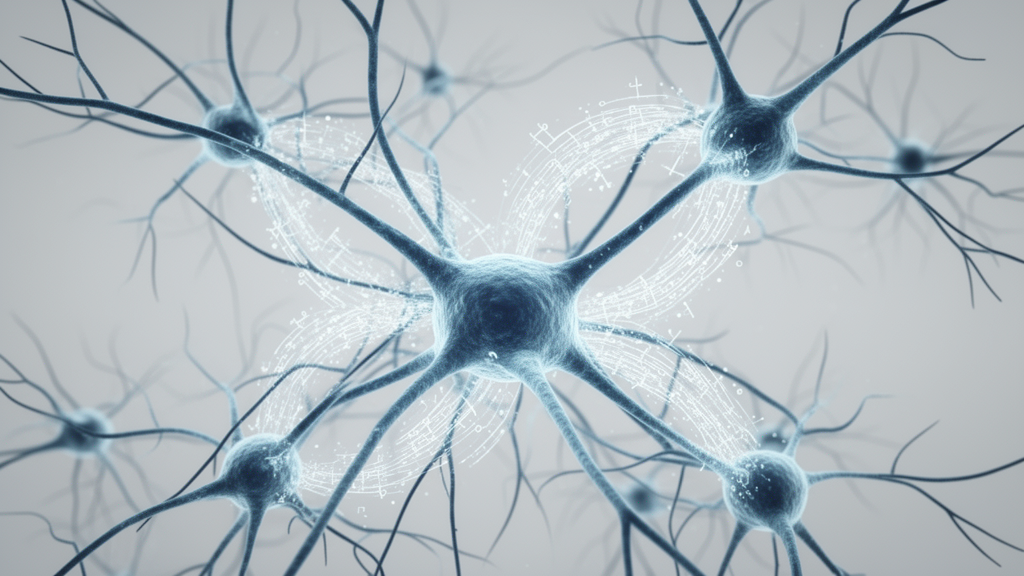
A study published in Scientific Reports on 22 October 2026 reports that structural remodeling of neurons in the nucleus accumbens is driven specifically by learned threat cues rather than by the aversive stimulus itself. The research, led by Desh Deepak Ratna with senior author T. Chase Francis, focused on dopamine 2 receptor-expressing medium spiny neurons, or D2-MSNs, which had previously been implicated in stress responses and aversive fear learning. Earlier observations had shown that repeated exposure to aversive stimuli and stress increases the density of excitatory spines, the tiny protrusions on neurons that receive synaptic input.
What remained unknown was whether this plasticity reflects cue-specific aversive fear learning, in which an animal associates a predictive signal with danger, or a more general, cue-independent response to stress. To separate these possibilities, the team used Pavlovian fear conditioning, an experimental design that allowed them to dissociate the associative component of learning from the effects of foot shock exposure alone. The experiments revealed that acute fear conditioning produced distinct physiological outcomes depending on whether an aversive stimulus was delivered in the presence or absence of a cue.
When conditioning was extended over seven days, cue learning consolidated, and the researchers measured an increase in the frequency of excitatory transmission onto D2-MSNs. This functional change was accompanied by an increase in total spine density, indicating that the strengthened signaling rested on measurable structural alterations at the synapses. Strikingly, repeated exposure to foot shock by itself did not produce this synaptic remodeling.
The morphological changes supporting plasticity in nucleus accumbens D2-MSNs therefore appear attributable to cue-dependent aversive fear learning rather than to foot shock stress alone. The authors propose that these neurons encode fear learning and responses to threat cues, a role that may heighten stress responsivity. Because the findings come from an accepted manuscript shared early for faster access and remain subject to further editorial edits before the final version of record, the results should be read as citable but still pending final publication formatting.
Even so, it sharpens the picture of the nucleus accumbens as a structure whose D2-MSNs participate in how the brain learns to anticipate danger from environmental signals, distinguishing cue-driven associative plasticity from the effects of stress exposure alone.
Subject of Research: Cue-dependent aversive fear learning and synaptic plasticity in nucleus accumbens D2 medium spiny neurons
Article Title: Cue-dependent fear learning drives nucleus accumbens spine plasticity
Article References: Ratna, D. D., Gray, C., Lee, E., Kiaris, C., Hamilton, M., & Francis, T. C. (2026). Cue-dependent fear learning drives nucleus accumbens spine plasticity. Scientific Reports. https://doi.org/10.1038/s41598-026-76692-6
Image Credits: AI Generated
DOI: 10.1038/s41598-026-76692-6
Keywords: nucleus accumbens, D2-MSNs, fear conditioning, spine plasticity, excitatory transmission, stress responsivity, Pavlovian learning, threat cues, Scientific Reports, neuroscience, Cue-dependent, fear
Cite Scienmag News
Cassandra Pierce. (October 23, 2026). Threat Cues, Not Shocks Alone, Reshape Nucleus Accumbens Neurons. Scienmag. https://scienmag.com/threat-cues-not-shocks-alone-reshape-nucleus-accumbens-neurons/
Cassandra Pierce. "Threat Cues, Not Shocks Alone, Reshape Nucleus Accumbens Neurons." Scienmag, 23 October 2026, https://scienmag.com/threat-cues-not-shocks-alone-reshape-nucleus-accumbens-neurons/. Accessed 23 October 2026.
Cassandra Pierce. "Threat Cues, Not Shocks Alone, Reshape Nucleus Accumbens Neurons." Scienmag. October 23, 2026. https://scienmag.com/threat-cues-not-shocks-alone-reshape-nucleus-accumbens-neurons/


