

Friday, October 23, 2026
Science
No Result
View All Result
  • Login
  • HOME
  • SCIENCE NEWS
  • CONTACT US
  • HOME
  • SCIENCE NEWS
  • CONTACT US
No Result
View All Result
Scienmag
No Result
View All Result
Home Science News Medicine

Gallbladder Fossa Depth on CT May Predict Catheter Path in Drainage Procedure

October 23, 2026
in Medicine
Ophelia Keating
By Ophelia Keating Scienmag Editorial Profile - Health Services Research
Reading Time: 2 mins read
0
Gallbladder Fossa Depth on CT May Predict Catheter Path in Drainage Procedure

Gallbladder Fossa Depth on CT May Predict Catheter Path in Drainage Procedure

65
SHARES
587
VIEWS
Share on FacebookShare on Twitter
ADVERTISEMENT

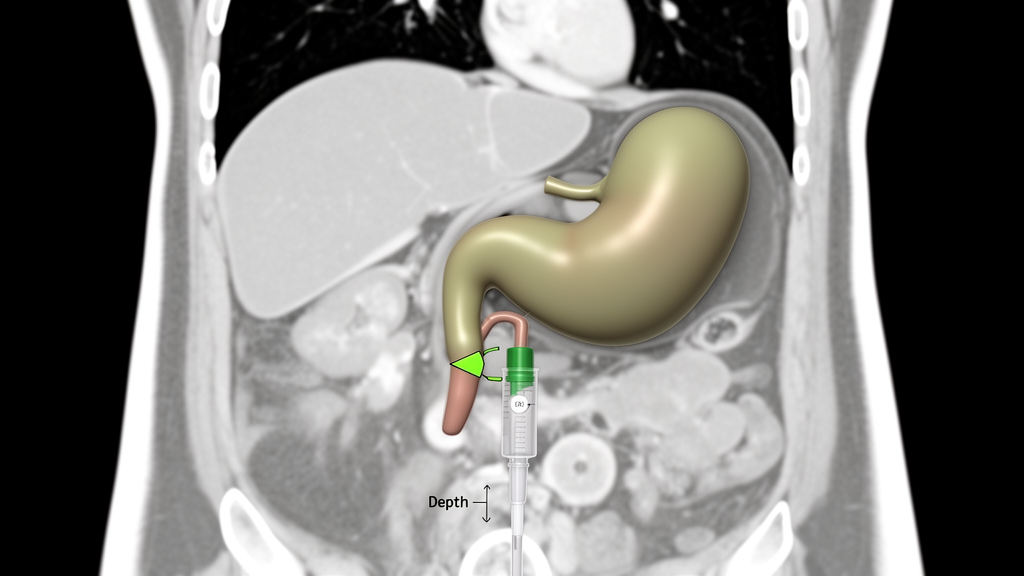
A catheter placed into an inflamed gallbladder does not always follow the path intended, according to a study published in BMC Medical Imaging. Led by Zhongyu Li and Huiming Yi with colleagues, the research examined percutaneous transhepatic gallbladder drainage, an ultrasound-guided procedure for acute cholecystitis. Using computed tomography as the reference, the team found that in 8 of 100 patients, or 8.0 percent, the catheter configuration suggested it had not traversed the perimuscular connective tissue, a layer concentrated at the deepest part of the gallbladder fossa.

The investigation was a single-center study conducted in two sequential phases. The first phase retrospectively reviewed 100 patients who underwent the drainage procedure for acute cholecystitis between 2021 and 2024. On CT and ultrasound images, the researchers measured the position of each catheter, the depth ratio of the gallbladder fossa, the projected ratio of the gallbladder length, and gallbladder dimensions. They then used receiver operating characteristic analysis to estimate an exploratory cutoff value of the depth ratio that could discriminate patients whose scans showed the CT-defined endpoint of a catheter trajectory not passing through the connective tissue layer.

The results pointed squarely at one measurement. The depth ratio of the gallbladder fossa was significantly lower in the group with properly positioned catheters, with a P value below 0.001, while the projected ratio of gallbladder length and gallbladder dimensions showed no significant differences between groups. The depth ratio achieved an area under the curve of 0.906 for discriminating the CT-defined endpoint. Using an exploratory cutoff of 65.69, the measurement showed a sensitivity of 87.5 percent and a specificity of 83.7 percent.

To understand the anatomy behind the numbers, the team carried out a second, prospective phase in 50 patients undergoing laparoscopic cholecystectomy. During these operations, the surgeons directly observed the distribution and dimensions of the perimuscular connective tissue. Those intraoperative observations confirmed that the tissue is concentrated at the deepest portion of the gallbladder fossa, the very region the depth ratio is designed to quantify.

The authors are careful about what these findings do and do not show. Conventional ultrasound-guided drainage did not consistently produce a trajectory with a CT appearance consistent with traversal of the perimuscular connective tissue, and the depth ratio should be regarded as an exploratory trajectory-related imaging parameter rather than a validated clinical decision tool. A lower depth ratio was associated with a CT-inferred trajectory consistent with tissue traversal and a lower likelihood of CT-defined catheter dislodgement, but the imaging phase was retrospective, the endpoint was defined by imaging appearance rather than confirmed clinical outcomes, and the researchers state that prospective validation is required before the measurement can inform practice.

Subject of Research: Association of gallbladder fossa depth ratio with catheter trajectory during percutaneous transhepatic gallbladder drainage

Article Title: Association of gallbladder fossa depth ratio with catheter trajectory during percutaneous transhepatic gallbladder drainage

Article References: Li, Z., Yi, H., Liu, Y., Xie, Y., Wang, D., Zhang, J., & Zhang, W. (2026). Association of gallbladder fossa depth ratio with catheter trajectory during percutaneous transhepatic gallbladder drainage. BMC Medical Imaging. https://doi.org/10.1186/s12880-026-02974-0

Image Credits: AI Generated

DOI: 10.1186/s12880-026-02974-0

Keywords: Association, gallbladder, fossa, depth, ratio, catheter, trajectory, during, percutaneous, transhepatic, drainage, scientific research

Cite Scienmag News

Ophelia Keating. (October 23, 2026). Gallbladder Fossa Depth on CT May Predict Catheter Path in Drainage Procedure. Scienmag. https://scienmag.com/gallbladder-fossa-depth-on-ct-may-predict-catheter-path-in-drainage-procedure/


Ophelia Keating. "Gallbladder Fossa Depth on CT May Predict Catheter Path in Drainage Procedure." Scienmag, 23 October 2026, https://scienmag.com/gallbladder-fossa-depth-on-ct-may-predict-catheter-path-in-drainage-procedure/. Accessed 23 October 2026.

Ophelia Keating. "Gallbladder Fossa Depth on CT May Predict Catheter Path in Drainage Procedure." Scienmag. October 23, 2026. https://scienmag.com/gallbladder-fossa-depth-on-ct-may-predict-catheter-path-in-drainage-procedure/

Tags: associationcatheterCatheter path prediction in gallbladder proceduresConnective tissue layer in gallbladder drainageCT and ultrasound comparison in gallbladder diseaseCT-based assessment of catheter placementdepthdrainageduringfossagallbladderGallbladder fossa anatomical variationsGallbladder fossa depth measurement on CTGallbladder fossa depth ratio as a predictive markerImaging techniques for acute cholecystitisImaging-guided gallbladder interventionsPercutaneousPercutaneous transhepatic gallbladder drainageratioScientific ResearchSingle-center retrospective studytrajectorytranshepatic
Share26Tweet16
Previous Post

Seeing and Listening at Once: Dual-View AI Spots Malware That Single Detectors Miss

Next Post

Open-Source 3D-Printed Air-Cooling Conveyor Slashes Hot Filament Temperatures by Half

Related Posts

Model maps cheapest routes to end sleeping sickness transmission in DRC
Medicine

Model maps cheapest routes to end sleeping sickness transmission in DRC

October 23, 2026
Screening Young Hearts: How ECGs and AI Could Curb Sudden Cardiac Death
Medicine

Screening Young Hearts: How ECGs and AI Could Curb Sudden Cardiac Death

October 23, 2026
AI Decision Aid for Juvenile Arthritis Scores Well on Safety but Diverges on Treatment Choices
Medicine

AI Decision Aid for Juvenile Arthritis Scores Well on Safety but Diverges on Treatment Choices

October 23, 2026
Data-driven subtypes reveal hidden diversity in chronic inflammatory demyelinating polyneuropathy
Medicine

Data-driven subtypes reveal hidden diversity in chronic inflammatory demyelinating polyneuropathy

October 23, 2026
Canada and Europe Build a Shared Shield Against Emerging Infections Across the North Atlantic
Medicine

Canada and Europe Build a Shared Shield Against Emerging Infections Across the North Atlantic

October 23, 2026
Decade-long Chinese surveillance shows falling MRSA and ESBL resistance, but carbapenem-resistant Klebsiella persists
Medicine

Decade-long Chinese surveillance shows falling MRSA and ESBL resistance, but carbapenem-resistant Klebsiella persists

October 23, 2026
Next Post
Open-Source 3D-Printed Air-Cooling Conveyor Slashes Hot Filament Temperatures by Half

Open-Source 3D-Printed Air-Cooling Conveyor Slashes Hot Filament Temperatures by Half

  • Mothers who receive childcare support from maternal grandparents show more optimized

    Mothers who receive childcare support from maternal grandparents show more parental warmth, finds NTU Singapore study

    27656 shares
    Share 11059 Tweet 6912
  • University of Seville Breaks 120-Year-Old Mystery, Revises a Key Einstein Concept

    1061 shares
    Share 424 Tweet 265
  • Bee body mass, pathogens and local climate influence heat tolerance

    682 shares
    Share 273 Tweet 171
  • Researchers record first-ever images and data of a shark experiencing a boat strike

    546 shares
    Share 218 Tweet 137
  • Groundbreaking Clinical Trial Reveals Lubiprostone Enhances Kidney Function

    531 shares
    Share 212 Tweet 133
Science

Embark on a thrilling journey of discovery with Scienmag.com—your ultimate source for cutting-edge breakthroughs. Immerse yourself in a world where curiosity knows no limits and tomorrow’s possibilities become today’s reality!

RECENT NEWS

  • Model maps cheapest routes to end sleeping sickness transmission in DRC
  • Open-Source 3D-Printed Air-Cooling Conveyor Slashes Hot Filament Temperatures by Half
  • Gallbladder Fossa Depth on CT May Predict Catheter Path in Drainage Procedure
  • Seeing and Listening at Once: Dual-View AI Spots Malware That Single Detectors Miss

Categories

  • Agriculture
  • Anthropology
  • Archaeology
  • Athmospheric
  • Biology
  • Biotechnology
  • Blog
  • Bussines
  • Cancer
  • Chemistry
  • Climate
  • Earth Science
  • Editorial Policy
  • Marine
  • Mathematics
  • Medicine
  • Pediatry
  • Policy
  • Psychology & Psychiatry
  • Science Education
  • Science News
  • Social Science
  • Space
  • Technology and Engineering

Subscribe to Blog via Email

Enter your email address to subscribe to this blog and receive notifications of new posts by email.

Join 5,151 other subscribers

© 2025 Scienmag - Science Magazine

Welcome Back!

Login to your account below

Forgotten Password?

Retrieve your password

Please enter your username or email address to reset your password.

Log In
No Result
View All Result
  • HOME
  • SCIENCE NEWS
  • CONTACT US

© 2025 Scienmag - Science Magazine

Discover more from Science

Subscribe now to keep reading and get access to the full archive.

Continue reading