

Thursday, October 22, 2026
Science
No Result
View All Result
  • Login
  • HOME
  • SCIENCE NEWS
  • CONTACT US
  • HOME
  • SCIENCE NEWS
  • CONTACT US
No Result
View All Result
Scienmag
No Result
View All Result
Home Science News

Ghana district study finds antenatal care access differs by household factors

October 22, 2026
in Science News
Harold Sullivan
By Harold Sullivan Scienmag Editorial Profile - Maternal and Child Health
Reading Time: 3 mins read
0
Ghana district study finds antenatal care access differs by household factors

Ghana district study finds antenatal care access differs by household factors

65
SHARES
587
VIEWS
Share on FacebookShare on Twitter
ADVERTISEMENT

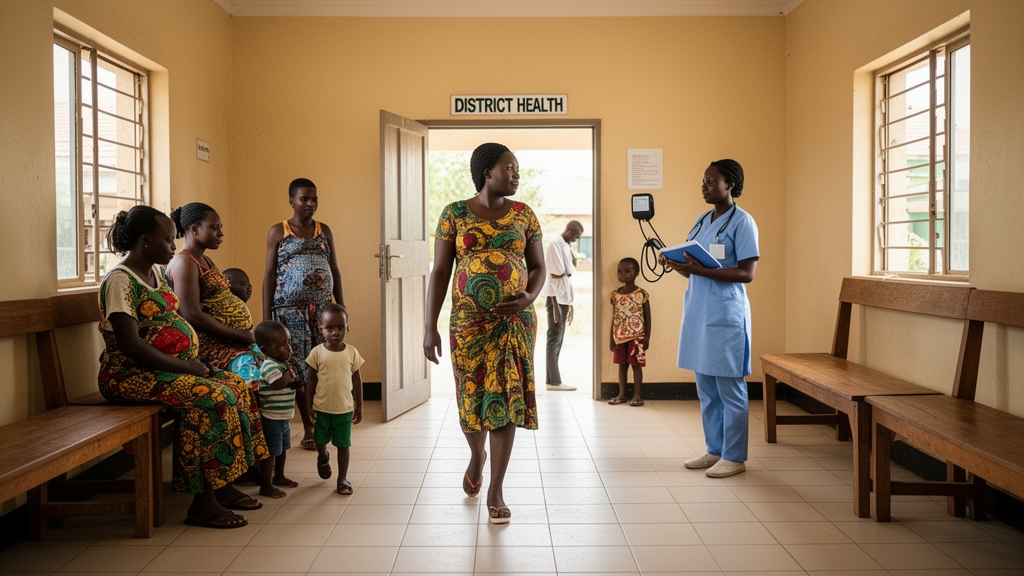
A cross-sectional study of 310 women in Ghana’s Twifo Hemang Lower Denkyira District found that antenatal care attendance was high, but access and the timing of the first visit were associated with different household and socioeconomic factors. Among women aged 15–49 years with children younger than 12 months, 93.9% reported attending at least one antenatal care visit and 69.1% began care early. The study defined early initiation as a first visit at 0–12 weeks of gestation and late initiation as a first visit at 13 weeks or later.

Researchers collected data through structured interviews and used univariate and multivariate logistic regression analyses in Stata 17, reporting adjusted odds ratios and 95% confidence intervals. The results identified distinct patterns for attendance and timing. Unmarried women had lower odds of attending at least one antenatal care visit than married women, with an adjusted odds ratio of 0.125 (95% confidence interval, 0.012–0.926; p = 0.047). Women who delivered at home also had lower odds of attending antenatal care, with an adjusted odds ratio of 0.013 (95% confidence interval, 0.001–0.176; p = 0.001). These were adjusted associations in the surveyed population, not experimentally established effects.

Several factors were associated with late initiation rather than attendance itself. Women living in households with 11 or more members had higher odds of beginning antenatal care late than women in smaller households, with an adjusted odds ratio of 3.848 (95% confidence interval, 1.914–6.211; p = 0.046). Women reporting fewer than four antenatal care contacts also had higher odds of late initiation, with an adjusted odds ratio of 6.332 (95% confidence interval, 2.049–9.571; p = 0.001). A home visit by Community-Based Health Planning and Services, or CHPS, staff was also associated with late initiation, with an adjusted odds ratio of 1.813 (95% confidence interval, 1.014–3.243; p = 0.045). In the opposite direction, higher monthly income was associated with lower odds of late initiation, with an adjusted odds ratio of 0.123 (95% confidence interval, 0.024–0.630; p = 0.012).

Not every measured characteristic showed a statistically significant association after adjustment. Antenatal care and pregnancy knowledge, receiving care in a CHPS zone, and distance to a CHPS zone were not significantly associated with antenatal care attendance or initiation timing in the reported models. The study therefore points to differing correlates for two related but separate outcomes: whether women attended antenatal care at all and when they began it. Its findings concern access within the Central Region district and do not show that any single factor caused the observed differences.

The cross-sectional design limits the conclusions that can be drawn about causation and change over time. The sample was restricted to women aged 15–49 years with children less than 12 months old, and the single-district setting limits generalization beyond the study area. Even with high reported attendance and early initiation overall, the analysis identified groups with lower odds of attending care or greater odds of starting late. The authors concluded that strengthening community-based and multisectoral interventions may improve timely antenatal care use and maternal health outcomes, while the present study itself did not test those outcomes or establish that the measured factors produced them.

Subject of Research: Antenatal care attendance and initiation timing in a Ghanaian district

Article Title: A cross-sectional study to evaluate access to antenatal care services in Twifo Hemang Lower Denkyira district of Ghana

Article References: Hammond, J., Adjei-Gyamfi, S., Brew Daniels, D., Sarpong, G. K., Aiga, H., & Aoki, T. (2026). A cross-sectional study to evaluate access to antenatal care services in Twifo Hemang Lower Denkyira district of Ghana. PLOS One, 21(10), e0359892. https://doi.org/10.1371/journal.pone.0359892

Image Credits: AI Generated

DOI: 10.1371/journal.pone.0359892

Keywords: antenatal care, Ghana, maternal health, cross-sectional study, health access, household factors, CHPS, pregnancy care, health equity, cross-sectional, evaluate, access

Cite Scienmag News

Harold Sullivan. (October 22, 2026). Ghana district study finds antenatal care access differs by household factors. Scienmag. https://scienmag.com/ghana-district-study-finds-antenatal-care-access-differs-by-household-factors/


Harold Sullivan. "Ghana district study finds antenatal care access differs by household factors." Scienmag, 22 October 2026, https://scienmag.com/ghana-district-study-finds-antenatal-care-access-differs-by-household-factors/. Accessed 22 October 2026.

Harold Sullivan. "Ghana district study finds antenatal care access differs by household factors." Scienmag. October 22, 2026. https://scienmag.com/ghana-district-study-finds-antenatal-care-access-differs-by-household-factors/

Tags: accessantenatal careantenatal care access in GhanaCHPScross-sectionalcross-sectional maternal health studycross-sectional studyearly versus late antenatal care initiationeffects of household factors on maternal healthcareevaluateGhanahealth accesshealth equityhealthcare utilization among women in Ghanahome delivery impact on antenatal attendancehousehold factorshousehold socioeconomic factors and maternal healthinfluence of marital status on prenatal carelogistic regression analysis in healthcare researchMaternal healthmaternal health disparities in Ghanapregnancy caresocioeconomic determinants of prenatal caretiming of antenatal care initiation
Share26Tweet16
Previous Post

Reflexive model maps how researchers shape psychobiographical knowledge

Next Post

Disability Employment Ties Record as Labor Force Participation Rises

Related Posts

Disability Employment Ties Record as Labor Force Participation Rises
Social Science

Disability Employment Ties Record as Labor Force Participation Rises

October 22, 2026
Reflexive model maps how researchers shape psychobiographical knowledge
Psychology & Psychiatry

Reflexive model maps how researchers shape psychobiographical knowledge

October 22, 2026
Human brain connectivity geometry predicts cortical task transformations
Medicine

Human brain connectivity geometry predicts cortical task transformations

October 22, 2026
WHOLISTIC captures cellular communication across a living zebrafish
Biology

WHOLISTIC captures cellular communication across a living zebrafish

October 22, 2026
Airway AI needs more than high segmentation scores
Medicine

Airway AI needs more than high segmentation scores

October 22, 2026
miR-142-3p suppresses tumors but can reshape their surroundings
Biology

miR-142-3p suppresses tumors but can reshape their surroundings

October 22, 2026
Next Post
Disability Employment Ties Record as Labor Force Participation Rises

Disability Employment Ties Record as Labor Force Participation Rises

  • Mothers who receive childcare support from maternal grandparents show more optimized

    Mothers who receive childcare support from maternal grandparents show more parental warmth, finds NTU Singapore study

    27656 shares
    Share 11059 Tweet 6912
  • University of Seville Breaks 120-Year-Old Mystery, Revises a Key Einstein Concept

    1061 shares
    Share 424 Tweet 265
  • Bee body mass, pathogens and local climate influence heat tolerance

    682 shares
    Share 273 Tweet 171
  • Researchers record first-ever images and data of a shark experiencing a boat strike

    546 shares
    Share 218 Tweet 137
  • Groundbreaking Clinical Trial Reveals Lubiprostone Enhances Kidney Function

    531 shares
    Share 212 Tweet 133
Science

Embark on a thrilling journey of discovery with Scienmag.com—your ultimate source for cutting-edge breakthroughs. Immerse yourself in a world where curiosity knows no limits and tomorrow’s possibilities become today’s reality!

RECENT NEWS

  • Disability Employment Ties Record as Labor Force Participation Rises
  • Ghana district study finds antenatal care access differs by household factors
  • Reflexive model maps how researchers shape psychobiographical knowledge
  • Human brain connectivity geometry predicts cortical task transformations

Categories

  • Agriculture
  • Anthropology
  • Archaeology
  • Athmospheric
  • Biology
  • Biotechnology
  • Blog
  • Bussines
  • Cancer
  • Chemistry
  • Climate
  • Earth Science
  • Editorial Policy
  • Marine
  • Mathematics
  • Medicine
  • Pediatry
  • Policy
  • Psychology & Psychiatry
  • Science Education
  • Science News
  • Social Science
  • Space
  • Technology and Engineering

Subscribe to Blog via Email

Enter your email address to subscribe to this blog and receive notifications of new posts by email.

Join 5,151 other subscribers

© 2025 Scienmag - Science Magazine

Welcome Back!

Login to your account below

Forgotten Password?

Retrieve your password

Please enter your username or email address to reset your password.

Log In
No Result
View All Result
  • HOME
  • SCIENCE NEWS
  • CONTACT US

© 2025 Scienmag - Science Magazine

Discover more from Science

Subscribe now to keep reading and get access to the full archive.

Continue reading