


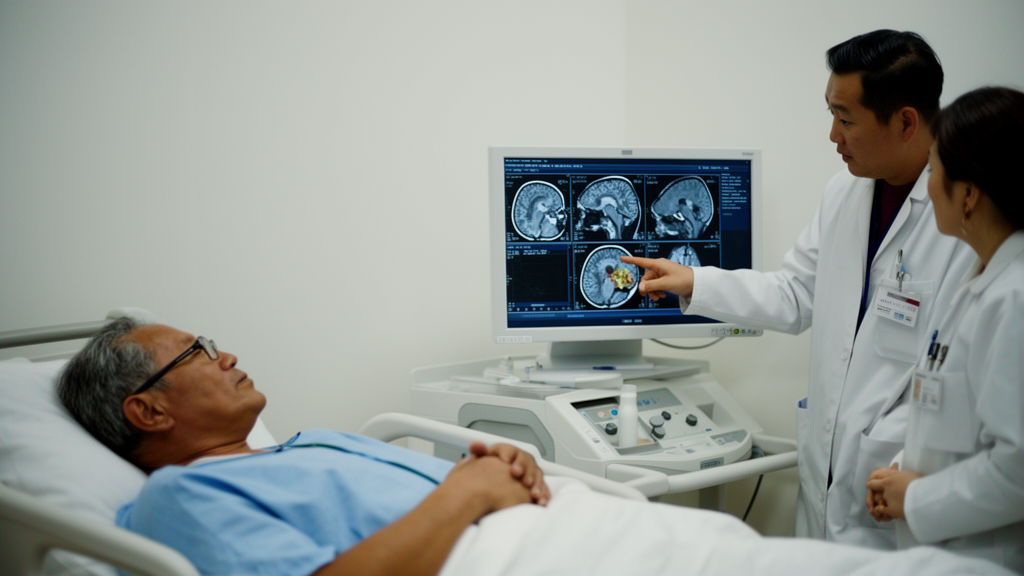
In a cross-sectional study of 499 neurological inpatients living at high altitude in Tibet, a higher body mass index was associated with lower odds of severe white matter hyperintensities, the bright lesions visible on magnetic resonance imaging that are commonly used as imaging markers of cerebral small vessel disease. The association was not uniform across all levels of lesion burden: it was clearest at the highest severity thresholds and was strongest for periventricular white matter hyperintensities surrounding the brain’s ventricles. After adjustment for age, sex, smoking, alcohol use, cardiovascular history, hypertension, diabetes, antihypertensive medication use and hemoglobin level, the odds ratio for severe total white matter burden was 0.939 for each one-unit increase in BMI. Because the study measured BMI, brain imaging and other factors at the same time, the results show an association and do not demonstrate that higher BMI prevents brain injury.
The analysis was conducted from November 2022 to February 2025 at the Hospital of the Chengdu Office of the People’s Government of Xizang Autonomous Region. Participants were at least 35 years old, ethnically Tibetan and long-term residents of areas at or above 3,000 metres. Their mean residential altitude was 3,746.2 metres, with a standard deviation of 481.6 metres. The hospital-based sample mainly included people admitted with cerebrovascular or neurological conditions such as parkinsonian syndromes, vertigo, chronic headache, anxiety and depression. The researchers excluded people with large cortical infarcts or hemorrhages, central nervous system demyelinating disease, intracranial infection, severe liver disease, advanced chronic kidney disease or cancer. The mean age was 57.7 years, 55.7% of participants were men, and 51 of 499, or 10.2%, had a history of stroke.
Participants underwent 3.0-tesla magnetic resonance imaging, and two neurologists blinded to their clinical data independently graded white matter hyperintensities using the semi-quantitative Fazekas scale. The scale ranges from zero to three in each of two anatomical categories: periventricular lesions, ranging from thin caps or pencil-thin linings to irregular extensions into deep white matter, and deep subcortical lesions, ranging from punctate foci to large confluent areas. A total Fazekas score combines the two categories and can range from zero to six. The analysts also counted whether lesions were present in each of ten brain regions. Inter-rater agreement was substantial, with weighted Cohen’s kappa values of 0.82 for periventricular grading and 0.79 for deep subcortical grading. Repeat ratings of 50 scans after four weeks produced kappa values of 0.88 and 0.85 for the two raters. In total, 139 participants, or 27.9%, met the study’s definition of significant white matter hyperintensity burden.
Because total lesion burden and the number of affected regions were not normally distributed, the researchers used threshold-specific binary logistic regression rather than a single proportional-odds model. This allowed the BMI association to vary across clinically meaningful cutoffs. The pattern was inverse for total white matter burden: the adjusted odds ratio was 0.968 when scores of zero to one were compared with scores of two to six, with a 95% confidence interval of 0.910 to 1.030 and a p-value of 0.306. At the higher threshold separating scores of zero to two from three to six, the odds ratio was 0.939, with a 95% confidence interval of 0.882 to 0.999 and a p-value of 0.047. The changing estimates indicated that the inverse association was concentrated among participants with more severe total lesion burden rather than being equally apparent at every threshold.
Periventricular lesions showed a similar progression. Across the three comparisons, the adjusted odds ratios were 0.984 for no lesions versus grades one to three, 0.942 for grades zero to one versus two to three, and 0.864 for grades zero to two versus grade three. The most severe comparison had a 95% confidence interval of 0.787 to 0.949 and a p-value of 0.002. Deep subcortical lesions followed a similar threshold-dependent pattern. The odds ratio was 1.014 when participants without lesions were compared with those graded one to three, 0.928 at the next threshold and 0.874 when grades zero to two were compared with grade three. The two higher-threshold confidence intervals excluded one: 0.872 to 0.988 for the middle cutoff and 0.796 to 0.959 for the highest cutoff. The number of anatomical regions containing lesions also produced odds ratios below one at all three thresholds, although the estimate for four to 10 affected regions versus zero to three was 0.947, with a 95% confidence interval of 0.894 to 1.004 and a p-value of 0.067. The authors therefore emphasized the consistency of the trend across thresholds rather than treating each p-value as a separate primary finding.
Region-specific analysis identified two locations where higher BMI was associated with a lower likelihood of lesions after full adjustment. The adjusted odds ratio was 0.76 for white matter hyperintensities in the corona radiata, with a 95% confidence interval of 0.65 to 0.88, and 0.74 for lesions in the brainstem, with a 95% confidence interval of 0.62 to 0.87; both p-values were below 0.001. The frontal lobe and periventricular region were the most frequently affected sites, occurring in 82.6% and 81.2% of participants, respectively, but their region-specific odds ratios were close to one. This distinction matters because the severe-burden results concerned the presence or degree of lesions, whereas the regional models assessed whether a lesion was present at all. The researchers also examined whether altitude or hemoglobin concentration modified the inverse associations. Neither factor significantly changed the BMI association in the corona radiata or brainstem, and stratified results were similar in participants with hemoglobin below and above 147 grams per litre.
Exploratory analyses did not identify statistical evidence that triglycerides, high-density lipoprotein cholesterol or hypertension mediated the relationship between BMI and severe total white matter burden. The estimated indirect effect through triglycerides was −0.0010, with a 95% confidence interval of −0.0107 to 0.0078 and a p-value of 0.838. Through high-density lipoprotein cholesterol, the indirect effect was 0.0011, with a confidence interval of −0.0069 to 0.0108 and a p-value of 0.762. The estimate through hypertension was 0.0284, with a confidence interval of −0.0212 to 0.0779 and a p-value of 0.262. These analyses cannot distinguish causal pathways because BMI, candidate mediators and brain imaging were assessed concurrently. Their purpose was to generate hypotheses rather than establish a sequence in which metabolic traits, blood pressure or lipid levels carried the observed association.
Several biological ideas were proposed, but none was directly tested in this cohort. Tibetan populations carry EPAS1 and HIF-2α adaptations associated with life at high altitude, and chronic hypoxia can affect vascular signaling, blood pressure, erythrocyte production and circulation. The researchers also considered nutritional reserve, adipose-derived signals and a “healthy obesity” phenotype that may differ under high-altitude conditions. These explanations remain hypothetical. A particularly important unmeasured factor is obstructive sleep apnoea, which is associated with obesity and can contribute to white matter injury through repeated nocturnal hypoxia, oxidative stress, blood–brain barrier disruption and sympathetic activation. The study collected neither polysomnography nor questionnaire-based sleep-apnoea screening, so the possibility that sleep-disordered breathing influenced the results cannot be excluded. Physical activity, diet and direct measures of visceral fat were also unavailable, and the semi-quantitative Fazekas scale could not precisely measure lesion volume.
The findings therefore offer a nuanced counterpoint to the usual assumption that higher adiposity always accompanies more cerebrovascular injury, rather than a clinical strategy for managing brain disease. The sample was drawn from one hospital and may not represent Tibetans living in the wider community, while the cross-sectional design prevents the investigators from establishing whether BMI preceded lesion development, whether severe lesions influenced weight, or whether another factor affected both. Selection bias is also possible because the participants were hospitalized for neurological or cerebrovascular disorders, and the reasons for admission may themselves be related to both adiposity and cerebrovascular pathology. The study also used BMI as its only direct adiposity measure, despite the limitations of body mass as a marker of fat distribution. Prospective, population-based cohorts that repeatedly measure BMI, brain lesion volume, metabolic markers and sleep-disordered breathing would be needed to determine whether the observed inverse association persists over time and whether it reflects genuine protection, selection effects or residual confounding.
Subject of Research: Cross-sectional association between body mass index and MRI-rated white matter hyperintensity burden in high-altitude Tibetan neurological inpatients
Article Title: The association between body mass index and white matter hyperintensities: a cross-sectional analysis in a Tibetan population
Article References: Yao, S., Bao, S.-M., Xing, Y.-Y., Qi, Z.-R., Feng, H.-R., Tan, Y., Zhang, Q., Ge, W.-H., & Chen, X. (2026). The association between body mass index and white matter hyperintensities: a cross-sectional analysis in a Tibetan population. Frontiers in Neurology, 17, Article 1805682. https://doi.org/10.3389/fneur.2026.1805682
Image Credits: AI Generated
DOI: 10.3389/fneur.2026.1805682
Keywords: body mass index, white matter hyperintensities, cerebral small vessel disease, Tibetan population, high altitude, magnetic resonance imaging, obesity paradox, cross-sectional study, brain imaging, hospital-based cohort, association, between
Cite Scienmag News
Cassandra Pierce. (October 22, 2026). Higher BMI linked to fewer severe brain lesions in Tibetan inpatients. Scienmag. https://scienmag.com/higher-bmi-linked-to-fewer-severe-brain-lesions-in-tibetan-inpatients/
Cassandra Pierce. "Higher BMI linked to fewer severe brain lesions in Tibetan inpatients." Scienmag, 22 October 2026, https://scienmag.com/higher-bmi-linked-to-fewer-severe-brain-lesions-in-tibetan-inpatients/. Accessed 22 October 2026.
Cassandra Pierce. "Higher BMI linked to fewer severe brain lesions in Tibetan inpatients." Scienmag. October 22, 2026. https://scienmag.com/higher-bmi-linked-to-fewer-severe-brain-lesions-in-tibetan-inpatients/


