

Thursday, October 22, 2026
Science
No Result
View All Result
  • Login
  • HOME
  • SCIENCE NEWS
  • CONTACT US
  • HOME
  • SCIENCE NEWS
  • CONTACT US
No Result
View All Result
Scienmag
No Result
View All Result
Home Science News Medicine

Chinese surveillance shows steep declines in reported vector-borne diseases during COVID-19

October 22, 2026
in Medicine
Phoebe Ingram
By Phoebe Ingram Scienmag Editorial Profile - Epidemiology
Reading Time: 2 mins read
0
Chinese surveillance shows steep declines in reported vector-borne diseases during COVID-19

Chinese surveillance shows steep declines in reported vector-borne diseases during COVID-19

65
SHARES
587
VIEWS
Share on FacebookShare on Twitter
ADVERTISEMENT

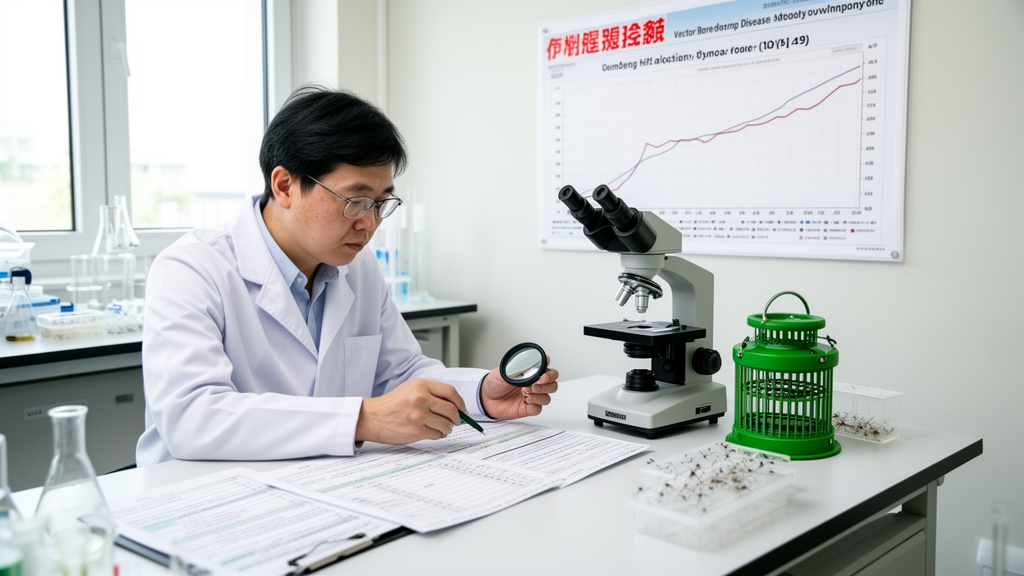
Reported incidence and mortality from five vector-borne diseases were substantially lower in China during 2020–2023 than in the preceding period, according to an analysis of surveillance data spanning 2004–2023. Compared with 2013–2019, overall reported incidence during 2020–2023 was 59.86% lower (95% CI: –60.36% to –59.36%; P < 0.001), while reported mortality was 83.72% lower (95% CI: –87.86% to –78.18%; P < 0.001). The observational analysis did not establish that COVID-19-related public-health measures alone caused these reductions.

The study examined typhus, dengue, leishmaniasis, malaria and epidemic encephalitis B, abbreviated EEB. Researchers obtained province- and age-specific surveillance data for 2004–2020 from the Chinese Center for Disease Control and Prevention and national aggregate data for 2021–2023 from the National Health Commission. Consequently, spatial and age-specific analyses covered 2004–2020, whereas national trend analyses extended through 2023. Across the earlier surveillance period, incidence and mortality declined significantly, with especially large reductions for malaria, dengue and EEB. Spatial hotspots were concentrated mainly in southern provinces, although the available data did not permit comparable geographic and age-specific analysis for 2021–2023.

Malaria and EEB had the largest reductions during the pandemic-period comparison, whereas typhus and leishmaniasis changed less markedly. These findings describe reported disease burden rather than experimentally measured causal effects. The analysis used Joinpoint regression to assess annual trends, seasonal-trend decomposition using STL to examine monthly seasonal patterns, and interrupted time-series analysis to evaluate monthly changes after January 2020. Seasonal autoregressive integrated moving average, or SARIMA, models trained on pre-COVID data also estimated expected monthly trajectories for 2020–2023, allowing observed pandemic-era patterns to be compared with forecasts based on earlier data.

Despite the size of the national reductions, interpreting them as a direct consequence of the COVID-19 period would be too simplistic, the researchers said. The observed changes may reflect a combination of pandemic-era public-health measures, the pre-existing long-term decline, disease-specific control programs and possible disruption to surveillance and reporting. The analysis therefore identifies a strong temporal association between the COVID-19 period and lower reported incidence and mortality, but it does not quantify the contribution of each possible factor. This distinction is particularly important because the study combines provincial and age-specific data through 2020 with national aggregate data for the final three years.

The findings underline the need for reliable surveillance and reporting during public-health emergencies, as well as forecasting tools that can be adapted when conditions change. The study does not show that the observed declines persisted independently of pandemic-era conditions or that they were produced by any single intervention. Instead, it documents a marked reduction in reported vector-borne disease burden in China, while leaving unresolved how much of the change reflected intervention effects, continuing control programs, underlying trends or changes in the completeness of health reporting.

Subject of Research: Trends in reported vector-borne disease incidence and mortality in China, 2004–2023

Article Title: Temporal trends in reported vector-borne diseases in China before and after the onset of COVID-19 from 2004 to 2023

Article References: Lei, Z., Liu, Q., & Lei, Z. (2026). Temporal trends in reported vector-borne diseases in China before and after the onset of COVID-19 from 2004 to 2023. PLOS Neglected Tropical Diseases, 20(10), e0014745. https://doi.org/10.1371/journal.pntd.0014745

Image Credits: AI Generated

DOI: 10.1371/journal.pntd.0014745

Keywords: vector-borne diseases, China, COVID-19, surveillance, malaria, dengue, leishmaniasis, epidemic encephalitis B, time-series analysis, public health, Temporal, trends

Cite Scienmag News

Phoebe Ingram. (October 22, 2026). Chinese surveillance shows steep declines in reported vector-borne diseases during COVID-19. Scienmag. https://scienmag.com/chinese-surveillance-shows-steep-declines-in-reported-vector-borne-diseases-during-covid-19/


Phoebe Ingram. "Chinese surveillance shows steep declines in reported vector-borne diseases during COVID-19." Scienmag, 22 October 2026, https://scienmag.com/chinese-surveillance-shows-steep-declines-in-reported-vector-borne-diseases-during-covid-19/. Accessed 22 October 2026.

Phoebe Ingram. "Chinese surveillance shows steep declines in reported vector-borne diseases during COVID-19." Scienmag. October 22, 2026. https://scienmag.com/chinese-surveillance-shows-steep-declines-in-reported-vector-borne-diseases-during-covid-19/

Tags: age-specific trends in vector-borne disease incidenceChinaChina CDC and National Health Commission diseaseCOVID-19decline in malaria and dengue cases during pandemicdengueeffects of COVID-19 on typhus and leishmaniasis reportingepidemic encephalitis Bepidemiological trends of epidemic encephalitis Bimpact of public health measures on disease transmissioninfluence of COVID-19 restrictions on disease mortalityleishmaniasismalariaPublic healthspatial distribution of vector-borne diseases in Chinasurveillancesurveillance data analysis of infectious diseases in ChinaTemporaltime-series analysisTrendsvector-borne disease decline during COVID-19vector-borne diseases
Share26Tweet16
Previous Post

Gonadoblastoma Found in 30.77% of Turner Mosaic Gonadectomies

Next Post

SubPoE benchmarked for uncertainty-aware spatial multi-omics clustering

Related Posts

Gonadoblastoma Found in 30.77% of Turner Mosaic Gonadectomies
Medicine

Gonadoblastoma Found in 30.77% of Turner Mosaic Gonadectomies

October 22, 2026
TRPV4–NCX1 coupling links CCK secretion to diarrhea-like changes in male mice
Medicine

TRPV4–NCX1 coupling links CCK secretion to diarrhea-like changes in male mice

October 21, 2026
Six-part framework aims to clarify clinical trial outcomes
Medicine

Six-part framework aims to clarify clinical trial outcomes

October 21, 2026
Research report: Progress in the Mechanism of Heat Shock Proteins in Gastric Cancer: From Biomarkers to Therapeutic Targets
Medicine

Research report: Progress in the Mechanism of Heat Shock Proteins in Gastric Cancer: From Biomarkers to Therapeutic Targets

October 21, 2026
Nursing homes still deny buprenorphine after federal prescribing rules changed
Medicine

Nursing homes still deny buprenorphine after federal prescribing rules changed

October 21, 2026
Single-fibre multi-omics links inflammation to altered myosin energetics in ICU weakness
Medicine

Single-fibre multi-omics links inflammation to altered myosin energetics in ICU weakness

October 21, 2026
Next Post
SubPoE benchmarked for uncertainty-aware spatial multi-omics clustering

SubPoE benchmarked for uncertainty-aware spatial multi-omics clustering

  • Mothers who receive childcare support from maternal grandparents show more optimized

    Mothers who receive childcare support from maternal grandparents show more parental warmth, finds NTU Singapore study

    27656 shares
    Share 11059 Tweet 6912
  • University of Seville Breaks 120-Year-Old Mystery, Revises a Key Einstein Concept

    1061 shares
    Share 424 Tweet 265
  • Bee body mass, pathogens and local climate influence heat tolerance

    682 shares
    Share 273 Tweet 171
  • Researchers record first-ever images and data of a shark experiencing a boat strike

    546 shares
    Share 218 Tweet 137
  • Groundbreaking Clinical Trial Reveals Lubiprostone Enhances Kidney Function

    531 shares
    Share 212 Tweet 133
Science

Embark on a thrilling journey of discovery with Scienmag.com—your ultimate source for cutting-edge breakthroughs. Immerse yourself in a world where curiosity knows no limits and tomorrow’s possibilities become today’s reality!

RECENT NEWS

  • SubPoE benchmarked for uncertainty-aware spatial multi-omics clustering
  • Chinese surveillance shows steep declines in reported vector-borne diseases during COVID-19
  • Gonadoblastoma Found in 30.77% of Turner Mosaic Gonadectomies
  • Survey links peer ties to social support and student physical activity

Categories

  • Agriculture
  • Anthropology
  • Archaeology
  • Athmospheric
  • Biology
  • Biotechnology
  • Blog
  • Bussines
  • Cancer
  • Chemistry
  • Climate
  • Earth Science
  • Editorial Policy
  • Marine
  • Mathematics
  • Medicine
  • Pediatry
  • Policy
  • Psychology & Psychiatry
  • Science Education
  • Science News
  • Social Science
  • Space
  • Technology and Engineering

Subscribe to Blog via Email

Enter your email address to subscribe to this blog and receive notifications of new posts by email.

Join 5,151 other subscribers

© 2025 Scienmag - Science Magazine

Welcome Back!

Login to your account below

Forgotten Password?

Retrieve your password

Please enter your username or email address to reset your password.

Log In
No Result
View All Result
  • HOME
  • SCIENCE NEWS
  • CONTACT US

© 2025 Scienmag - Science Magazine

Discover more from Science

Subscribe now to keep reading and get access to the full archive.

Continue reading