

Wednesday, October 21, 2026
Science
No Result
View All Result
  • Login
  • HOME
  • SCIENCE NEWS
  • CONTACT US
  • HOME
  • SCIENCE NEWS
  • CONTACT US
No Result
View All Result
Scienmag
No Result
View All Result
Home Science News Biology

Genome-resolved metagenomics maps rumen microbes and carcass-trait links in crossbred cattle

October 21, 2026
in Biology
Juliet Wilcox
By Juliet Wilcox Scienmag Editorial Profile - Human Genetics
Reading Time: 3 mins read
0
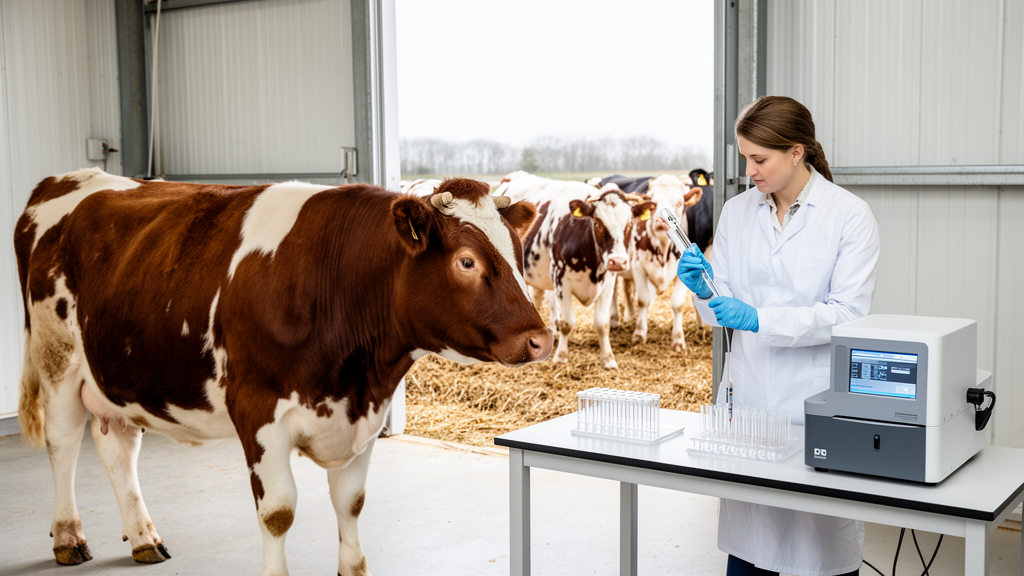
Genome-resolved metagenomics maps rumen microbes and carcass-trait links in crossbred cattle

Genome-resolved metagenomics maps rumen microbes and carcass-trait links in crossbred cattle

65
SHARES
587
VIEWS
Share on FacebookShare on Twitter
ADVERTISEMENT

A genome-resolved metagenomic study found distinct rumen microbial communities and carbohydrate-processing functions in Japanese Black × Holstein crossbred, or F1, cattle compared with Japanese Black cattle. Within the F1 group, several reconstructed microbial genomes were associated with carcass weight, ribeye area and the proportion of acetate in the rumen, providing an association-level view of how rumen microbial functions may relate to carcass traits. The researchers characterized the rumen microbiome of 51 F1 cattle at both taxonomic and functional levels.

They then compared these animals with a previously published Japanese Black cattle metagenomic dataset. The analysis used metagenome-assembled genomes, or MAGs, to examine differences in microbial groups between the breeds and to connect particular microbial genomes with functional profiles and carcass measurements. Rumen microbial community structure differed significantly between Japanese Black and F1 cattle.

Their functional profiles also differed when the researchers assessed genes grouped as KEGG orthologs and carbohydrate-active enzyme families. At the genome-resolved level, the comparison identified 116 MAGs with significantly different abundances between the two breeds, indicating that breed-associated differences were visible not only in the overall community but also among individual reconstructed microbial genomes. F1 cattle were enriched in MAGs affiliated with Ruminococcoides and Prevotella .

Their glycoside hydrolase repertoire included families related to starch metabolism, suggesting a fermentation profile oriented toward readily fermentable carbohydrates. Japanese Black cattle, in contrast, showed enrichment of MAGs affiliated with Ruminococcus and Verrucomicrobiota that carried glycoside hydrolase families associated with lignocellulose degradation. The pathway analysis also detected 38 KEGG pathways that differed significantly between the breeds, with several amino acid metabolism pathways enriched in F1 cattle.

Together, the community, genome and pathway results show that the breed-associated contrast included both differences in the abundance of microbial groups and differences in the metabolic capabilities represented in their genomes. Within the F1 cattle, several MAGs carrying diverse glycoside hydrolase families were significantly correlated with carcass weight and ribeye area. These same MAGs were positively associated with the proportion of acetate in the rumen.

The study’s breed comparison combined newly characterized F1 cattle with an earlier Japanese Black dataset, and its carcass-trait relationships were assessed within F1 animals. As a result, the evidence supports breed-associated differences and microbiome–trait correlations, but it does not establish that particular microbes or an acetate-oriented fermentation pattern caused carcass weight or ribeye area to increase. By resolving microbial communities into individual MAGs and linking them to carbohydrate-processing functions and carcass traits, the research provides a genome-level description of rumen variation in Japanese Black × Holstein F1 cattle.

The findings identify candidate microbial and metabolic features that may be relevant to productivity research in beef cattle, while the association design limits interpretation to correlation rather than proof that altering the rumen microbiome would change carcass outcomes.

Subject of Research: Genome-resolved analysis of rumen microbiome functions and carcass-trait associations in Japanese Black × Holstein F1 cattle

Article Title: Genome-resolved metagenomics reveals the taxonomic and functional landscape of the rumen microbiome in Japanese Black × Holstein cattle and its associations with carcass traits

Article References: Sato, Y. (2026). Genome-resolved metagenomics reveals the taxonomic and functional landscape of the rumen microbiome in Japanese Black × Holstein cattle and its associations with carcass traits. BMC Genomics. https://doi.org/10.1186/s12864-026-13486-0

Image Credits: AI Generated

DOI: 10.1186/s12864-026-13486-0

Keywords: rumen microbiome, genome-resolved metagenomics, Japanese Black cattle, Holstein crossbred cattle, carcass weight, ribeye area, rumen acetate, carbohydrate metabolism, MAGs, beef cattle, Genome-resolved, metagenomics

Cite Scienmag News

Juliet Wilcox. (October 21, 2026). Genome-resolved metagenomics maps rumen microbes and carcass-trait links in crossbred cattle. Scienmag. https://scienmag.com/genome-resolved-metagenomics-maps-rumen-microbes-and-carcass-trait-links-in-crossbred-cattle/


Juliet Wilcox. "Genome-resolved metagenomics maps rumen microbes and carcass-trait links in crossbred cattle." Scienmag, 21 October 2026, https://scienmag.com/genome-resolved-metagenomics-maps-rumen-microbes-and-carcass-trait-links-in-crossbred-cattle/. Accessed 21 October 2026.

Juliet Wilcox. "Genome-resolved metagenomics maps rumen microbes and carcass-trait links in crossbred cattle." Scienmag. October 21, 2026. https://scienmag.com/genome-resolved-metagenomics-maps-rumen-microbes-and-carcass-trait-links-in-crossbred-cattle/

Tags: Association of rumen microbes with carcass weight and meat qualitybeef cattleBreed-specific microbial functional profiles in cattlecarbohydrate metabolismCarbohydrate-processing functions in cattle rumen microbiomescarcass weightFunctional geneGenome-resolvedgenome-resolved metagenomicsGenome-resolved metagenomics for livestock traitsHolstein crossbred cattleJapanese Black cattleMAGsMetagenome-assembled genomes in livestock microbial studiesmetagenomicsMicrobial community differences between Japanese Black and F1 cattleMicrobial taxa linked to carcass traits in crossbred cattleribeye arearumen acetateRumen microbial community structure and host geneticsrumen microbiomeRumen microbiome analysis in crossbred cattle
Share26Tweet16
Previous Post

Research report: Documented patient consent for ambient video monitoring technologies in an academic hospital: a cross-sectional analysis of consent outcomes and demographic differences

Next Post

Most matched AI incidents lacked specific disclosure in SEC filings

Related Posts

Machine Learning Shows Promise but Limited Clinical Validation in Keratoconus
Biology

Machine Learning Shows Promise but Limited Clinical Validation in Keratoconus

October 21, 2026
Review maps plant cell-wall kinase links between growth and defense
Biology

Review maps plant cell-wall kinase links between growth and defense

October 21, 2026
Invasive squirrels in Hamamatsu show patchy ectoparasite diversity across landscapes
Biology

Invasive squirrels in Hamamatsu show patchy ectoparasite diversity across landscapes

October 21, 2026
Goonch Catfish Mitogenome Resolves Close Phylogeny, Flags Preliminary DNA Modifications
Biology

Goonch Catfish Mitogenome Resolves Close Phylogeny, Flags Preliminary DNA Modifications

October 21, 2026
HLA variants linked to pediatric neuroblastoma risk and outcomes in review
Biology

HLA variants linked to pediatric neuroblastoma risk and outcomes in review

October 21, 2026
Narrative review evaluates vesicle microRNAs as HSV-1 uveitis biomarkers
Biology

Narrative review evaluates vesicle microRNAs as HSV-1 uveitis biomarkers

October 21, 2026
Next Post
Most matched AI incidents lacked specific disclosure in SEC filings

Most matched AI incidents lacked specific disclosure in SEC filings

  • Mothers who receive childcare support from maternal grandparents show more optimized

    Mothers who receive childcare support from maternal grandparents show more parental warmth, finds NTU Singapore study

    27656 shares
    Share 11059 Tweet 6912
  • University of Seville Breaks 120-Year-Old Mystery, Revises a Key Einstein Concept

    1061 shares
    Share 424 Tweet 265
  • Bee body mass, pathogens and local climate influence heat tolerance

    682 shares
    Share 273 Tweet 171
  • Researchers record first-ever images and data of a shark experiencing a boat strike

    546 shares
    Share 218 Tweet 137
  • Groundbreaking Clinical Trial Reveals Lubiprostone Enhances Kidney Function

    531 shares
    Share 212 Tweet 133
Science

Embark on a thrilling journey of discovery with Scienmag.com—your ultimate source for cutting-edge breakthroughs. Immerse yourself in a world where curiosity knows no limits and tomorrow’s possibilities become today’s reality!

RECENT NEWS

  • L-carnitine attenuates trastuzumab-induced changes in cardiac H9c2 cells
  • Most matched AI incidents lacked specific disclosure in SEC filings
  • Genome-resolved metagenomics maps rumen microbes and carcass-trait links in crossbred cattle
  • Research report: Documented patient consent for ambient video monitoring technologies in an academic hospital: a cross-sectional analysis of consent outcomes and demographic differences

Categories

  • Agriculture
  • Anthropology
  • Archaeology
  • Athmospheric
  • Biology
  • Biotechnology
  • Blog
  • Bussines
  • Cancer
  • Chemistry
  • Climate
  • Earth Science
  • Editorial Policy
  • Marine
  • Mathematics
  • Medicine
  • Pediatry
  • Policy
  • Psychology & Psychiatry
  • Science Education
  • Science News
  • Social Science
  • Space
  • Technology and Engineering

Subscribe to Blog via Email

Enter your email address to subscribe to this blog and receive notifications of new posts by email.

Join 5,150 other subscribers

© 2025 Scienmag - Science Magazine

Welcome Back!

Login to your account below

Forgotten Password?

Retrieve your password

Please enter your username or email address to reset your password.

Log In
No Result
View All Result
  • HOME
  • SCIENCE NEWS
  • CONTACT US

© 2025 Scienmag - Science Magazine

Discover more from Science

Subscribe now to keep reading and get access to the full archive.

Continue reading