


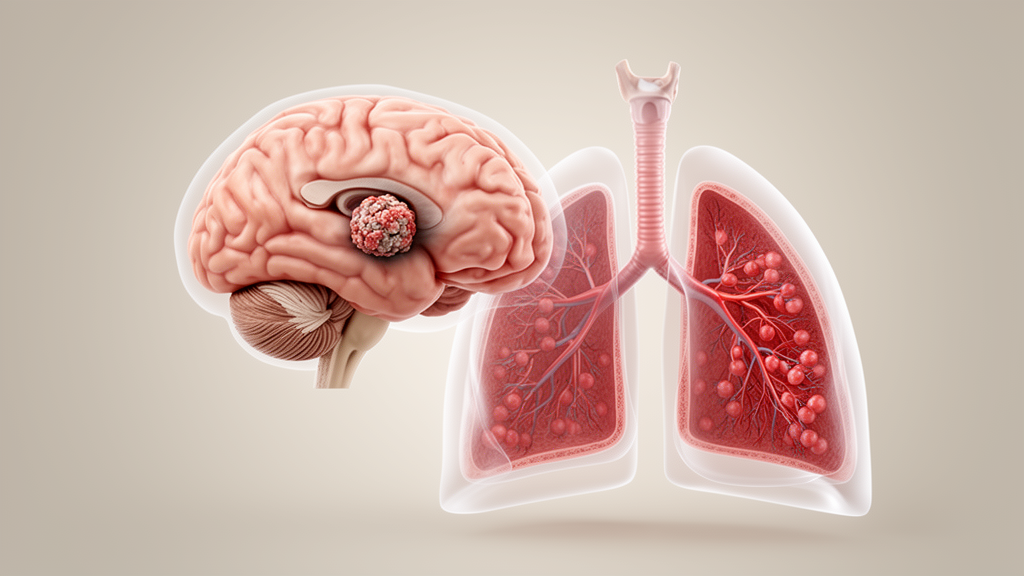
A 60-year-old woman with severe headache, conjunctival inflammation and multiple bilateral pulmonary nodules was initially suspected of having lung cancer with brain metastasis before biopsy and blood testing supported a diagnosis of granulomatosis with polyangiitis, or GPA. The case report in Frontiers in Medicine found necrotizing granulomatous inflammation with inflammatory-cell infiltration of vessel walls in a lung biopsy, with no tumor cells or microorganisms identified. Blood tests also showed strongly positive c-ANCA and PR3-ANCA, while MPO-ANCA was negative. The findings illustrate how GPA can resemble a malignant process involving the lungs and central nervous system, although the cranial component of this patient’s disease was not directly biopsied.
The patient first developed predominantly right-sided headache in October 2025, accompanied by bilateral conjunctival injection, photophobia, tinnitus and cough with sputum. Respiratory symptoms improved partially with symptomatic treatment, but the headache and ocular symptoms subsequently worsened. At another hospital, she was diagnosed with glaucoma and underwent two anti-glaucoma operations on January 4 and January 30, 2026. Symptoms improved transiently after each procedure but returned soon afterward, and oral ibuprofen was ineffective. The original ophthalmological records and details of the operations were unavailable, so the investigators said true glaucoma, episcleritis, scleritis, uveitis and orbital disease could not be definitively excluded. She reported no epistaxis, fever or night sweats, but had lost approximately 9 kg of body weight over two months.
When the patient was admitted on March 5, 2026, chest and abdominal computed tomography showed multiple bilateral pulmonary nodules considered suggestive of metastases. Contrast-enhanced cranial magnetic resonance imaging revealed bilateral dural thickening and enhancement, together with a right fronto-parieto-occipital subdural effusion; infection still had to be excluded. Laboratory findings included a white blood cell count of 10.17 × 10⁹/L, a neutrophil count of 7.77 × 10⁹/L, hemoglobin of 88 g/L, platelets of 559 × 10⁹/L, erythrocyte sedimentation rate of at least 120 mm/h and C-reactive protein concentration of 80.1 mg/L. Serum creatinine and urea were normal, and urinalysis showed leukocytes but no occult blood or protein. Because dysmorphic red-cell and red-cell-cast microscopy, quantitative proteinuria testing and estimated glomerular filtration rate measurement were not performed, the investigators could not definitively exclude renal involvement.
The working clinical diagnosis was lung cancer with brain metastasis, and the patient was transferred to the oncology department. Respiratory tests for influenza virus, Legionella, Mycoplasma, fungi and tuberculosis were negative or within normal ranges. Tumor markers—including CEA, CA125, CYFRA21-1, NSE and SCC—were also negative or normal. Ophthalmological examination recorded best-corrected visual acuity of 0.6 in the right eye and 1.0 in the left, intraocular pressures of 17 and 18 mmHg, conjunctival hyperemia in both eyes, vitreous opacity and a rough retina in both eyes. The ophthalmologist recommended treating the underlying systemic disease and stabilizing the patient’s general condition.
Lumbar puncture on March 10 measured an opening pressure of 270 mmH₂O, indicating markedly raised intracranial pressure. The cerebrospinal fluid was clear, with one white blood cell and 10 red blood cells per microliter; protein, glucose and chloride concentrations were normal, the Pandy test was negative, bacterial and fungal cultures were negative, and cytology detected no tumor cells. Mannitol dehydration and dexamethasone at 5 mg/day for three days provided slight relief. A CT-guided percutaneous lung biopsy performed on March 11 then showed necrotizing granulomatous inflammation with inflammatory-cell infiltration of vessel walls. PAS and periodic acid–Schiff-methenamine silver staining, acid-fast staining and auramine O fluorescence found no fungi or acid-fast bacilli, tuberculosis PCR was negative, and pathology identified no tumor cells. The investigators regarded the vascular inflammation and granulomas in this tissue as evidence of vasculitis.
Additional testing found c-ANCA and PR3-ANCA above 200 RU/mL, described as strongly positive, while MPO-ANCA was negative. Electronic nasopharyngoscopy revealed pale and edematous nasal mucosa on both sides and an erosive lesion at the posterior nasal septum, documenting upper-airway involvement even though the classic combination of upper-airway, lung and kidney disease was not clinically apparent on admission. Together with the pulmonary histology and PR3-ANCA result, these findings led to a diagnosis of systemic GPA. The cranial involvement was classified as clinicoradiologically supported GPA-related pachymeningitis rather than pathologically confirmed disease because the thickened dura was not biopsied. A second lumbar puncture on March 22 measured an opening pressure of 170 mmH₂O after mannitol dehydration; cultures again found no pathogens, and testing detected no Cryptococcus neoformans. Repeated cerebrospinal-fluid cytology and flow cytometry were not performed.
Treatment with intravenous methylprednisolone at 80 mg/day began on March 24. By the next day, the patient’s headache was essentially relieved and conjunctival congestion had markedly subsided. After three days, she was changed to oral prednisone at 60 mg/day, tapered weekly, and was discharged on March 28 without headache and in good mental condition. Chest CT on April 14 showed that the multiple patchy and nodular pulmonary opacities had decreased significantly, while brain MRI showed marked improvement in dural thickening and enhancement and substantial resolution of the previous right subdural effusion. These observations documented a short-term clinical and radiological response to glucocorticoids. Because follow-up lasted only about one month, the report could not establish sustained remission, long-term relapse risk or the durability of the treatment response.
The accompanying narrative literature review examined 33 published cases of GPA with definite cranial or central nervous system involvement. The median patient age was 42 years, with a range of 9 to 68, and the male-to-female ratio was approximately one to one. ANCA was positive in 29 of 33 cases, or 87.9%. Among all 33 cases, 23, or 69.7%, reported c-ANCA or PR3-ANCA; among the 29 ANCA-positive cases, the corresponding proportion was 79.3%. Four patients were ANCA-negative, showing that the absence of detectable ANCA would not exclude cranial GPA in the reviewed population. Hypertrophic pachymeningitis was the most common imaging manifestation, reported in 17 cases, or 51.5%, followed by cerebrovascular events in 30.3% and hydrocephalus in 15.2%.
Glucocorticoids were used in 93.9% of the reviewed cases, while cyclophosphamide, rituximab and azathioprine were used in 63.6%, 33.3% and 24.2%, respectively. After immunosuppressive or immunomodulatory treatment, 30 of 33 patients, or approximately 90.9%, improved or stabilized, although some retained visual or hearing deficits. Two patients died, one from status epilepticus and the other from septic shock. The authors cautioned that the review was not a formal systematic review: PubMed was searched through December 2025, but there was no duplicate screening process or PRISMA flow diagram, and the included evidence consisted mainly of retrospective case reports vulnerable to publication and reporting bias. It also lacked a comparator group, meaning that the clinical and imaging patterns cannot be treated as established discriminators between GPA and lung cancer meningeal metastasis.
Several mechanisms were proposed for the patient’s intracranial hypertension and subdural effusion, but none was proven. Possibilities included impaired cerebrospinal-fluid absorption through inflamed arachnoid granulations, venous-sinus outflow obstruction caused by dural inflammation, inflammatory exudation into the subdural space and granulomatous obstruction of cerebrospinal-fluid pathways. No definite obstruction was visible on imaging in this case. The investigators noted that normal cerebrospinal-fluid protein, the partial reduction in opening pressure after mannitol and rapid absorption of the effusion were compatible with inflammatory exudation rather than cerebrospinal-fluid leakage, while presenting this interpretation as a possibility. The report likewise does not establish that steroid-responsive subdural effusions can generally avoid drainage or that a steroid-only regimen is sufficient for severe GPA with central nervous system involvement. Overall, the single-patient evidence and small case-report review support considering GPA in the differential diagnosis of pulmonary nodules with pachymeningeal disease and raised intracranial pressure, but they do not demonstrate that earlier recognition prevents unnecessary surgery or chemoradiotherapy.
Subject of Research: Granulomatosis with polyangiitis involving the lungs and cranial dura in a case initially suspected of metastatic lung cancer
Article Title: Granulomatosis with polyangiitis masquerading as lung cancer with meningeal metastasis: a case report and literature review
Article References: Zhou, H., Zhang, X., Yang, D., Jiang, Y., Lin, Y., Ye, L., Yan, X., Li, J., Chen, Q., & Chen, X. (2026). Granulomatosis with polyangiitis masquerading as lung cancer with meningeal metastasis: a case report and literature review. Frontiers in Medicine, 13, Article 1970702. https://doi.org/10.3389/fmed.2026.1970702
Image Credits: AI Generated
DOI: 10.3389/fmed.2026.1970702
Keywords: granulomatosis with polyangiitis, lung cancer mimic, pachymeningitis, PR3-ANCA, pulmonary nodules, intracranial hypertension, case report, vasculitis, meningeal metastasis, Granulomatosis, polyangiitis, masquerading
Cite Scienmag News
Nathaniel Bowman. (October 21, 2026). Case report links GPA mimic to lung cancer brain metastasis. Scienmag. https://scienmag.com/case-report-links-gpa-mimic-to-lung-cancer-brain-metastasis/
Nathaniel Bowman. "Case report links GPA mimic to lung cancer brain metastasis." Scienmag, 21 October 2026, https://scienmag.com/case-report-links-gpa-mimic-to-lung-cancer-brain-metastasis/. Accessed 21 October 2026.
Nathaniel Bowman. "Case report links GPA mimic to lung cancer brain metastasis." Scienmag. October 21, 2026. https://scienmag.com/case-report-links-gpa-mimic-to-lung-cancer-brain-metastasis/


