


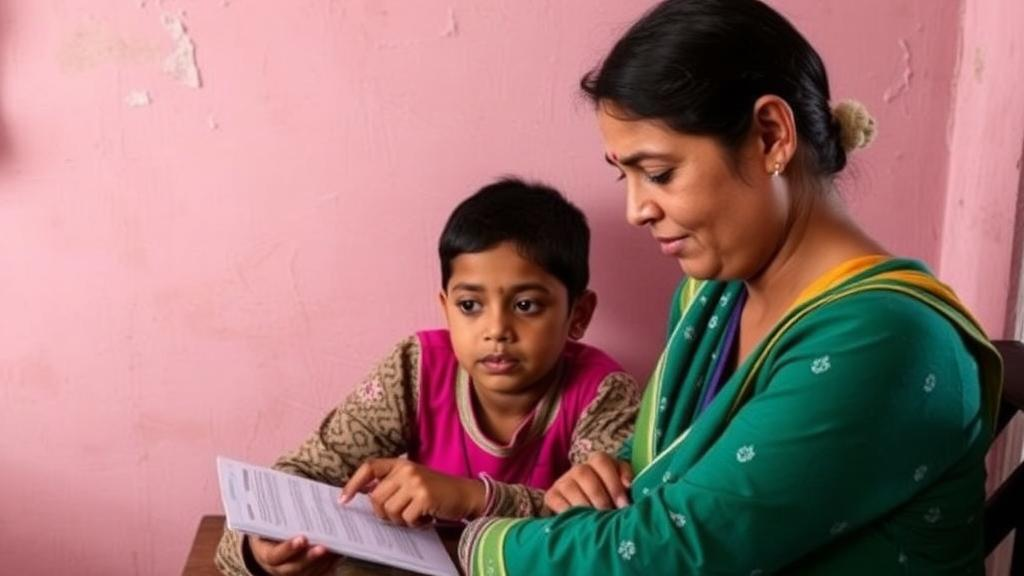
Parents in a 12-week pilot study in Nepal completed daily written diaries of common respiratory and diarrheal symptoms for children under five at high rates, supporting the feasibility of using the method in a larger longitudinal investigation. Across 672 child-weeks of data collection, 98.5% included at least one completed diary day and 88.7% were completed for all seven days. The study involved 56 children in 40 households in the Western Chitwan Valley. Weekly telephone interviews took an average of 5.9 minutes and created an opportunity to obtain information when a diary had not been filled in every day. The findings concern completion and feasibility rather than the diagnostic accuracy of parent-reported symptoms or the health effects of the method.
The pilot was designed to test a high-frequency symptom-reporting approach that could later be combined with the Chitwan Valley Family Study, a longitudinal household and community panel that has collected detailed information about children, parents, households, and communities since 1996. Researchers randomly selected households with children under five from within the family study’s geographic area but outside its established sample neighborhoods, avoiding contamination of the samples planned for the follow-on investigation. Sampling was stratified by the number of age-eligible children, with about half of the households having one child under five and about half having two. Half of the households were then randomized to receive a daily text-message reminder, with this randomization also stratified by the number of eligible children.
All respondents were mothers of children under five. Trained interviewers visited the selected households, confirmed that the children met the age requirement, obtained informed consent, and explained the symptom definitions using the diary’s written instructions and pictures. Diarrhea, for example, was defined as three or more loose stools in a 24-hour period. Each paper diary contained seven daily checklists for recording diarrhea, fever, cough, runny nose, fast or labored breathing, loss of appetite, and fatigue. The paper format was intended to make the daily observations easier for parents to record without requiring a visit or telephone contact for every day of the study period.
During the 12-week study, a trained interviewer called each participating mother every week. The interview was designed to take less than 10 minutes and used a computer-assisted personal-interview procedure. Interviewers asked which symptoms the children had experienced and on which days they had occurred. When a respondent had not recorded symptoms in the diary, the interview provided an opportunity to report them from memory. Interviewers also recorded whether the information had come from the completed checklist, recall, or a combination of both, making it possible to distinguish information documented at the time from information supplied later. The final weekly interview included questions about respondents’ experiences with the study.
A diary week was classified as complete only when all days contained complete data for all enrolled children in the household. The participants’ children averaged 26.9 months of age, with a standard deviation of 15.5 months, and 51.8% were female. The proportion of fully completed diary weeks ranged from 87.5% to 94.6% across the study weeks, apart from the first and last weeks, when completion was 67.9% and 80.3%, respectively. The study therefore recorded lower full-week completion at both ends of the observation period, although the results do not identify a cause for those differences.
Mixed-effects logistic regression was used to assess how diary completion varied by week while accounting for clustering at the respondent, or mother, level. The unadjusted model evaluated completion by collection week. A fuller model additionally accounted for collection week, child sex, child age in years, and whether the mother had one or two children enrolled in the study. The investigators reported odds ratios with 95% confidence intervals and p-values. They also used cumulative incidence curves and kernel-density plots to estimate the incidence and prevalence of reported symptoms, and summarized the qualitative feedback collected at the end of the study.
Daily text reminders did not show a statistically significant association with completion. Mothers who received reminders completed 86.3% of diaries fully, compared with 91.3% among those who did not receive texts. The regression estimated the odds of completion at 1.19 for households receiving reminders, but the 95% confidence interval was wide, from 0.31 to 4.53, indicating substantial uncertainty. The pilot therefore did not establish a benefit or disadvantage associated with receiving reminders. It also did not demonstrate that the messages changed the number or type of symptoms reported. Nevertheless, all respondents who had received a text described it as helpful, while 73.7% of those who had not received one said they would prefer to have it.
Runny nose and cough had the highest reported incidence and overall prevalence, whereas fatigue and difficulty breathing were reported least often. The investigators said the pattern of symptom frequency was consistent with their expectations for the season in which data were collected. They also suggested that more common symptoms being reported more often indicated that respondents had understood the study definitions. These observations concern what parents recorded during a single collection period; they do not establish a geographic contrast or demonstrate a change in childhood illness over time. The pilot did not use a diagnostic instrument or clinical or laboratory confirmation to evaluate whether individual entries represented infectious disease.
Respondents said that both the text messages and storing the diary in a visible place helped them remember to complete it each day. They requested a smaller diary and a format that would be easier to store and clearer to complete. The pilot therefore informed several changes for the larger study within the Chitwan Valley Family Study: advising participants about possible storage locations, redesigning the diary, and modifying the protocol so that household caregivers other than the enrolled mother could help complete the written records. Although the pilot found no clear effect of reminders on completion, the favorable feedback led the team to offer daily text messages to all participants in the larger study.
The results support daily parent-reported symptom diaries as a potentially practical way to measure acute childhood illness, but several limitations constrain how broadly the findings can be generalized. The sample included only 40 households and 56 children, and symptom reporting covered 12 weeks, compared with 52 weeks in the larger planned study. The children came from one geographic area and may not represent the wider pediatric population of Chitwan or the full family-study sample. Seasonality also influenced the illnesses reported during the collection period. Longer participation could increase attrition, while selection effects and social desirability might affect diary completion or the information parents provide. The authors proposed cross-checking diaries against respondent-reported data in the follow-on study as one way to identify possible discrepancies.
Within those bounds, the pilot provides evidence that parents are willing to record daily symptoms and that the written diaries can be completed at high rates over a 12-week period. A daily record preserves the timing and frequency of respiratory and diarrheal symptoms, while the brief weekly interview provides a structured opportunity to fill gaps through recall and documents how each report was obtained. When combined with existing social, demographic, household, and community information from the Chitwan Valley Family Study, these data could support analysis of the contextual factors associated with acute illness in early childhood. The study did not demonstrate clinical benefits, improved child health outcomes, or the diagnostic accuracy of the diaries. Its immediate contribution was to identify a workable, relatively low-cost data-collection strategy and refine it for a larger study in Nepal, with possible application in other low- and middle-income countries.
Subject of Research: Feasibility of daily parent-reported respiratory and diarrheal symptom diaries for children under five in Nepal
Article Title: Feasibility of high frequency parent-reported respiratory and diarrheal symptom data for children under five in a pilot study cohort
Article References: Dwan, M., Chaudhary, I., Kubale, J., Ghimire, R., Noppert, G., Ghimire, D., & Treleaven, E. (2026). Feasibility of high frequency parent-reported respiratory and diarrheal symptom data for children under five in a pilot study cohort. Public Health in Practice, 12, Article 100869. https://doi.org/10.1016/j.puhip.2026.100869
Image Credits: AI Generated
DOI: 10.1016/j.puhip.2026.100869
Keywords: childhood illness, symptom diaries, parent reporting, Nepal, Chitwan Valley, respiratory symptoms, diarrheal disease, longitudinal research, public health, low-income settings, Feasibility, high
Cite Scienmag News
Harold Sullivan. (October 21, 2026). Pilot supports daily parent-reported illness diaries in Nepal. Scienmag. https://scienmag.com/pilot-supports-daily-parent-reported-illness-diaries-in-nepal/
Harold Sullivan. "Pilot supports daily parent-reported illness diaries in Nepal." Scienmag, 21 October 2026, https://scienmag.com/pilot-supports-daily-parent-reported-illness-diaries-in-nepal/. Accessed 21 October 2026.
Harold Sullivan. "Pilot supports daily parent-reported illness diaries in Nepal." Scienmag. October 21, 2026. https://scienmag.com/pilot-supports-daily-parent-reported-illness-diaries-in-nepal/


