


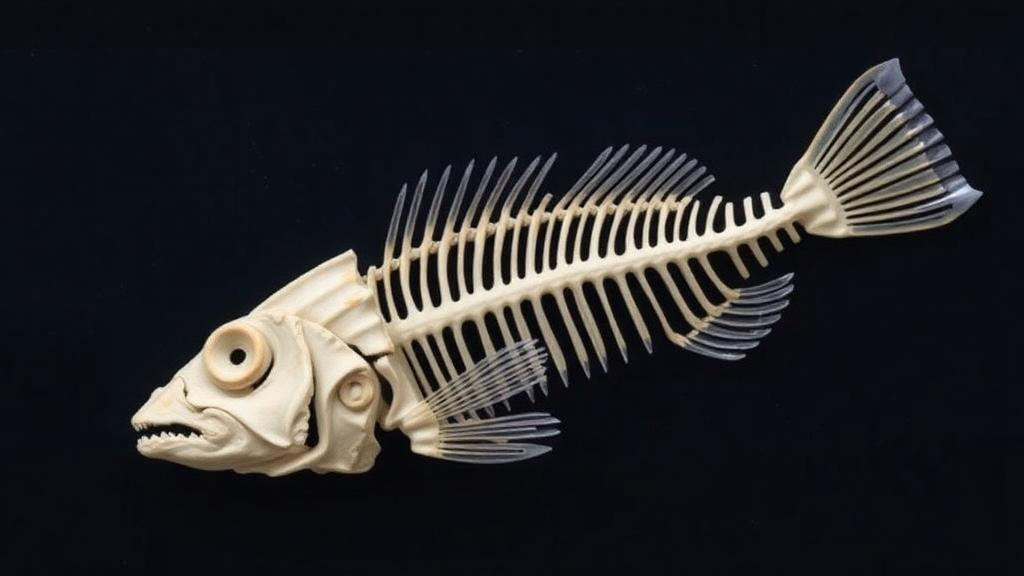
Radiocarbon-dated fish otoliths recovered from Arctic sediments show that ice cod and polar cod occupied the central Arctic Ocean during the last ice age, when ecosystem productivity was very low. The two species were present at latitudes of 87–89°N between approximately 48,000 and 35,000 years ago, providing direct evidence of vertebrate life in a region where such evidence is exceptionally scarce. Their records also differed during the Last Glacial Maximum: both disappeared from the North Pole area, but ice cod remained farther south at 84–85°N around 20,000 years ago. The researchers suggest that areas of open water surrounded by sea ice, known as polynyas, may have allowed ice cod to survive.
The findings emerged from an expedition to the Arctic coordinated by Stockholm University and conducted aboard the Swedish icebreaker Oden. The expedition’s original aim was to map present-day fish stocks using echo sounding and catches in the water column. Researchers noticed a fish otolith when the first bottom-sediment samples arrived on deck, then found more otoliths in that sample and in four additional samples collected at locations across the Arctic Ocean. The remains were identified and dated at the Alfred Wegener Institute’s radiocarbon-dating facility, known as MICADAS. The study was conducted by researchers at Stockholm University and the Alfred Wegener Institute Helmholtz Institute for Polar and Marine Research in Bremerhaven, Germany.
Otoliths are small calcium carbonate structures found in the inner ears of bony fish. They are part of the organs responsible for balance and hearing, detecting movement, gravity and sound vibrations. In the Arctic sediments, their importance came from the fact that they preserve direct evidence of where and when particular fish species occupied Arctic waters. The researchers had to sieve carefully through large volumes of sediment because the structures were rare in the samples. Despite the limited number recovered, the dated remains documented the distribution of two cold-adapted species that are endemic to the Arctic, ice cod and polar cod, across major climatic transitions spanning about 50,000 years.
The occurrence of both species in the central Arctic indicates that a food web capable of supporting fish existed there during the earlier part of the last ice age. Fish are key organisms in this setting because they feed on plankton and, in turn, provide food for seabirds and marine mammals. The researchers therefore interpreted the otoliths as evidence that a complex food web similar to the one present today existed in the central Arctic during the glacial period. The fossils do not directly reveal the abundance of fish, plankton, seabirds or marine mammals, but their presence provides physical evidence that the predator-prey relationships required to support those consumers were possible.
Radiocarbon measurements revealed that ice cod and polar cod were distributed across the North Pole area between about 48,000 and 35,000 years ago, during an ice-age interval characterized by very low ecosystem productivity. The samples came from latitudes of 87–89°N, placing the dated fish remains close to the North Pole. This record expands the known historical presence of both species in the central Arctic. It also demonstrates that the region was not an biologically empty, ice-covered environment: the remains show that cold-adapted fish lived there, with the associated implications for the wider marine food web.
Both species disappeared from the North Pole area during the Last Glacial Maximum, the coldest period of the last ice age, which lasted from approximately 27,000 to 19,000 years ago. The fossil sequence nevertheless showed different survival patterns. Around 20,000 years ago, at the peak of this interval, ice cod was found farther south at approximately 84–85°N, while polar cod was not present in the central Arctic locations represented by the samples. The researchers suggest that ice cod may have survived in polynyas, areas of open water surrounded by sea ice. The polynya explanation is a proposed mechanism based on the observed distribution rather than a directly measured physiological response in the fish.
The contrasting persistence of the two species may help explain a mechanism for climate-driven evolutionary divergence. Ice cod and polar cod are thought to have diverged between 5 million and 10 million years ago, although the otolith record does not show that the glacial climate transitions themselves caused the original separation. Instead, the study documents how the already distinct species responded to a major climate interval: ice cod retained a presence farther south when polar cod was absent from the sampled North Pole area. As climate warmed at the beginning of the Holocene around 12,000 years ago, both species reappeared in the region and have persisted there to the present.
As an observational study, the research reconstructed past distributions from rare otoliths in selected sediment samples. Its conclusions are strongest for the dated remains recovered and their measured locations and ages. The record does not provide a complete census of fish populations across the Arctic Ocean, and it cannot directly establish the physiological mechanisms that allowed ice cod and polar cod to respond differently. Likewise, the disappearance of a species from a particular set of samples does not by itself prove that it was absent from every part of the region. Nevertheless, the dated structures offer unusually direct physical evidence for the presence of two Arctic fish species during major climate transitions.
The authors say the historical patterns are relevant to the vulnerability of ice cod and polar cod as the Arctic warms. Sea ice over the deep basins and submarine ridges of the central Arctic Ocean is becoming thinner, younger and more dynamic, while midwater temperatures are rising. These conditions threaten species adapted to extremely cold environments, although the sediment study did not measure contemporary population trends. The researchers also identify Atlantic cod and Alaska pollock as boreal species whose northward expansion is expected to increase competition and predation in the Arctic Ocean. Their assessment is that continued warming may soon exceed the limits of the evolutionary adaptations of the two Arctic-endemic cod species, creating a significant risk of population declines.
That future warning is a forward-looking projection from the researchers rather than a result measured in the dated sediments. The study itself reconstructed the historical presence and distribution of ice cod and polar cod; it did not monitor present abundance or test the effects of warming, competition or predation directly. Even so, the fossil record supplies a long-term context for the species’ present circumstances. By showing repeated occupation, disappearance and renewed presence across roughly 50,000 years, the otoliths demonstrate that Arctic fish distributions have changed substantially during major climatic transitions and that the two cold-adapted cod species did not respond to the Last Glacial Maximum in exactly the same way.
Subject of Research: Fossil otolith evidence of how two Arctic cod species responded to glacial climate change
Article Title: Ancient fish bones reveal how Arctic cod species survived the last ice age
Article References: Ancient fish bones reveal how Arctic cod species survived the last ice age. Original publication (Bibliographic details unavailable.)
Image Credits: AI Generated
DOI: Not provided
Keywords: Arctic cod, ice cod, polar cod, otoliths, last ice age, central Arctic Ocean, radiocarbon dating, Last Glacial Maximum, polynyas, marine ecosystems, Ancient, fish
Cite Scienmag News
Violet Maxwell. (October 21, 2026). Ancient fish bones reveal how Arctic cod species survived the last ice age. Scienmag. https://scienmag.com/ancient-fish-bones-reveal-how-arctic-cod-species-survived-the-last-ice-age/
Violet Maxwell. "Ancient fish bones reveal how Arctic cod species survived the last ice age." Scienmag, 21 October 2026, https://scienmag.com/ancient-fish-bones-reveal-how-arctic-cod-species-survived-the-last-ice-age/. Accessed 21 October 2026.
Violet Maxwell. "Ancient fish bones reveal how Arctic cod species survived the last ice age." Scienmag. October 21, 2026. https://scienmag.com/ancient-fish-bones-reveal-how-arctic-cod-species-survived-the-last-ice-age/


